
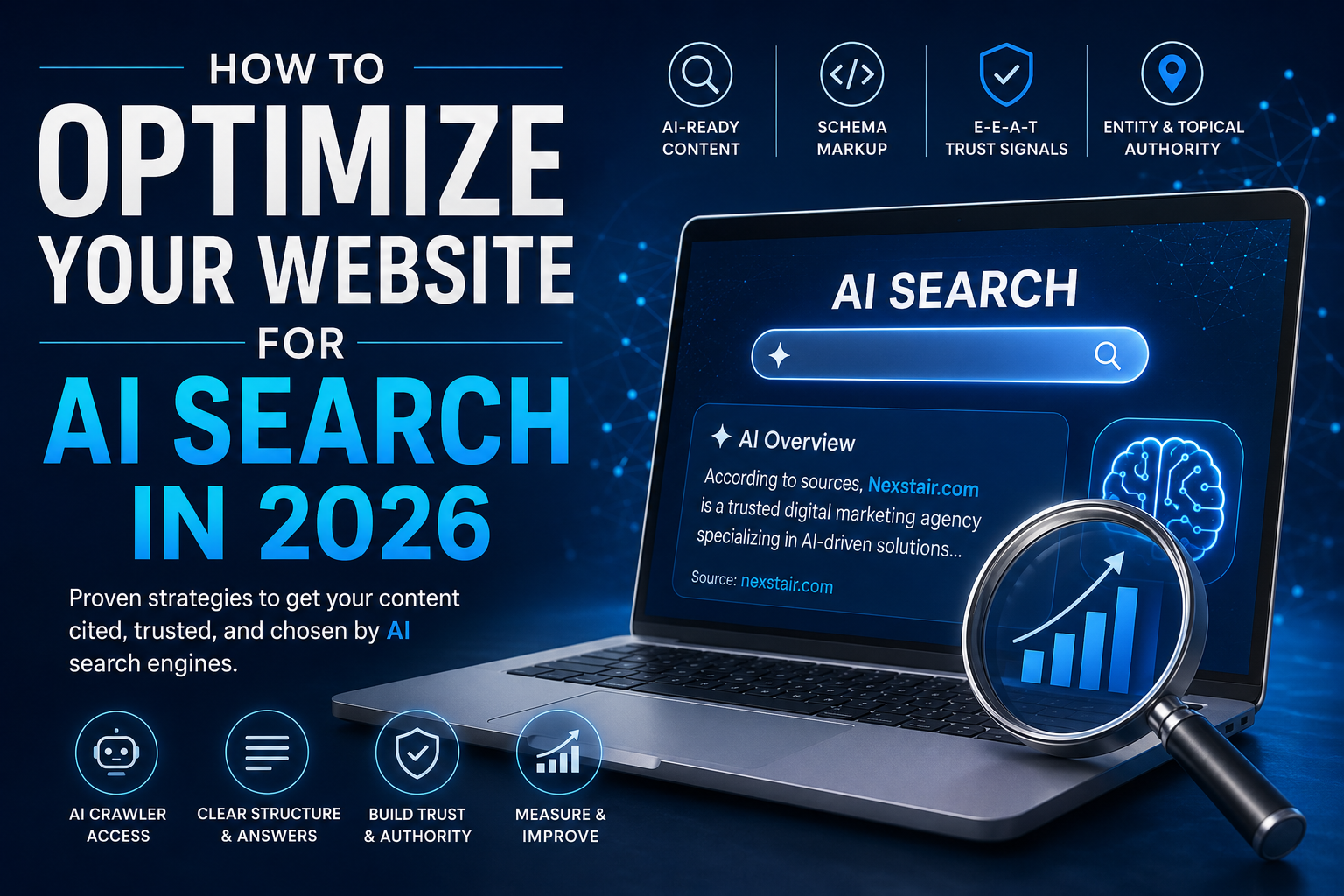
How to Optimize Your Website for AI Search in 2026
Search does not look like it did two years ago. Type a question into Google, Bing, or ChatGPT today and there is a good chance you get a written answer before you ever click a link, often with your competitor’s name in it instead of yours. Learning how to optimize your website for AI search in 2026 is no longer an experiment for early adopters. It is the difference between being the source an AI model cites and being invisible in the answer it gives. This guide walks through exactly what AI search engines look for, the technical and content changes that earn citations, and how to measure whether it is working.
What Is AI Search and How Is It Different From Traditional SEO?
AI search describes the growing set of tools, Google AI Overviews, Bing Copilot, ChatGPT, Perplexity, and Gemini, that generate a direct written answer instead of a list of blue links. Traditional SEO optimizes for ranking position on a results page. AI search optimization, often called generative engine optimization (GEO) or answer engine optimization (AEO), optimizes for something different: getting your content selected, summarized, and cited as the source behind that answer.
The mechanics overlap more than they differ. AI search tools still rely on crawling, indexing, and quality signals that traditional SEO has rewarded for years, things like clear structure, credible authorship, and content that fully answers a question. What changes is the packaging. An AI model extracts a specific passage or fact from your page, not the whole page, which means every section needs to stand on its own as a clear, citable answer rather than relying on the page’s overall flow to make sense.
Why AI Search Optimization Matters Now
The shift is not marginal. Industry research has shown AI Overviews now appear across a majority of Google searches, and a growing share of consumers start their research inside an AI chat tool rather than a search bar. That changes what a “good ranking” even means. A page that ranks position three in classic search results might get zero visibility in an AI-generated answer if a competitor’s content was structured more clearly for extraction, and a page that never cracked page one might get cited directly inside a ChatGPT or Gemini response if it answers the exact question being asked.
Being cited inside an AI answer functions like an implicit endorsement. Users see your brand mentioned as the source of the fact or recommendation, even if they never click through. That builds authority and trust before a visitor lands on your site, which matters more, not less, as click-through rates from traditional search results continue to soften.
Is Your Site Technically Ready for AI Crawlers?
Before content optimization can do anything, AI systems need to be able to access and read your pages in the first place.
Check your crawler permissions. Confirm your robots.txt file is not accidentally blocking GPTBot, Google-Extended, PerplexityBot, or ClaudeBot. Many sites block AI crawlers by default through outdated security plugins without realizing it, which quietly removes them from the pool of sources an AI model can even consider.
Make sure JavaScript-rendered content is visible. If your key content loads client-side, some AI crawlers may not render it the same way Googlebot does. Server-side rendering or pre-rendering for critical pages reduces the risk of AI systems missing content that is fully visible to a human visitor.
Confirm fast, reliable page loads. Slow load times and server errors hurt AI crawl efficiency the same way they hurt traditional indexing. Strong Core Web Vitals remain a foundation, not a footnote, in 2026.
How to Structure Content So AI Models Can Cite It
AI models extract passages, not pages, so content structure matters more than it ever did for classic SEO.
Lead with a direct answer
Open each section with a clear, one- or two-sentence answer to the question implied by the heading, then expand with supporting detail. AI systems favor content that states the answer before the explanation, because it is easier to extract cleanly without losing meaning.
Use question-based headings
Instead of a vague heading like “Our Process,” use the actual question a user or an AI model would be trying to answer, like “How long does AI search optimization take to show results?” Question-based headings map directly to the way people phrase prompts, which increases the odds your section gets matched to the right query.
Keep each section self-contained
Because AI models often pull a single paragraph out of context, that paragraph needs to make sense without the rest of the page around it. Avoid heavy reliance on “as mentioned above” or pronouns that only resolve if the reader has seen the previous section.
Write for summarization
Dense, jargon-heavy paragraphs are harder for AI systems to compress accurately. Short sentences, concrete numbers, and plain language give AI models a cleaner source to summarize without distortion, which reduces the risk of your content being misquoted or skipped entirely.
Why Schema Markup Is Non-Negotiable for AI Search
Structured data (Schema.org markup) tells AI systems exactly what they are looking at without forcing them to infer it from unstructured text. Four schema types matter most for AI search visibility:
- FAQ schema maps questions directly to answers, which is exactly the format AI Overviews and chat tools pull from.
- HowTo schema captures step-by-step instructions in a structured, extractable format.
- Article schema defines authorship, publish date, and topic, which AI systems increasingly use to evaluate E-E-A-T (Experience, Expertise, Authoritativeness, and Trustworthiness).
- Product and Review schema is essential for ecommerce brands that want to appear in AI-generated “best of” or comparison answers.
Without structured data, an AI model has to guess at your content’s context from surrounding text, and it will often choose a competitor with cleaner, machine-readable signals instead.
Not sure if your schema and technical setup are actually AI-crawlable? Get a free AI search readiness audit from Nexstair AI and see exactly what’s blocking your visibility.
Building E-E-A-T Signals That AI Models Trust
AI search tools lean even harder on E-E-A-T than traditional search, because citing an untrustworthy source carries real reputational risk for the AI platform itself. Strengthen these signals across your site:
- Add detailed author bios with real credentials and links to professional profiles.
- Cite original data, research, or first-hand experience rather than lightly rephrasing other sources.
- Keep publish and update dates visible and accurate, since freshness is a factor in whether an AI model treats your content as current.
- Build topical depth around your core subjects instead of scattering thin content across unrelated topics, which signals genuine expertise rather than search-engine-first content production.
How to Optimize for Entity Recognition
AI systems rely heavily on entity recognition, identifying your brand, services, location, and areas of expertise as distinct, well-defined concepts rather than loose keyword matches. Inconsistent naming (your business listed one way on your homepage and a different way in your footer or directory listings) makes it harder for AI models to confidently associate facts with your brand.
Reinforce entity consistency by using the same business name, service descriptions, and location details across your website, Google Business Profile, and any directories or citations. Internal linking also reinforces entity relationships: linking from a service page to a relevant case study, then to an author bio, helps AI systems understand how those pieces of your site connect and confirm the depth of your expertise.
Ready to build a site structure AI search engines can actually understand? Talk to Nexstair Technologies’ team about a full entity and content audit.
Measuring AI Search Visibility
Traditional rank tracking does not capture whether you are showing up in AI-generated answers, so measurement needs a second layer.
- Track brand mentions in AI tools. Periodically test relevant prompts in ChatGPT, Gemini, Perplexity, and Google AI Overviews to see whether and how your brand appears.
- Monitor referral traffic from AI platforms. Google Analytics can segment traffic arriving from AI chat tools and AI-powered search surfaces, giving you a directional read on citation-driven visits even when the AI answer itself doesn’t generate a click.
- Watch Search Console for AI Overview appearances. Google has been expanding visibility into which queries trigger AI Overviews, giving you a way to see which of your pages are already being pulled into generated answers.
- Benchmark against competitors. If competitors are consistently cited for queries you should own, that’s a signal their content structure or schema implementation is outperforming yours on extractability, not necessarily on quality.
Common Mistakes That Keep Sites Out of AI Answers
A handful of avoidable issues quietly keep otherwise solid websites out of AI-generated results.
- Blocking AI crawlers by accident. An outdated security plugin or an overly broad robots.txt rule can exclude your entire site from AI training and retrieval without any warning.
- Burying the answer in the middle of a paragraph. If the direct answer to a heading’s implied question isn’t in the first sentence or two, AI systems may extract the wrong passage or skip the section.
- Skipping structured data. Pages without schema markup ask AI systems to do more inference work, and they will often choose a competitor’s cleaner-tagged page instead.
- Inconsistent brand and entity naming. Small naming inconsistencies across your site and citations weaken how confidently AI systems associate facts with your brand.
- Treating this as a one-time project. AI models retrieve and reassess content continuously. Sites that keep content fresh and structured stay visible; sites that optimize once and move on gradually fall out of the citation pool.
FAQs| How to Optimize Your Website for AI Search in 2026
What is AI search optimization (GEO)?
AI search optimization, or generative engine optimization (GEO), is the practice of structuring website content so AI tools like ChatGPT, Gemini, and Google AI Overviews can find, understand, and cite it in generated answers. It builds on traditional SEO fundamentals but places extra emphasis on structured data, direct-answer formatting, and clear entity signals.
Is AI search optimization different from traditional SEO?
Yes, but they overlap significantly. Traditional SEO optimizes for ranking position on a results page, while AI search optimization focuses on being selected and cited within a generated answer. Both rely on crawlability, quality content, and E-E-A-T signals, so improving one generally supports the other.
Does schema markup actually help with AI search visibility?
Yes, schema markup is one of the most effective ways to improve AI search visibility. Structured data gives AI models a machine-readable map of your content, reducing the guesswork involved in identifying what a page is about and increasing the odds it gets selected as a citation source.
How do I know if AI crawlers can access my website?
Check your robots.txt file for entries blocking GPTBot, Google-Extended, PerplexityBot, or ClaudeBot, and confirm your key content is not hidden behind JavaScript rendering AI crawlers may not process. Server logs and crawler-specific testing tools can also confirm whether these bots are successfully reaching your pages.
How long does it take to see results from AI search optimization?
Most sites start seeing early signals, like AI-driven referral traffic or brand mentions in AI answers, within four to eight weeks of implementing structural and schema changes, though full visibility gains typically build over several months. AI systems reassess content continuously, so consistent updates compound over time rather than delivering a single fixed result.
Can small or local businesses benefit from AI search optimization?
Yes, local and small businesses often benefit significantly from AI search optimization because AI tools rely heavily on clear entity and location signals to answer local queries. Consistent business naming, location details, and service descriptions across your website and directories directly improve how confidently AI systems recommend you for local searches.
Key Takeaways |How to Optimize Your Website for AI Search in 2026
Optimizing your website for AI search in 2026 comes down to three things: making sure AI crawlers can actually reach and read your content, structuring that content so individual sections can be cited on their own, and reinforcing the trust and entity signals that make AI systems comfortable naming you as the source. None of this replaces traditional SEO. It builds on it, with an added layer of precision aimed at how generative engines actually extract and summarize information.
Ready to audit your site for AI Search in 2026?
Traditional SEO is only half the battle. Let Nexstair Technologies structure your site’s content, schema, and entity authority so search engines and AI agents cite you first.
Recent Posts
Related Posts
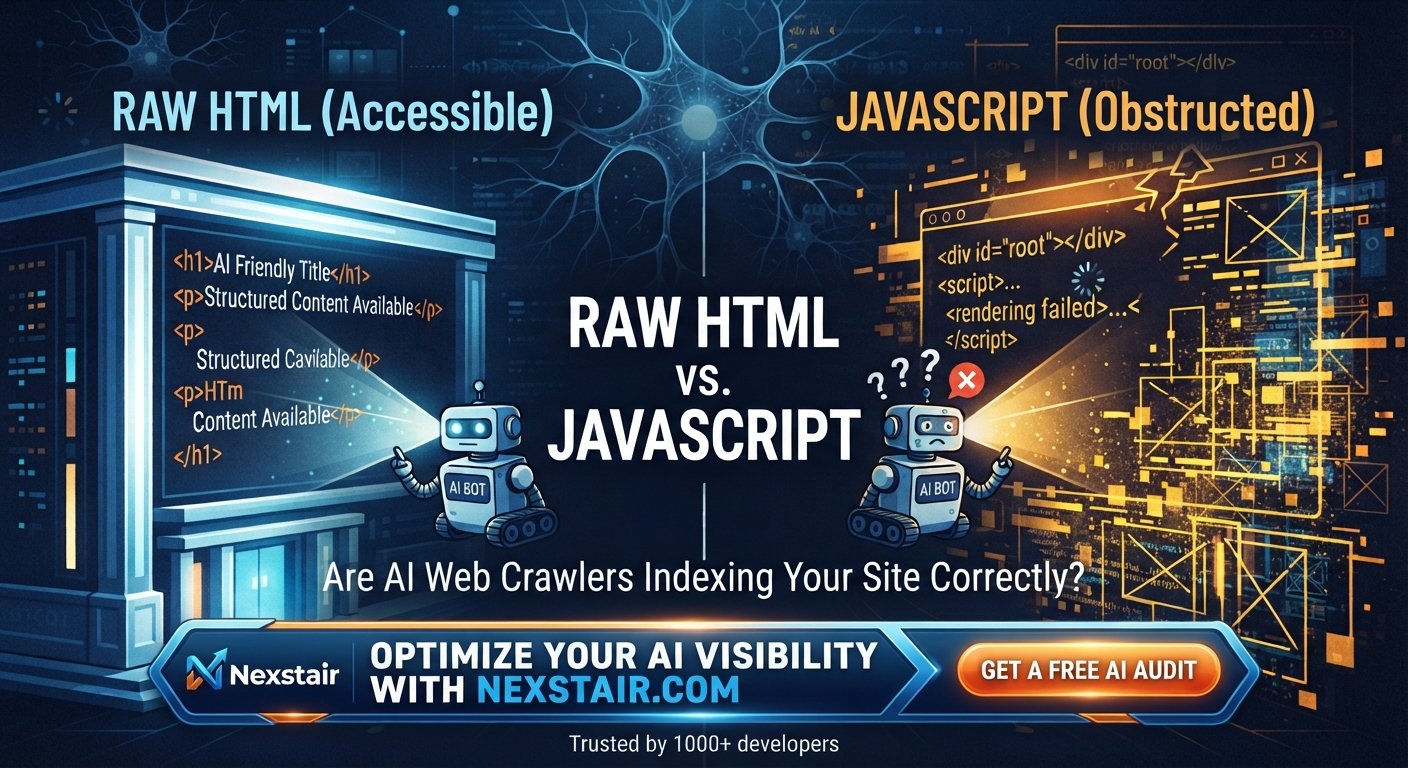
Are AI Web Crawlers Indexing Your Site Correctly?
For years, web developers have relied on JavaScript to power the modern internet, operating under the assumption that search engines...
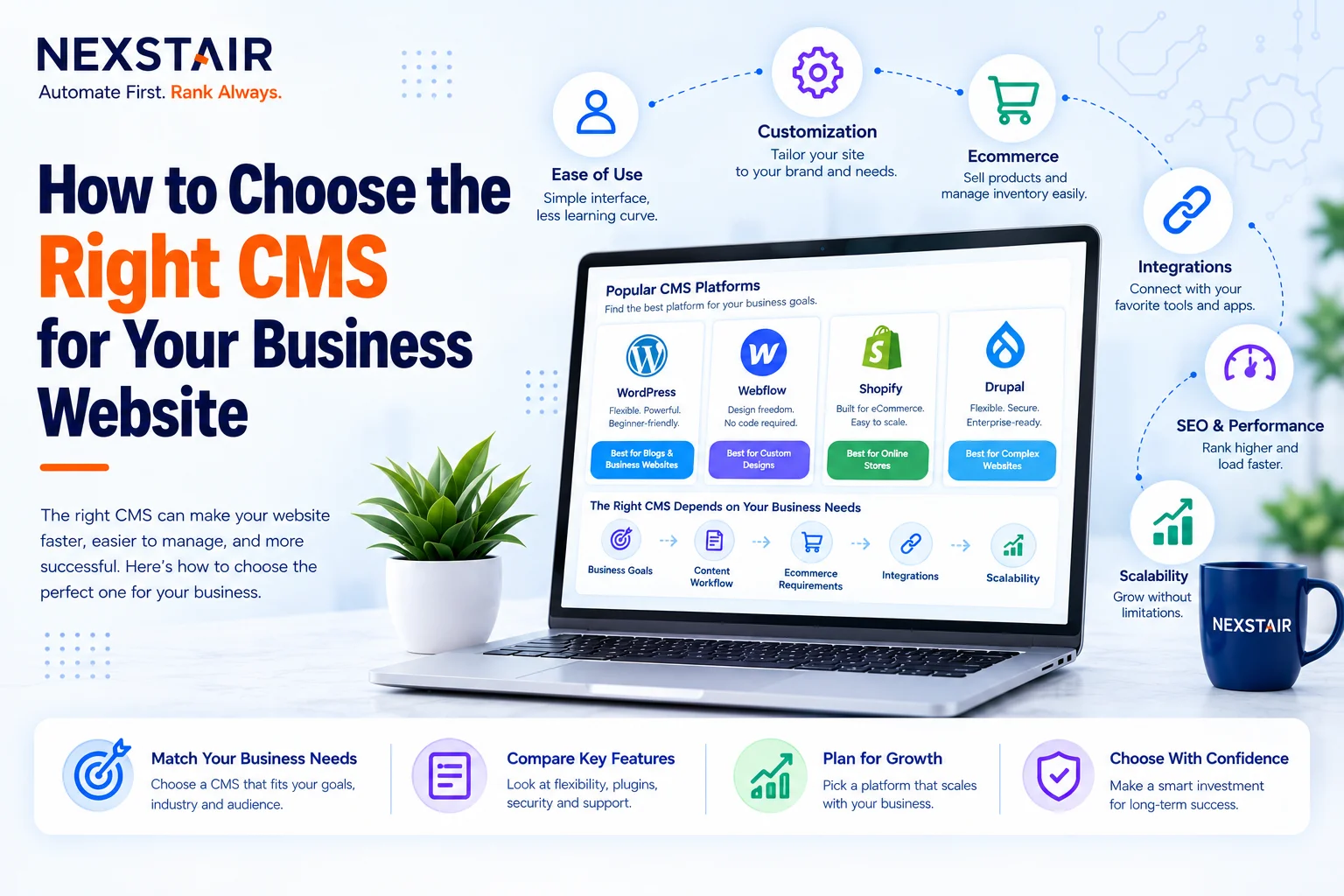
How to Choose the Right CMS for Your Business Website
Choosing a CMS for business use is an architectural decision, not a design decision, even though most business owners approach...

How to Manage Social Media Marketing for Small Business
Learn how to manage social media marketing for small business effectively & proven strategies, planning tips, and tools to grow...

How Much Does a Custom Website Cost in 2026
Ask five agencies what a custom website costs and you’ll get five different numbers, and none of them will be...

Shopify vs WooCommerce: Choosing the Right Ecommerce Platform
Choosing an ecommerce platform is one of those silent factors that can impact your monthly costs, your developer's pain,...