
Is SEO Dead in 2026? SEO Strategy for Social Media, LLMs & Google Search
Direct Answer: No, SEO is not dead in 2026 — but the 2018 version of it is. Rankings and keywords still matter, but the real prize now is being the source that Google’s AI Overviews, ChatGPT, Gemini, and Perplexity actually quote. Search has split into three lanes — Google, social platforms, and AI chat tools — and brands that only optimize for one are quietly losing ground to competitors who optimize for all three.
If your traffic graph has been dipping even though your rankings look fine, you’re not imagining it, and you’re not doing anything “wrong.” The rules changed under you.
This guide breaks down exactly what’s happening across Google, social search, and LLMs in 2026, and how to build a strategy that works across all three — with a little help from Nexstair Technologies, which builds exactly this kind of AI-ready visibility for e-commerce, SMB, and enterprise brands. See how Nexstair AI can audit your search visibility →
Is SEO dead in 2026? Discover how to adapt your SEO strategy for LLMs, social media, and the latest Google Search updates to stay ahead.
TL;DR: Is SEO Dead in 2026?
- No — SEO isn’t dead, it’s repriced. The global SEO services market grew from roughly $74.9B in 2025 to nearly $84B in 2026, even as click volume falls.
- Zero-click search is now the norm. Around 68% of U.S. Google searches end without a click, largely because of AI Overviews.
- Citations matter more than rankings. Brands cited inside an AI Overview see meaningfully higher click-through and paid conversion rates than brands left out — some studies put the lift as high as 35–120%.
- Social platforms are a parallel search layer, not a Google replacement. Roughly half of U.S. consumers have used TikTok as a search engine, and a large majority of Gen Z use Instagram, TikTok, and Google in the same week for different types of queries.
- AI chat traffic is small but converts well and is growing fast — some trackers report year-over-year growth above 500% for AI-referred sessions.
Why “Is SEO Dead in 2026?” Keeps Coming Back Every Few Years
Is SEO Dead in 2026, this question isn’t new. It surfaced when Google rolled out Panda in 2011, again with the Knowledge Graph in 2012, again with featured snippets, and again with voice search. Each time, a specific tactic died — not the discipline itself. In 2026, the tactic dying is the idea that ranking a URL for a keyword is the whole job. What’s actually happening is bigger: search has fragmented into Google, social platforms, and generative AI tools, and each has its own rules for what gets seen and what doesn’t.
Thin, keyword-stuffed content built purely to rank was already bad practice — Google has spent over a decade trying to kill it. What’s genuinely new is that original research, first-person experience, and clearly structured, well-sourced content are performing better than they were a few years ago, simply because they’re harder to fake at scale.
Is SEO Dead in 2026? What’s Actually Changed in Google Search in 2026
AI Overviews have rewritten the click economics of search
Google’s AI Overviews now sit above the traditional ten blue links for a large share of informational queries, answering the question directly instead of sending users to a page. The practical effect on traffic has been dramatic. One large-scale analysis tracking over 3,000 informational search terms across 42 organizations found organic click-through rates on AI Overview queries fell substantially — and even queries without an AI Overview saw softer clicks than before, a sign that user behavior itself has shifted, not just the SERP layout.
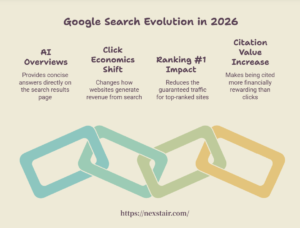
By early 2026, roughly two-thirds of U.S. Google searches were ending without any click at all, and Google has been steadily adding paid ads directly inside AI Overview results — a sign of how central this format has become to its business model, not a side experiment.
Ranking #1 no longer guarantees you get cited
This is the part most SEO teams haven’t fully internalized yet: the overlap between the traditional top-ten organic results and the sources an AI Overview actually cites has narrowed considerably over the past year. Being page-one doesn’t automatically earn you a citation inside the AI-generated answer anymore. That gap is exactly where Generative Engine Optimization (GEO) comes in — structuring content so it’s not just rankable, but extractable by an AI system scanning for a clean, quotable answer.
Being cited pays more than being clicked
Here’s the silver lining: brands that do get cited inside an AI Overview see a real lift. Multiple industry studies now put the click-through boost for cited brands anywhere from roughly 35% to well over 100% compared to brands the AI Overview leaves out, along with stronger paid-click performance for the same query. The traffic that does show up tends to be higher-intent and further along in the decision journey, because the AI has effectively pre-qualified the visitor before they land on your page.
This is where a lot of brands quietly fall behind — not because their content is bad, but because it isn’t structured for an AI to extract. If you want a clear-eyed look at where your brand currently stands with AI search visibility, Nexstair AI’s search visibility audit shows you exactly what ChatGPT, Gemini, and Google’s AI Overviews currently say — and don’t say — about your business.
Google SEO Best Practices That Still Work — And What’s Dead
| Still works in 2026 | Dead or dying |
|---|---|
| E-E-A-T signals: real experience, original data, named experts | Keyword stuffing and exact-match anchor text |
| Answering the query in the first sentence, not paragraph three | Thin content built only to rank, with no real value |
| Structured schema markup and clean semantic HTML | Chasing informational keywords with generic “ultimate guide” posts |
| Digital PR and backlinks from genuinely authoritative sources | Content farms and mass AI-generated filler at scale |
| Case studies, benchmarks, and proprietary research | Treating rankings as the finish line instead of citations |
Google itself has said publicly that its AI features are “rooted in our core Search ranking and quality systems” — meaning there is no separate, secret ranking system for AI Overviews to game. If your content doesn’t rank well organically in the first place, it’s very unlikely to be cited in the AI answer either. GEO without a solid SEO foundation doesn’t work.
Is Social Media the New Search Engine? What the Data Actually Shows
Short answer: social platforms are now a parallel search layer, especially for younger audiences — but they haven’t replaced Google, and the “Gen Z has abandoned Google” narrative is more nuanced than the headlines suggest.
- Nearly half of U.S. consumers (49%) have used TikTok as a search engine, up from 41% two years earlier, and that figure climbs to roughly 65% among Gen Z.
- But when asked which platform they prefer over Google, only about 4% of Gen Z chose TikTok in 2026 — down from 8% two years ago. Usage is high; exclusive preference is actually falling.
- When consumers were asked which platforms they found most helpful for search, Google still topped the list by a wide margin, with Reddit, ChatGPT, YouTube, and TikTok trailing behind.
- The pattern that’s emerging: Gen Z uses Google for factual, transactional queries (“how do I apply for X,” “price of Y”) and TikTok or Instagram for discovery-driven, visual, social-proof queries (“is this restaurant good,” “how does this look in real life,” product reviews and hauls).
- TikTok’s own search behavior favors video tutorials, product reviews, personal stories, and influencer recommendations — content types that a static blog post simply can’t replicate.
What this means for your strategy: social SEO isn’t optional anymore, but it’s a complement to Google SEO, not a replacement. If your audience includes Gen Z or millennial buyers, your content strategy needs a video-and-caption layer built for platform-native search, in addition to your web content.
This is exactly the kind of “search everywhere” strategy Nexstair Technologies helps brands build — keyword and content plans that work across Google, social search, and AI assistants at once, instead of three disconnected strategies fighting for the same budget. Talk to Nexstair AI about a multi-platform search strategy →
How LLMs Like ChatGPT, Gemini & Claude Are Changing Discovery
Generative AI chat tools are becoming a genuine third pillar of discovery, alongside Google and social:
- ChatGPT reached roughly 900 million weekly active users by early 2026, up from about 400 million a year earlier — a near-doubling in twelve months.
- The vast majority of ChatGPT searches are informational rather than transactional, meaning people are increasingly using it for research and comparison-shopping before they ever land on a brand’s website.
- AI-referred traffic is still a small slice of total web traffic overall, but it’s growing at triple-digit rates year over year in multiple independent trackers, and it tends to convert at a noticeably higher rate than average organic traffic once it does arrive.
- Some AI models are now injecting the current year directly into their search queries when researching “best of” recommendations — meaning outdated titles and stale meta descriptions can quietly cost you visibility. Keeping publish dates, titles, and meta descriptions current is a small habit with an outsized payoff.
The 7-part content structure that gets cited by AI
Based on current GEO best practices across the industry, content that consistently earns AI citations tends to follow a repeatable pattern:
- H1 as a question that mirrors real search phrasing.
- A one-line direct answer immediately below the H1 — this is the sentence AI models tend to extract.
- A short TL;DR block with 3–5 bullets restating the answer.
- H2s written as questions, not vague labels like “Overview.”
- Answer-first paragraphs — never bury the point in the third sentence.
- 2–3 cited, dated statistics from named, reputable sources with links.
- Consistent brand and entity signals across the web (same name, same facts, same claims everywhere you’re mentioned).
If building and maintaining this structure across dozens of pages sounds like a full-time job — it is. This is precisely the gap Nexstair Technologies was built to close: effective content marketing services and keyword strategy that’s engineered from day one to be picked up by Google, TikTok search, and LLMs alike. Book a free AI-visibility strategy session with Nexstair→
A Practical “Search Everywhere” Strategy for 2026
- Audit your current AI visibility. Ask ChatGPT, Gemini, and Google’s AI Overview a handful of unbranded questions about your core service. If you’re not showing up, you’re technically invisible to a growing share of buyers.
- Restructure your best pages for extraction, using the 7-part structure above — don’t rewrite everything, start with your highest-traffic and highest-intent pages.
- Build platform-native social content, especially short-form video for TikTok and Instagram search, targeting discovery and comparison queries your Google content doesn’t cover.
- Invest in original data and real experience — case studies, benchmarks, and first-person insights are the hardest thing for AI-generated competitor content to replicate.
- Keep dates and titles current. Year-tagged, freshly-dated content is measurably favored by both Google and AI search assistants right now.
- Track citations, not just rankings. Add AI referral traffic and AI Overview citations as a KPI alongside your traditional rank-tracking.
Frequently Asked Questions | Is SEO Dead in 2026
Is SEO really dead in 2026? No. SEO isn’t dead — the version of it built purely around keyword volume and ranking single URLs is what’s dying. Modern SEO now includes AI Overview visibility, Generative Engine Optimization (GEO), and social search, all working together.
What is GEO (Generative Engine Optimization)? GEO is the practice of structuring content — clear direct answers, dated statistics, named sources, and consistent brand signals — so that AI tools like ChatGPT, Gemini, and Google’s AI Overviews can extract and cite it as an answer.
Is TikTok replacing Google as a search engine? Not for most query types. TikTok has become a major discovery and social-proof search channel, especially for Gen Z, but Google still leads for factual and transactional queries. Most brands need both, not one instead of the other.
Why is my organic traffic dropping even though my rankings haven’t changed? This is one of the most common symptoms of 2026 search: AI Overviews and zero-click search are absorbing clicks that used to go to page-one results, even when your ranking position hasn’t moved. The fix is optimizing for citations and answer extraction, not just position.
How long does it take to see results from GEO changes? Structural changes — direct answers, TL;DR blocks, question-format headings — can show ranking and citation improvements within a few weeks. Broader brand-mention improvements across AI tools typically take one to three months as models re-crawl and re-index the web.
Do I still need traditional SEO if I focus on GEO? Yes. AI tools overwhelmingly cite content that already ranks well organically. There is no shortcut around solid, foundational SEO — GEO is a layer on top of it, not a replacement for it.
Ready to make sure your brand shows up wherever your customers are actually searching — Google, TikTok, or ChatGPT? Nexstair Technologies builds keyword strategy and AI-ready content specifically designed to get found and cited across all three.
Get your free AI search visibility audit from Nexstair Technologies today
Recent Posts
Related Posts
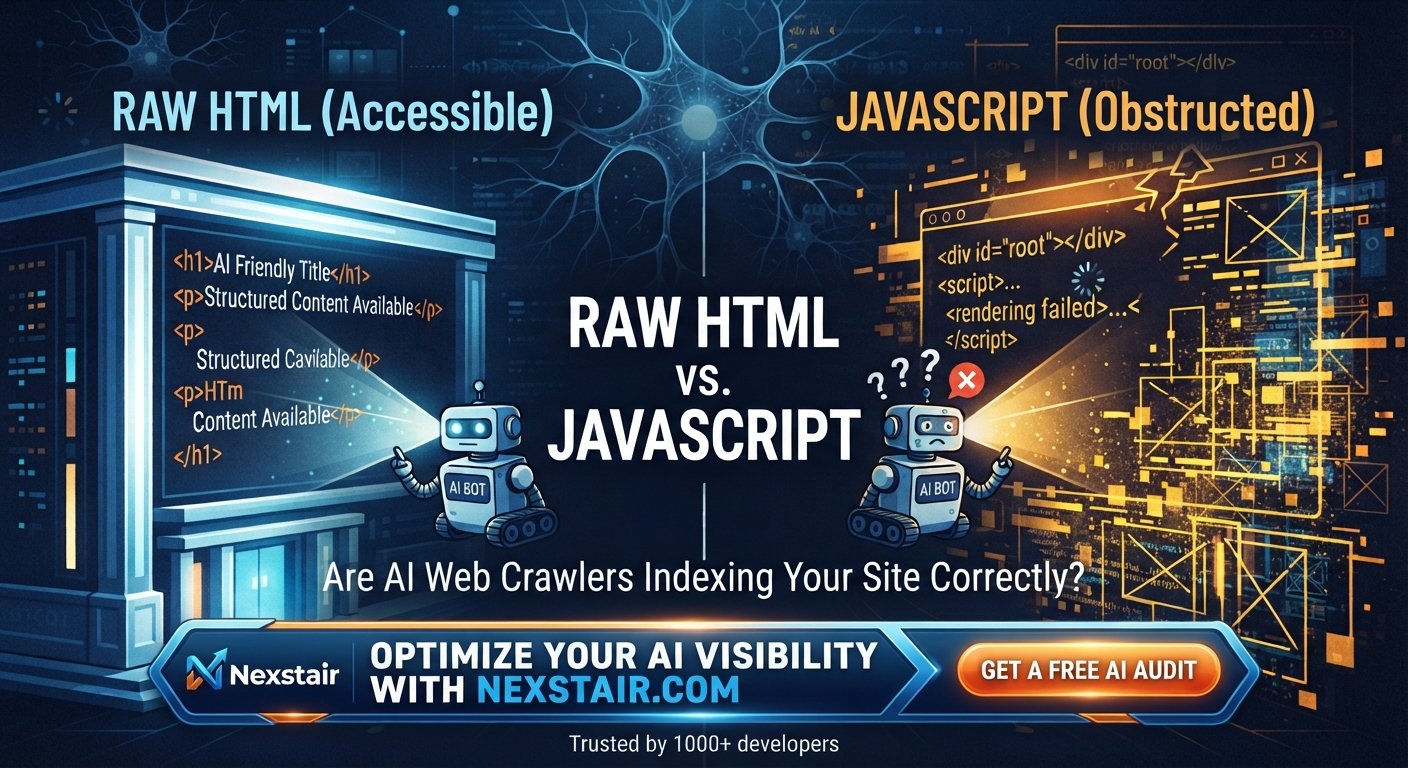
Are AI Web Crawlers Indexing Your Site Correctly?
For years, web developers have relied on JavaScript to power the modern internet, operating under the assumption that search engines...
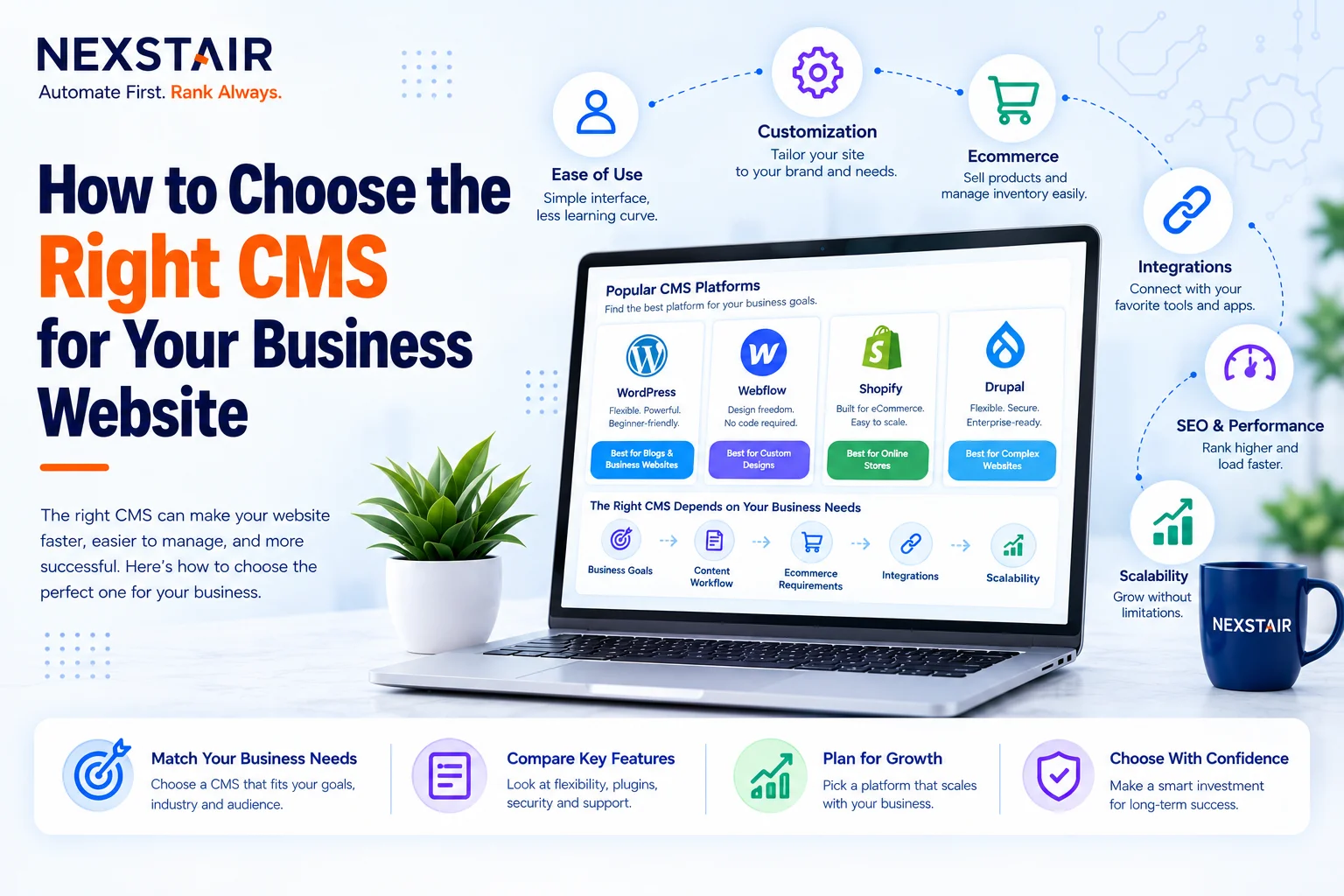
How to Choose the Right CMS for Your Business Website
Choosing a CMS for business use is an architectural decision, not a design decision, even though most business owners approach...
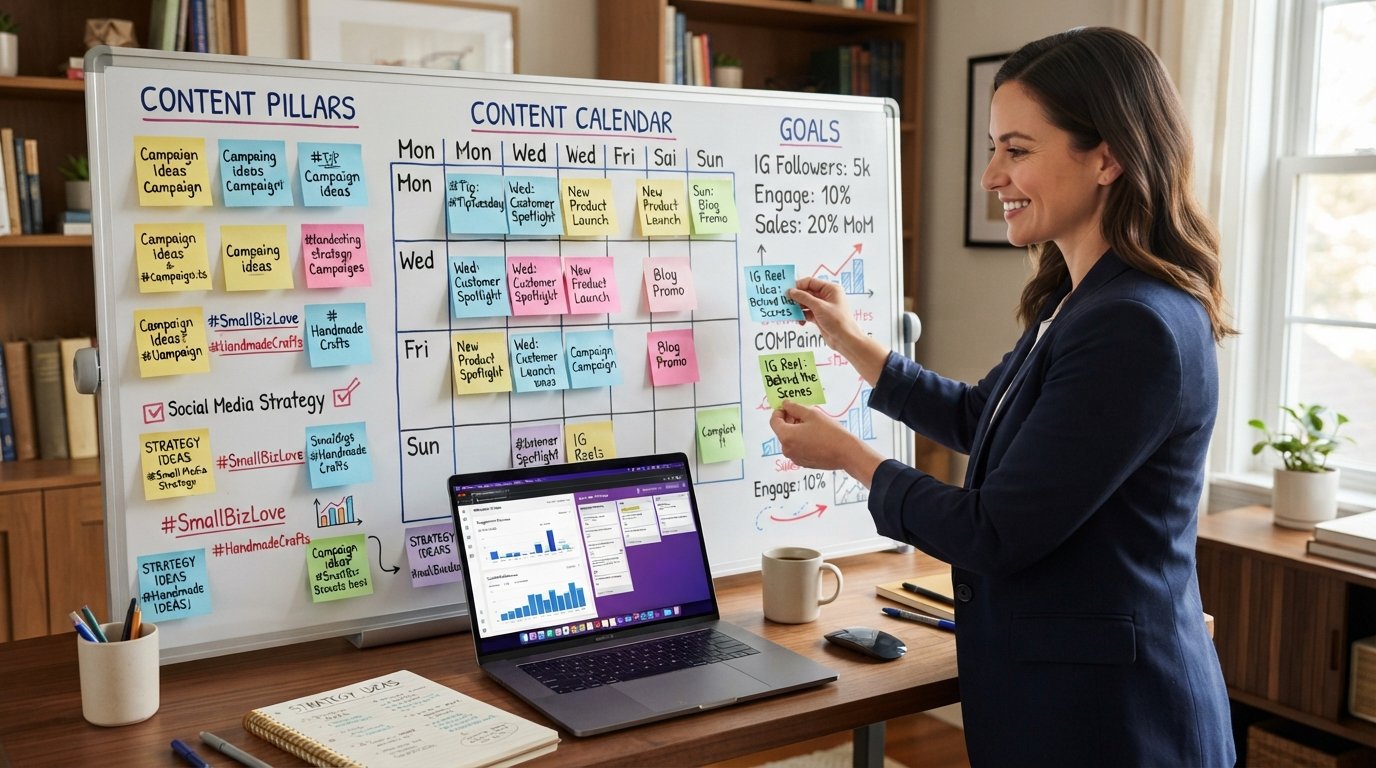
How to Manage Social Media Marketing for Small Business
Learn how to manage social media marketing for small business effectively & proven strategies, planning tips, and tools to grow...
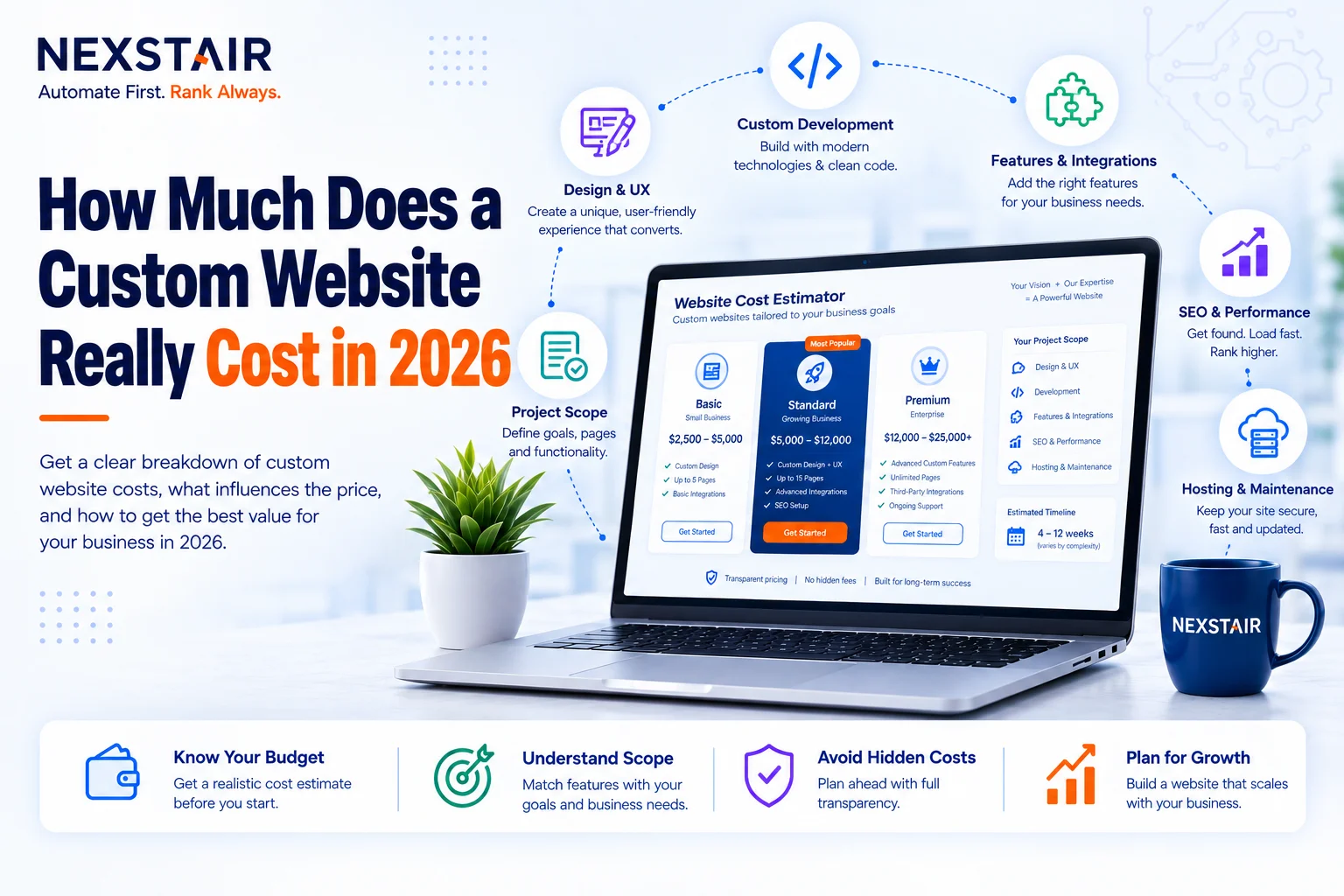
How Much Does a Custom Website Cost in 2026
Ask five agencies what a custom website costs and you’ll get five different numbers, and none of them will be...
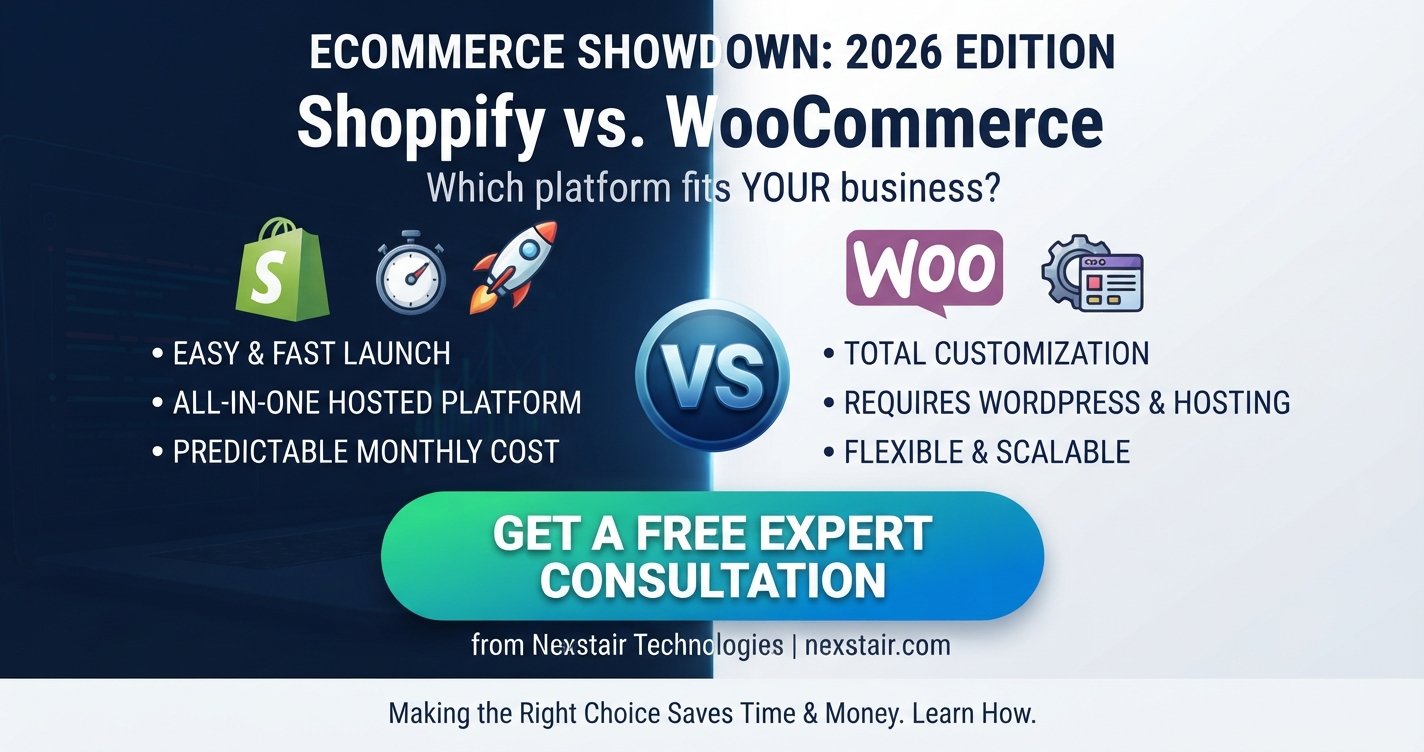
Shopify vs WooCommerce: Choosing the Right Ecommerce Platform
Choosing an ecommerce platform is one of those silent factors that can impact your monthly costs, your developer's pain,...