
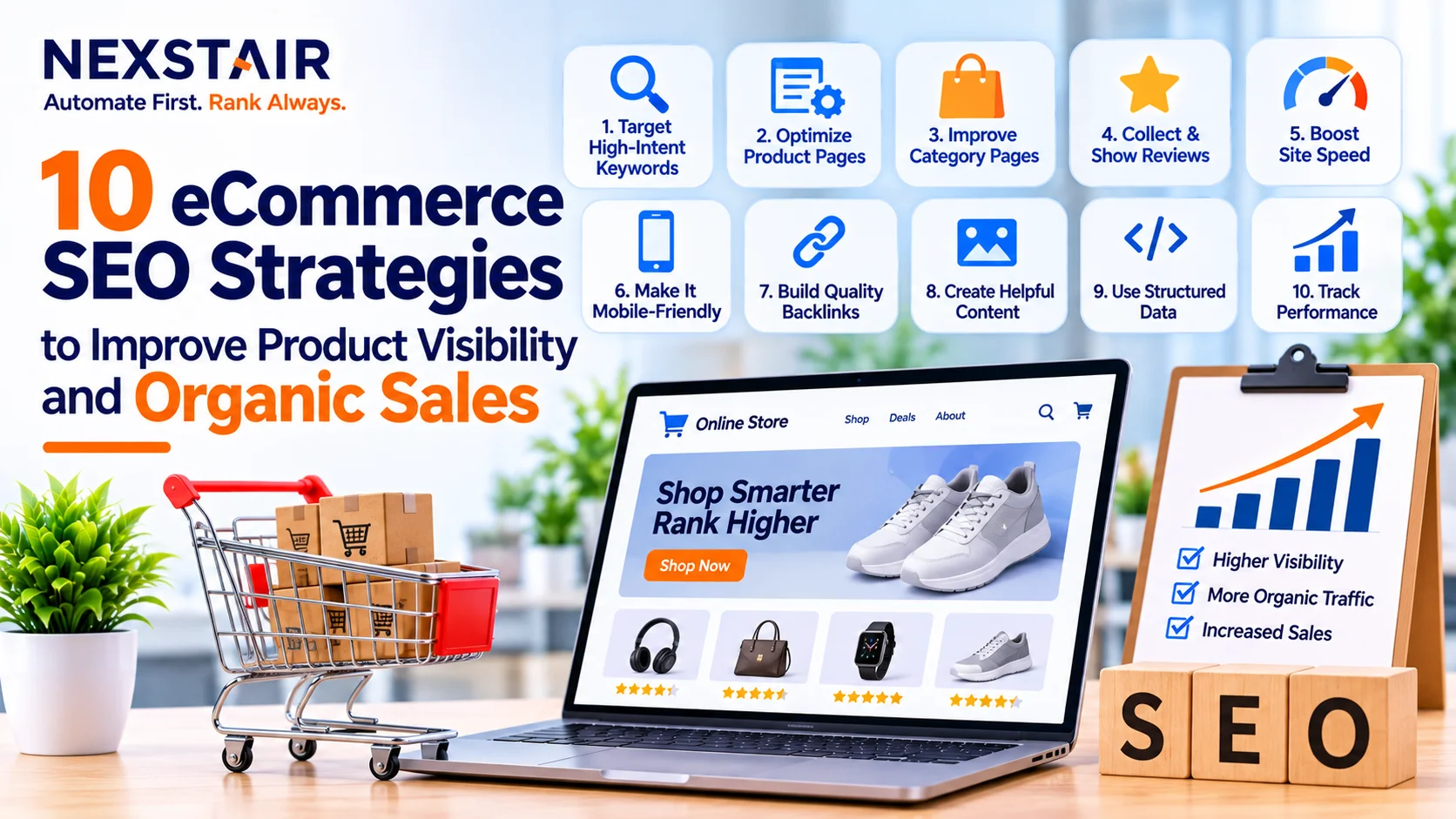
10 eCommerce SEO Strategies to Improve Product Visibility and Organic Sales
Running an online store is about more than adding products and waiting for customers to find them. With thousands of competing websites targeting the same shoppers, your store needs a clear search engine optimization strategy to reach people who are actively looking for your products.
eCommerce SEO helps online businesses improve their visibility in organic search results, attract relevant visitors, and make it easier for shoppers to discover products. However, effective optimization involves much more than adding keywords to product descriptions. It requires a combination of keyword research, technical improvements, product page optimization, content development, and a better shopping experience.
Whether you operate a Shopify store, WooCommerce website, or custom eCommerce platform, the right strategies can help you build sustainable organic visibility.
In this guide, we’ll explore 10 practical eCommerce SEO strategies that can help improve your store’s search performance and support long-term business growth.
1. Start With eCommerce Keyword Research
Keyword research is the foundation of a successful eCommerce SEO strategy. It helps you understand what potential customers search for when researching products, comparing options, or preparing to make a purchase.
Not every keyword has the same purpose. Some shoppers are looking for information, while others are ready to buy. Your keyword strategy should reflect these different stages of the customer journey.
For example, an online store selling skincare products might target:
- Informational: How to choose a moisturizer for dry skin
- Commercial: Best moisturizers for sensitive skin
- Transactional: Buy fragrance-free moisturizer online
- Navigational: Brand or product-specific searches
How to Find Relevant eCommerce Keywords
Start by researching the terms customers use to describe your products. You can use tools such as Google Keyword Planner, Google Search Console, Ahrefs, and Semrush to discover keyword opportunities.
Focus on:
- Product-specific keywords
- Category and collection keywords
- Long-tail search phrases
- Comparison and buying-related searches
- Questions customers ask before purchasing
Long-tail keywords are especially useful because they often describe a more specific need. Instead of targeting a broad phrase such as “running shoes,” a store could target “lightweight running shoes for beginners.”
The goal is to match the right search terms with the right pages instead of targeting every keyword on a single page.
2. Optimize Product Pages for Search and Customers
Product pages are among the most important pages on an eCommerce website. They provide the information shoppers need to understand a product and decide whether it meets their requirements.
A well-optimized product page should help both search engines and visitors understand exactly what you sell.
Important Product Page SEO Elements
Product Titles: Write clear, descriptive titles that include the product name and relevant attributes. Avoid unnecessary keyword repetition.
Product Descriptions: Create unique descriptions that explain product features, benefits, materials, dimensions, compatibility, and other useful details. Avoid copying manufacturer descriptions across multiple pages.
Meta Titles and Descriptions: Write unique metadata that accurately represents each product. Include the main search phrase naturally and give shoppers a reason to visit the page.
Product Images: Use high-quality images with descriptive file names and meaningful alt text. Optimize image file sizes to support faster loading.
Product Reviews: Display genuine customer reviews where available. They can help shoppers evaluate products and make more confident purchasing decisions.
For example, instead of using a generic title such as “Men’s Shoes,” a more descriptive product title could be “Men’s Lightweight Running Shoes for Daily Training.”
The more useful and specific your product information is, the easier it becomes for customers to evaluate your products.
3. Improve Category and Collection Page SEO
Category pages organize products into relevant groups and help shoppers navigate your store. They also provide opportunities to rank for broader product-related searches.
For example, an online clothing store may have categories such as:
- Men’s Jackets
- Women’s Running Shoes
- Summer Dresses
- Winter Accessories
Each important category should have a clear focus and useful information.
Category Page Optimization Checklist
- Create a unique title tag and H1 heading.
- Add a short, helpful category introduction.
- Use relevant keywords naturally.
- Organize products into logical subcategories.
- Add internal links to related collections.
- Make product listings easy to browse.
- Avoid duplicate category descriptions.
Category pages should not exist only to display a grid of products. Useful introductory content, clear navigation, and relevant product selections can help search engines understand the page and help visitors find what they need.
4. Build a Strong Internal Linking Structure
Internal links connect different pages within your website. They help search engines discover content and understand how products, categories, and informational resources relate to one another.
A good internal linking strategy also makes it easier for visitors to move from researching a product to exploring relevant products.
For example, a store selling home furniture could connect:
- A blog about choosing a sofa to its sofa category.
- A living room furniture category to individual product pages.
- A product page to related accessories.
- A buying guide to relevant product collections.
Internal Linking Best Practices
- Link from relevant blog posts to product and category pages.
- Use descriptive anchor text that explains the destination.
- Add breadcrumbs to improve website navigation.
- Link related products and collections where useful.
- Make important pages accessible through your main navigation.
Avoid adding links simply to increase their number. Every internal link should help users discover something relevant.
5. Improve Website Speed and Mobile Experience
A slow online store can make shopping frustrating. Visitors may leave before product images load, filters respond, or checkout pages become accessible.
Mobile experience is equally important because many shoppers browse and purchase products using smartphones.
Google’s Core Web Vitals provide useful measurements of real-world loading performance, responsiveness, and visual stability.
Website Performance Areas to Review
Loading Performance: Optimize large images, reduce unnecessary scripts, and use appropriate caching.
Mobile Responsiveness: Make sure product images, navigation, buttons, and product information work properly on smaller screens.
Navigation: Keep menus simple and make important categories easy to access.
Page Stability: Avoid unexpected layout shifts caused by images, banners, or dynamically loaded elements.
Checkout Experience: Make the purchasing process straightforward and remove unnecessary steps where possible.
You can use Google PageSpeed Insights and Google Search Console to identify performance issues and monitor improvements.
Remember that improving website speed is not just a technical task. It also helps create a smoother shopping experience.
6. Use Product and Review Structured Data
Structured data is additional information added to website pages to help search engines understand their content.
For eCommerce websites, Product structured data can communicate useful details such as product names, prices, availability, and review information when the relevant data is present and eligible.
Types of Structured Data That May Help eCommerce Websites
- Product schema
- Product offer information
- Review and aggregate rating data
- Breadcrumb schema
- Organization information
For example, Product structured data can help search engines interpret information about a product and may make the page eligible for enhanced search appearances.
However, adding schema does not guarantee rich results or higher rankings. The structured data must be accurate, relevant, and consistent with the visible information on the page.
Use Google’s Rich Results Test and Search Console reports to check eligible structured data and identify errors.
7. Create Helpful Content Around Your Products
Product pages are important, but they may not answer every question customers have before making a purchase.
This is where content marketing supports your eCommerce SEO strategy.
Informational content helps your website reach shoppers who are researching products, learning about features, or comparing available options.
For example, a store selling fitness equipment could publish:
- How to Choose the Right Treadmill for Home Use
- Treadmill vs. Exercise Bike: Which Is Better?
- Best Home Workout Equipment for Beginners
- How to Maintain Your Home Fitness Equipment
How Supporting Content Helps Your Store
Helpful content can:
- Attract visitors during the research stage.
- Answer common customer questions.
- Build topical relevance around your products.
- Create internal linking opportunities.
- Introduce visitors to relevant product categories.
Create content based on genuine customer needs rather than publishing articles only to include keywords.
A useful buying guide should provide practical advice, explain important product differences, and link naturally to relevant products or categories.
8. Manage Duplicate Content and Product URL Issues
Duplicate content is a common challenge for eCommerce websites, particularly stores with large product catalogs, product variations, and filtering systems.
For example, a clothing store may allow shoppers to filter products by color, size, brand, and price. These filters can sometimes generate multiple URLs showing nearly identical product listings.
If search engines discover too many unnecessary URL variations, it can make crawling and indexing more difficult.
How to Manage Duplicate Content
- Use canonical tags to identify preferred versions of similar pages.
- Review product variants and their URL structure.
- Control unnecessary filter and parameter URLs.
- Avoid publishing multiple pages with nearly identical descriptions.
- Redirect permanently removed products to relevant alternatives when appropriate.
- Review indexing and canonical reports in Google Search Console.
Not every similar page needs to be removed or blocked. The correct solution depends on the purpose of the page and whether it offers unique value to shoppers.
A regular technical SEO review can help identify these problems before they affect important product and category pages.
9. Build Relevant Backlinks and Brand Authority
Backlinks are links from other websites that point to your store. Relevant links can help search engines discover your website and understand how it is referenced across the web.
However, link building should focus on quality and relevance rather than collecting as many links as possible.
Practical Link Building Opportunities for eCommerce Stores
Industry Publications: Contribute useful insights or expert commentary to relevant publications.
Product Reviews: Build relationships with legitimate reviewers who cover products in your industry.
Digital PR: Share original research, product insights, or useful resources that other websites may want to reference.
Supplier and Partner Links: Look for relevant opportunities to be listed on legitimate supplier, manufacturer, or business partner websites.
Useful Resources: Publish buying guides, comparison resources, and original content that naturally attracts references.
Avoid buying spammy backlinks or participating in link schemes. A sustainable strategy prioritizes relevance, editorial value, and genuine brand relationships.
10. Track SEO Performance and Improve Based on Data
SEO is not a one-time activity. Search behavior, product demand, competitors, and website performance change over time.
Tracking the right metrics helps you understand which pages are performing well and where improvements are needed.
Important eCommerce SEO Metrics
| Metric | What It Helps You Understand |
|---|---|
| Organic clicks | How many visitors arrive through organic search |
| Impressions | How often your pages appear in search results |
| Click-through rate | How frequently search impressions generate clicks |
| Keyword rankings | How your important search terms perform |
| Organic conversions | How many organic visitors complete valuable actions |
| Revenue from organic search | How much revenue is attributed to organic traffic |
| Indexed pages | Whether important pages are available in search indexes |
Google Search Console helps you monitor impressions, clicks, CTR, and search queries. Google Analytics 4 can help you understand user behavior and track relevant eCommerce events.
Don’t judge success through rankings or traffic alone. A page that attracts visitors who never engage with your products may need better keyword targeting, content, or user experience.
Use performance data to identify opportunities, improve underperforming pages, and prioritize changes that support business goals.
eCommerce SEO Strategies for Shopify and WooCommerce
The platform you use can affect how you implement your SEO strategy. Shopify and WooCommerce both support important SEO improvements, but their settings and technical requirements are different.
Shopify SEO
Shopify provides built-in features such as XML sitemaps, canonical tags, and editable metadata. However, store owners still need to manage product descriptions, collection content, navigation, image optimization, and indexation.
A Shopify SEO strategy should review:
- Product and collection page optimization
- Duplicate URLs and canonical handling
- Theme performance and mobile experience
- Structured data implementation
- App-related performance issues
- Internal linking and content structure
WooCommerce SEO
WooCommerce runs on WordPress, giving store owners flexibility over website structure, content, and technical configuration.
Important areas to review include:
- SEO-friendly product and category URLs
- Unique product descriptions
- XML sitemap configuration
- Canonical tags and indexation settings
- Product schema and review markup
- Plugin and theme performance
- Product attribute and filter URL management
Both platforms can support strong organic search performance. The key is implementing the right strategy for the store’s catalog, technical setup, and business objectives.
Common eCommerce SEO Mistakes to Avoid
Even a well-designed online store can struggle in search results if important SEO issues are overlooked.
Watch out for these common mistakes:
- Using the same product descriptions across multiple pages.
- Targeting broad keywords without considering search intent.
- Ignoring category and collection page optimization.
- Uploading large product images without compression.
- Allowing unnecessary filter URLs to be indexed.
- Creating product pages without useful internal links.
- Publishing content that does not help potential customers.
- Ignoring mobile usability and website performance.
- Measuring success through rankings without tracking conversions.
Regularly reviewing these areas can help keep your store technically healthy and make its content more useful to customers.
Final Thoughts
Growing an online store through organic search requires a strategy that connects technical SEO, product optimization, content, and user experience.
From researching the right keywords to improving category pages, managing duplicate URLs, and tracking conversions, every part of your eCommerce SEO strategy should support the same goal: helping relevant shoppers discover your products and make informed purchasing decisions.
You don’t need to implement every change at once. Start by reviewing your highest-value product and category pages, identify technical issues, and prioritize improvements based on their potential business impact.
If your online store needs a more comprehensive SEO strategy, explore Nexstair’s eCommerce SEO services to learn how a structured approach can support your store’s organic growth.
Frequently Asked Questions
1. What is eCommerce SEO?
eCommerce SEO is the process of improving an online store’s visibility in organic search results. It includes keyword research, product and category page optimization, technical SEO, content development, internal linking, and other activities that help shoppers discover products through search engines.
2. Why is SEO important for an online store?
SEO helps online stores reach people who are actively searching for their products. It can improve organic visibility, bring relevant visitors to product and category pages, and support long-term customer acquisition without relying entirely on paid advertising.
3. How can I improve my product page SEO?
Start with unique product titles and descriptions, relevant keywords, optimized images, descriptive alt text, accurate product information, internal links, and appropriate Product structured data. Make sure the page also provides a helpful shopping experience on mobile devices.
4. Is Shopify or WooCommerce better for SEO?
Both Shopify and WooCommerce can support effective SEO. Shopify provides several built-in technical features, while WooCommerce offers flexibility through WordPress and its ecosystem. The better option depends on your business requirements, technical resources, and store management preferences.
5. How long does eCommerce SEO take to show results?
SEO timelines vary depending on competition, website condition, catalog size, content quality, and implementation. Some improvements may become visible earlier, while meaningful organic growth generally requires consistent work and monitoring over time.
6. What should I track to measure eCommerce SEO success?
Monitor organic clicks, impressions, CTR, keyword performance, indexed pages, organic conversions, and revenue attributed to organic search. These metrics provide a more complete picture than keyword rankings alone.
Recent Posts
Related Posts
Running an online store is about more than adding products and waiting for customers to find them. With thousands of...

SEO for tour operators and travel agencies (travel SEO) is the practice of earning organic Google traffic from travelers who...

A digital marketing agency is an outside team that plans, runs, and measures a business's online marketing across search engine...
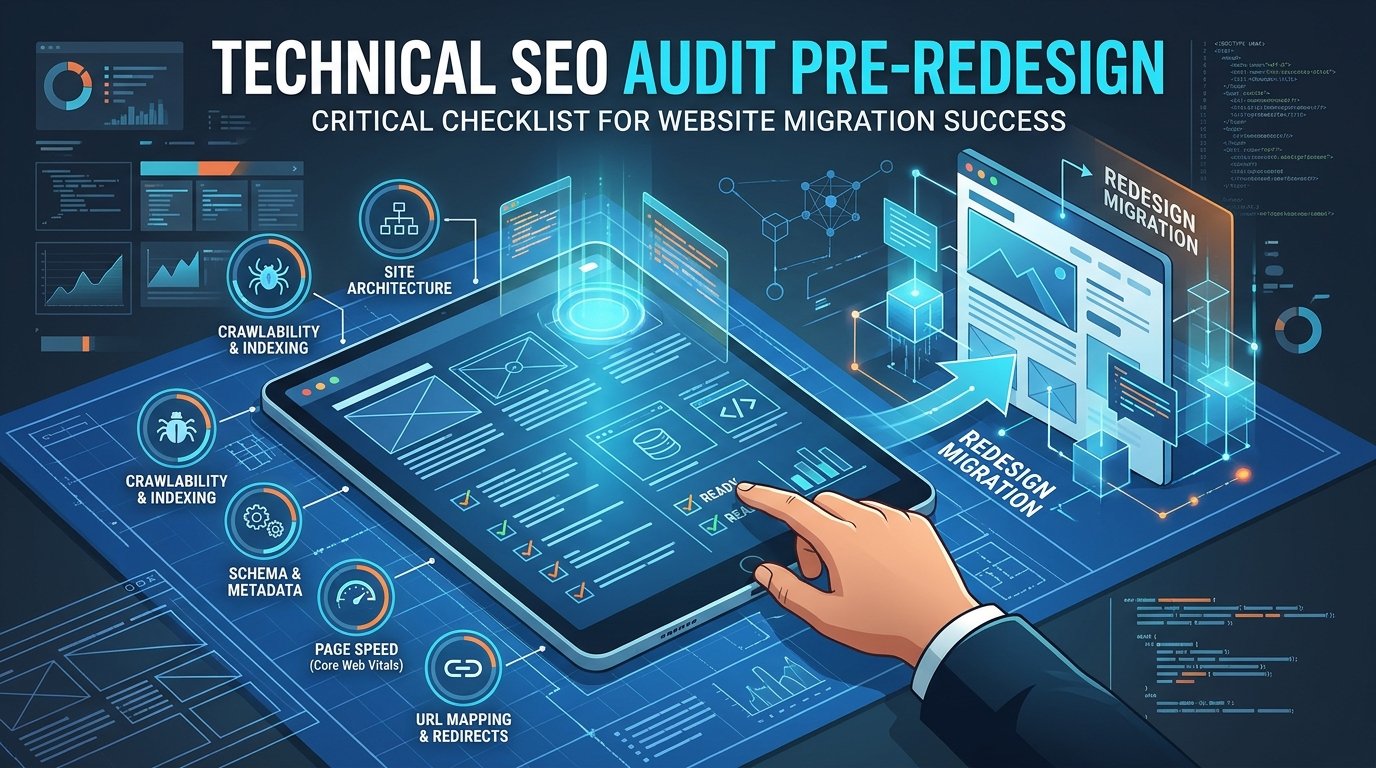
A website redesign is exciting. New layout, fresh branding, better user experience. It is also one of the easiest ways...

Growing a travel brand on Instagram means turning attention on the platform into inquiries and paid bookings, not just a...