
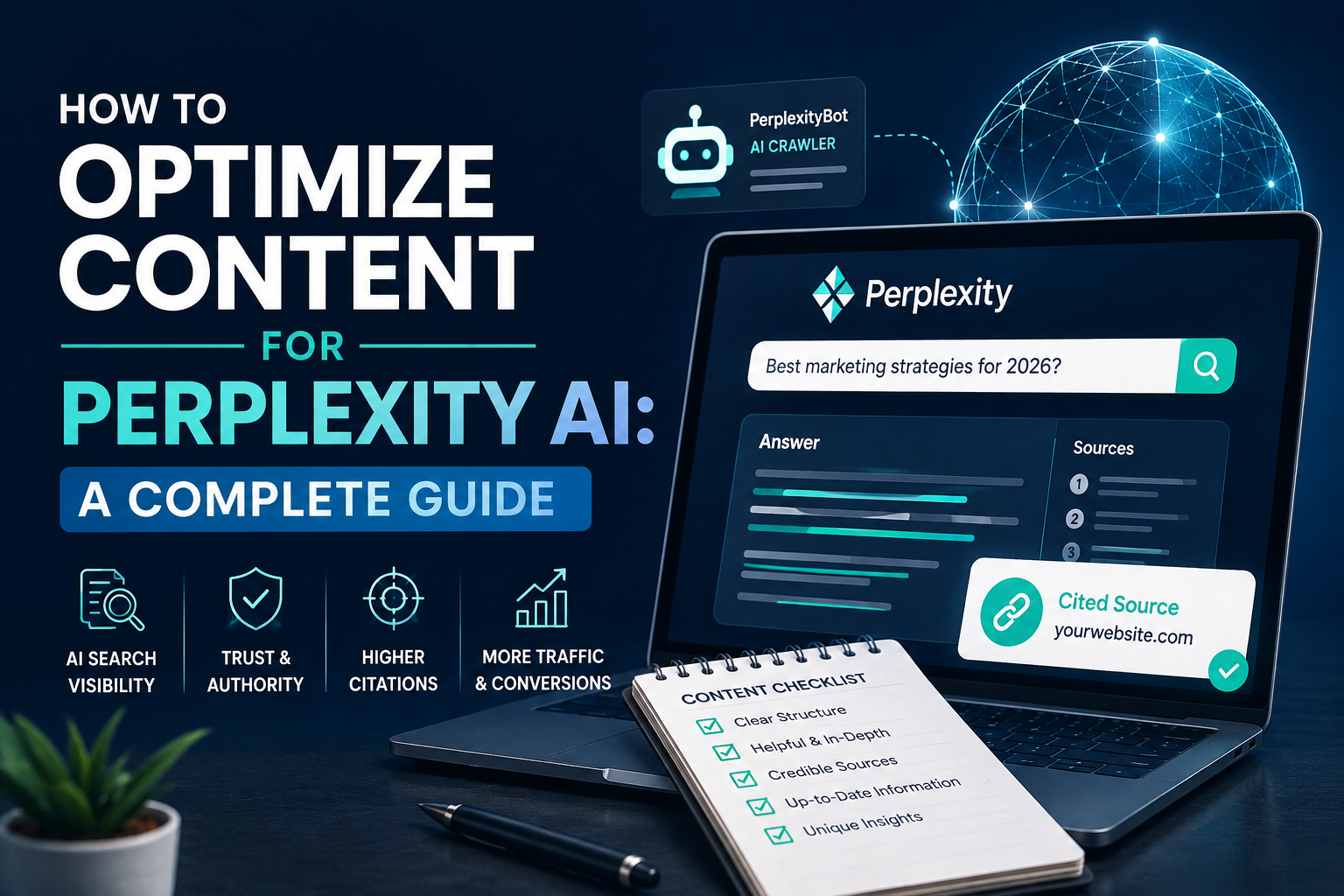
How to Optimize Content for Perplexity AI: Complete Guide
Knowing how to optimize content for Perplexity AI is quickly becoming as important as ranking on Google, since Perplexity now filters through roughly ten candidate pages per query and cites only a handful of them in its final answer. That narrow window rewards brands that structure their content deliberately, not the ones simply hoping their existing SEO carries over. If you want a shortcut past the trial and error, Nexstair Technologies can audit your content against Perplexity’s citation criteria and show you exactly what to fix before your competitors lock in the citations you’re aiming for.
Perplexity has grown from a niche research tool into a mainstream answer engine, and it now sends a meaningful share of qualified, high-intent traffic to the brands it cites. Unlike a blue link buried under an AI summary, a Perplexity citation appears at the exact moment someone is actively researching a decision, which is why that traffic converts at a noticeably higher rate than typical organic clicks. This guide answers the questions that actually determine whether your content gets pulled into a Perplexity answer or passed over for a competitor’s, from how the retrieval system works to the exact content structure that earns a citation.
What Is Perplexity AI and How Does It Find Content to Cite?
Perplexity is an AI answer engine built on retrieval-augmented generation (RAG), which means it does not rely primarily on a pre-trained internal dataset the way a chatbot might. Instead, when someone asks a question, Perplexity searches the live web in real time, retrieves a set of candidate pages, and synthesizes an answer built from the passages that best address the query, with inline citations linking back to the original sources.
That live-retrieval model is the core reason Perplexity optimization looks different from traditional SEO. Because every answer is assembled fresh from current web content, a page can start earning citations almost immediately after it is published and properly structured, without waiting for the slower ranking cycles typical of classic search.
Why Does Perplexity Optimization Matter for Your Brand in 2026?
Perplexity’s scale has moved well past the experimental stage. Query volume grew from roughly 230 million to 780 million monthly queries between August 2024 and May 2025, and industry estimates put it at 1.2 to 1.5 billion monthly queries by mid-2026. Across the broader AI search category, visit volume grew more than 40% year over year, reaching tens of billions of visits in the first quarter of 2026 alone.
What makes this channel worth prioritizing is not just volume, it is quality. AI referral traffic converts roughly three times as often as traditional organic channels, and Perplexity users specifically tend to spend significantly longer on the pages they land on after clicking a citation, since they arrived already convinced the source was credible enough to click through and verify. Brands that ignore Perplexity are not just missing a growing channel, they are ceding a high-converting one to competitors willing to structure their content for it.
How Does Perplexity’s Retrieval and Ranking System Actually Work?
Understanding the pipeline behind a Perplexity answer clarifies exactly what you are optimizing for. The process runs in roughly five stages: query parsing to determine intent, real-time retrieval where PerplexityBot and connected search infrastructure crawl the live web, vector matching where retrieved content is converted into numerical representations and filtered for semantic relevance, quality reranking through a machine learning model that scores sources on authority and trust signals, and finally answer generation, where the system synthesizes the highest-scoring passages into a coherent response with numbered citations.
The reranking stage matters most for content strategy. Perplexity typically retrieves around ten candidate pages per query but cites only three or four of them, which means the filter is aggressive. For queries about specific brands, companies, or named entities, that filtering appears to run even stricter, since Perplexity has extra incentive to verify a source before attaching a specific claim to a named entity in its answer. The practical takeaway is that ranking on Google no longer guarantees citation on Perplexity. The two systems reward overlapping but distinct qualities, and content built purely for classic keyword ranking often fails Perplexity’s extraction and verification filters even when it performs well in traditional search.
Is Your Site Technically Accessible to Perplexity’s Crawlers?
Before any content strategy can work, Perplexity’s systems need to be able to reach your pages in the first place. This is the step most commonly overlooked by sites that otherwise rank well.
How do I allow PerplexityBot in robots.txt?
Add an explicit Allow directive for PerplexityBot in your robots.txt file rather than assuming the default configuration permits it. Many sites unintentionally block AI crawlers through blanket disallow rules originally written for unrelated bots, which silently removes them from Perplexity’s candidate pool. Validate any change with a crawler simulator before publishing, since a syntax error in robots.txt can accidentally block Googlebot as well and cost you traditional search visibility in the process.
What if my WAF or firewall is blocking the crawler?
Robots.txt is only part of the picture. If your site runs behind a web application firewall or a security plugin, check the bot-management rules separately, since these systems often block unfamiliar crawler user-agents by default regardless of what robots.txt says. If you add crawler access but see no PerplexityBot activity in your server logs within about two weeks, a firewall or CDN layer blocking the bot outside of robots.txt is the most likely explanation.
Does a visible publish or update date matter?
Yes. Perplexity favors fresh, recently verified content, and a clearly visible publish or last-updated date gives the retrieval system an easy signal to confirm recency. Pages without a visible date are harder for the system to confidently treat as current, even if the underlying content was recently revised.
How Should You Structure Content So Perplexity Can Cite It?
Perplexity cites specific passages, not entire pages, which means the internal structure of your content matters as much as the topic itself.
What is the Answer-Evidence-Depth pattern?
The most effective structure for AI-citable content follows a three-part pattern within each section. Open with a direct, self-contained answer in the first fifty words or so, written so that a reader who saw only that sentence would still have a complete answer to the question. Follow it with supporting evidence, roughly the next hundred to hundred-fifty words, made up of specific data, statistics, or cited sources that validate the answer. Then expand into depth, covering context, examples, and edge cases that build out the surrounding detail. This pattern mirrors exactly how Perplexity’s reranker evaluates a passage: can it stand alone as a complete answer, and is it backed by verifiable specifics.
How specific should headings be?
Frame headings as the literal question a user would type or speak, rather than a vague label. A heading like “Pricing” gives Perplexity little to match against a real query, while “How much does Perplexity optimization typically cost?” maps directly to how people phrase questions in the tool itself, which increases the odds that section gets retrieved and matched to the right query.
Should content answer the question within the first 100 words?
Yes. Perplexity’s retrieval system weighs how quickly a page delivers a direct answer to the implied question, and burying that answer several paragraphs in reduces the odds the passage gets selected at all, even if the answer eventually appears later on the page.
What Content Qualities Increase Perplexity Citation Rates?
A handful of specific content qualities consistently separate cited pages from passed-over ones.
- Quantified, verifiable claims outperform vague statements. A sentence citing a specific percentage or figure is more likely to be selected than a general assertion making the same point, because Perplexity prioritizes content it can defend with concrete evidence.
- Semantic concept density matters. Research comparing cited and uncited content found that cited pages contain roughly a third more explicit, named concepts per section, meaning content that names specific entities, terms, and related ideas outperforms content that stays generic.
- Direct quotations and named sources add credibility. Passages that attribute a claim to a specific study, expert, or dataset give the reranker an easier path to trust the content enough to cite it.
- Schema markup makes content easier to extract. FAQPage, HowTo, and Article schema give Perplexity a machine-readable map of your content’s structure, reducing the inference work needed to confirm what a section is actually answering.
- Multi-platform presence reinforces credibility. Content that is consistently published and referenced across your own site, industry publications, and other authoritative sources builds the kind of cross-verified authority Perplexity’s ranking model favors.
Not sure whether your content is structured for Perplexity’s citation filters? Get a free AI search visibility audit from Nexstair Technologies and see exactly where the gaps are.
Does Topical Authority and Content Clustering Help on Perplexity?
Yes, and the effect is more pronounced on Perplexity than on traditional search. Perplexity’s retrieval system appears to reward interconnected content clusters, groups of five to ten related articles on a subject that link to each other and each cover a distinct angle of the same topic, over a single standalone article on the same subject. When a user asks a question within that topic area, the retrieval system can identify the full cluster as a coherent body of expertise, which functions as a stronger authority signal than one isolated page ever could.
Building a cluster means mapping the core subtopics within your area of expertise, publishing dedicated pages for each one, and linking them together deliberately rather than leaving them as disconnected posts. Brand search volume plays a role here too. Research has found a meaningful correlation between how often people search for a brand directly and how often that brand’s content gets cited in AI answers, which reinforces that off-site brand-building and on-site content structure work together rather than separately.
How Do You Track Whether Perplexity Is Citing Your Content?
Standard analytics setups often miss Perplexity traffic entirely, so tracking requires a few deliberate steps.
- Segment referral traffic from perplexity.ai in Google Analytics. This isolates sessions that arrived via a citation click, letting you study behavior metrics like session duration, which tends to run meaningfully longer for Perplexity referrals than average organic traffic.
- Manually test target queries inside Perplexity. Periodically search the questions your content is built to answer and check whether your domain appears among the citations, since this is the most direct way to confirm visibility.
- Use AI-visibility tracking tools where available. Emerging tools built specifically to monitor citation appearances across AI search platforms can automate what would otherwise be manual, repetitive testing.
- Benchmark against competitors being cited in your space. If a competitor consistently appears in answers to questions your content also targets, that is a direct signal their structure, freshness, or evidence density is currently outperforming yours.
What Common Mistakes Keep Content Out of Perplexity Citations?
A few recurring issues explain most of the gap between sites that get cited consistently and sites that never appear at all.
- Blocking PerplexityBot without realizing it. A leftover disallow rule, an aggressive WAF setting, or a security plugin can silently remove a site from consideration regardless of content quality.
- Burying the answer instead of leading with it. Content that builds up to an answer through several paragraphs of preamble loses out to competitors who state the answer immediately.
- Relying on vague claims instead of specific data. General statements without numbers, sources, or named specifics are the passages Perplexity’s reranker is least likely to trust enough to cite.
- Publishing isolated articles instead of topic clusters. A single strong page on a subject often loses to a competitor’s smaller cluster of interlinked, narrower articles covering the same territory.
- Letting content go stale without visible updates. Perplexity favors recency, and a page with no visible update date, even if quietly revised, reads as less current than one that clearly displays when it was last reviewed.
FAQs About Optimizing Content for Perplexity AI
How is optimizing for Perplexity different from traditional SEO?
Traditional SEO optimizes for ranking position on a results page, while Perplexity optimization focuses on being retrieved, verified, and cited as a source inside a generated answer. The two overlap in fundamentals like site accessibility and content quality, but Perplexity places extra weight on answer-first structure, quantified evidence, and content freshness that classic ranking factors do not weigh as heavily.
Does PerplexityBot need to be allowed in robots.txt?
Yes, PerplexityBot must be explicitly allowed in robots.txt for your content to be eligible for citation in Perplexity’s answers. Blocking rules left over from unrelated crawler management, or firewall settings blocking unfamiliar user-agents, are among the most common reasons well-structured content never appears in Perplexity results.
How many sources does Perplexity typically cite per answer?
Perplexity generally retrieves around ten candidate pages per query but cites only three or four of them in the final answer. That narrow selection window means content needs to clearly outperform, not just match, competing pages on structure and evidence quality to be included.
Does schema markup improve Perplexity citation odds?
Yes, schema markup such as FAQPage, HowTo, and Article schema improves Perplexity citation odds by giving the system a machine-readable map of your content’s structure. This reduces the inference work required to confirm what a given section answers, which supports faster and more confident extraction.
How long does it take to start earning Perplexity citations?
Because Perplexity retrieves content from the live web in real time, well-structured new content can start earning citations within days of publication, unlike traditional SEO rankings that typically take weeks or months to establish. Consistency and topical depth still compound over time, but initial visibility can appear far faster than classic search ranking.
Do content clusters really outperform single articles on Perplexity?
Yes, a cluster of five to ten interlinked articles covering distinct angles of the same topic generally outperforms a single standalone article on Perplexity. Perplexity’s retrieval system appears to detect coordinated topic coverage as a stronger authority signal than an isolated page, even if that single page is well written.
Key Takeaways
Optimizing content for Perplexity comes down to three fundamentals: making sure PerplexityBot can actually reach your pages, structuring every section around a direct, evidence-backed answer instead of a slow build-up, and building topical depth through interlinked content clusters rather than isolated posts. The brands treating this as an ongoing practice, not a one-time technical fix, are the ones compounding visibility as Perplexity’s query volume keeps climbing.
If you want a clear picture of where your content currently stands, request a free Perplexity and AI search visibility audit from Nexstair Technologies, and if you are ready to build the content structure, schema, and cluster strategy that earns consistent citations, talk to Nexstair’s SEO team about a full AI search optimization plan.
Recent Posts
Related Posts
How to Optimize Content for Perplexity AI: Complete Guide
Knowing how to optimize content for Perplexity AI is quickly becoming as important as ranking on Google, since Perplexity now...

How to Optimize Your Website for AI Search in 2026
Search does not look like it did two years ago. Type a question into Google, Bing, or ChatGPT today and...
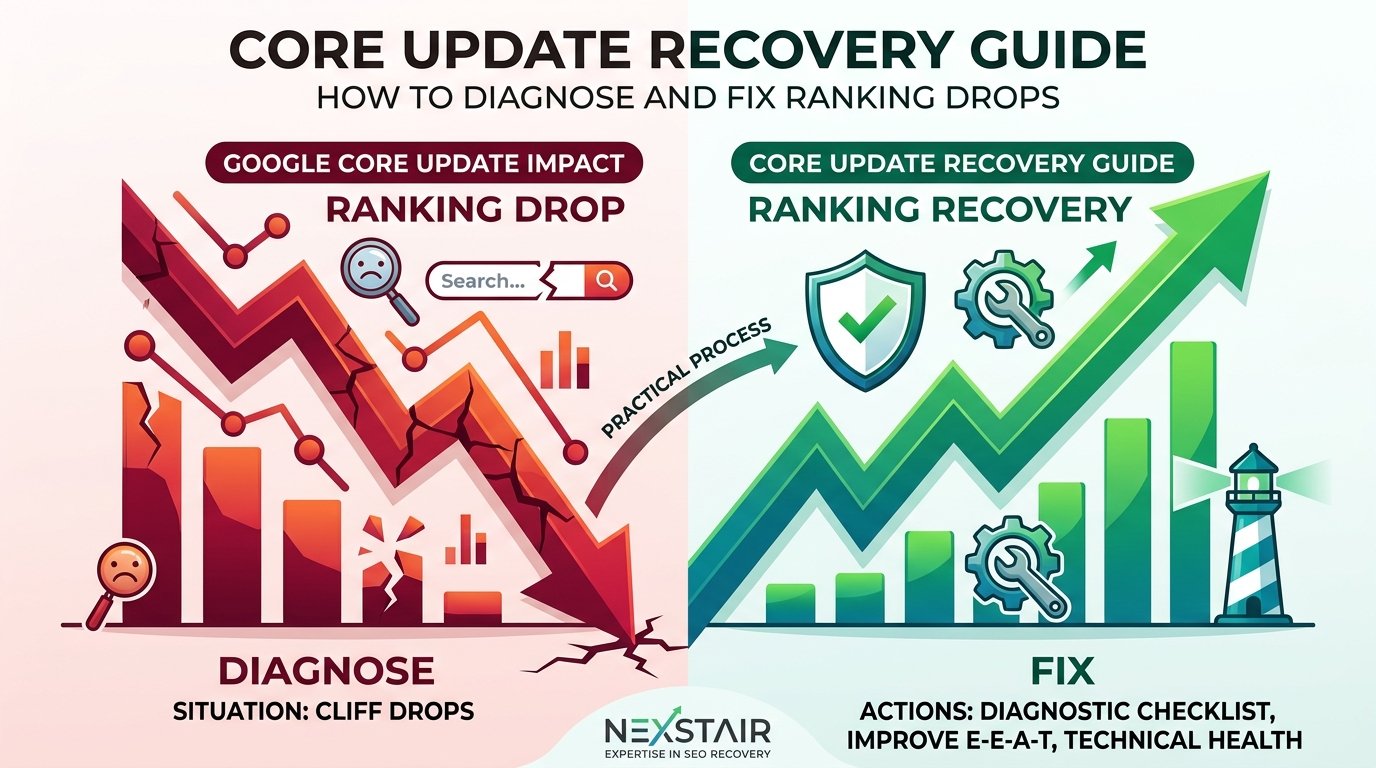
How to Fix Ranking Drops After a Core Update? Google Update 2026
Suffering from a traffic loss? Learn how to fix ranking drops after a core update with a step-by-step SEO audit,...
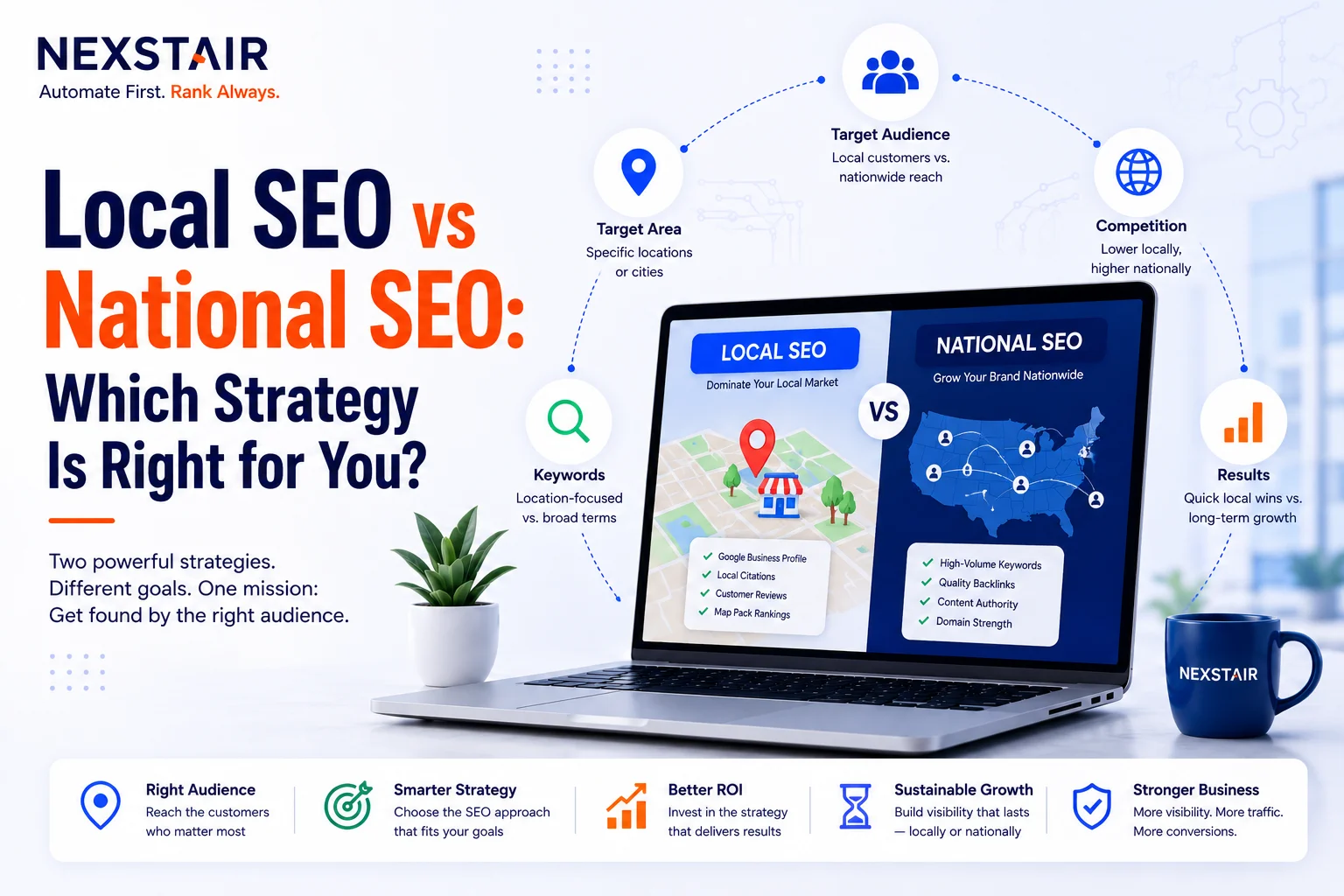
Local SEO vs National SEO: Which Strategy Is Right for You?
Local SEO gets a business ranking for a city or a service area. National SEO gets a business ranking across...

Website Design Trends That Actually Convert in 2026
Most “design trends” lists chase what looks impressive in a portfolio, not what moves a visitor toward a decision. In...