
AI Is Changing PPC Advertising: Bidding & Ad Copy in 2026
A media buyer used to spend most of a Monday morning adjusting bids by hand: checking which keywords burned budget over the weekend, nudging a few up, pausing a few down. That job barely exists anymore. Google’s and Meta’s ad platforms now make thousands of bidding decisions a minute, and the marketer’s job has shifted from setting individual bids to deciding what the algorithm should optimize for in the first place.
That shift, from manual bid management to algorithm supervision, is the real story of AI in PPC advertising. This guide covers what’s actually changed in audience targeting, bidding, ad copy, and budget allocation, what still needs a human, and how a business can start using AI-powered PPC without losing control of its ad spend. For a wider view of how AI touches every marketing channel beyond paid ads, see our complete guide to AI in digital marketing.
What Is AI-Powered PPC?
AI-powered PPC uses machine learning to handle the decisions that used to require constant manual adjustment: who sees an ad, how much to bid for that impression, which creative variation to show, and how to redistribute budget as a campaign runs. Google Ads, Meta Ads, and most other major platforms now build this directly into their bidding and campaign systems rather than treating it as an optional add-on.
The practical effect is that campaign management has moved from configuring individual settings to configuring goals and guardrails. A media buyer sets a target cost per acquisition or return on ad spend, defines audience signals, and structures creative assets, then lets the system handle execution in real time. The strategic decisions, what to optimize for and which audiences matter, still belong to a person.
AI Audience Targeting: From Segments to Signals
Traditional PPC targeting relied on broad demographic and interest segments defined manually: age range, location, a handful of interest categories. AI targeting works differently. It analyzes behavioral signals, search history, site engagement, purchase patterns, and similarity to existing customers, then finds people who match a pattern rather than a static category.
This is why Google Ads and Meta both now ask advertisers for audience signals rather than rigid audience definitions. The advertiser feeds the system a starting point, a customer list, a set of interests, past converters, and the algorithm expands from there, continuously refining who it targets based on which impressions actually convert. The result tends to be more precise than manual segmentation, but it depends heavily on the quality of the signal fed in. A vague or overly broad signal produces a vague, overly broad audience.
Automated Bidding and Smart Bidding Strategies
Smart Bidding is where AI has made the most visible difference in PPC. Instead of setting a manual cost-per-click ceiling, advertisers now typically choose a strategy like Target ROAS or Target CPA and let the algorithm bid dynamically for each auction based on the likelihood of conversion at that specific moment, accounting for device, time of day, location, and dozens of other real-time signals.
Google’s Performance Max campaigns take this further, pulling Search, Shopping, Display, YouTube, and Discover into one automated structure instead of separate campaigns for each channel. This consolidation is now the default for a large share of enterprise ad accounts, not a niche feature.
The trade-off is visibility. A manually configured campaign shows exactly which keyword or placement drove a result. An automated bidding strategy optimizes toward the stated goal but gives less granular insight into which specific signal drove which outcome. Advertisers who rely entirely on automated bidding without reviewing account-level trends, audience quality, and conversion tracking accuracy tend to be the ones surprised when performance drifts.
AI Ad Copy Generation and Creative Testing
Generating ad copy variations used to mean a copywriter manually drafting a handful of headlines and descriptions, then waiting weeks to see which combination performed best. AI tools now draft dozens of variations in minutes and platforms test them against each other automatically, serving the better-performing combination more often as data comes in.
This speed doesn’t remove the need for a human editor. AI-generated ad copy tends toward safe, generic phrasing unless it’s given specific product details, a clear offer, and a defined brand voice to work from. The advertisers getting the most value treat AI as a variation generator, then have a person select, edit, and sharpen the options that actually reflect the brand before they go live.
Creative fatigue is a related, often underestimated risk. When the same few assets run repeatedly across platforms, click-through rates decline as audiences see them too often. AI-assisted creative rotation helps by testing more variations continuously, but it still needs fresh creative input on a regular cycle, not just algorithmic reshuffling of the same three ads.
Real-Time Performance Optimization and Budget Allocation
One of the clearest gains from AI in PPC is speed of reaction. Where a manual account review might happen weekly, automated systems reallocate budget across campaigns and ad groups continuously, shifting spend toward what’s converting and away from what isn’t, often within hours rather than after a full reporting cycle.
Conversion prediction plays a role here too: rather than waiting for a click to actually convert, some platforms estimate the likelihood of conversion at the moment of the click and adjust bidding accordingly. This matters most for businesses with longer sales cycles, where the actual conversion event might happen days after the ad click.
None of this replaces the need to check whether the underlying conversion tracking is accurate. An AI system optimizing toward a broken or mislabeled conversion event will confidently optimize toward the wrong outcome, and it won’t flag that the goal itself is wrong.
Cross-Platform Considerations
Running AI-optimized campaigns across multiple platforms at once introduces a specific risk: audience overlap. When the same audience sees ads from the same brand on both Meta and TikTok, for example, combined frequency can climb past the point where it helps, and engagement starts to drop instead of improving. Structuring platforms around different funnel stages, retargeting on one, prospecting on another, reduces that overlap and keeps frequency in a useful range.
Local PPC campaigns benefit from AI targeting in a more straightforward way: geographic and intent signals combine to prioritize nearby, ready-to-convert searchers, which matters most for businesses depending on foot traffic or service-area leads.
Benefits of AI in PPC Advertising
- Faster reaction to performance data. Budget and bids adjust continuously instead of on a weekly review cycle.
- More precise targeting. Behavioral and lookalike signals often outperform static demographic segments.
- Reduced manual workload. Bid adjustments, creative testing, and reporting that used to take hours run largely on their own.
- Better creative testing at scale. Dozens of ad variations get tested simultaneously instead of a handful over several weeks.
- Cross-channel consolidation. Campaign types like Performance Max manage multiple channels from a single structure, reducing account complexity.
Risks and Limitations to Watch
- Less granular reporting. Automated strategies show what the account achieved but not always which exact keyword, placement, or audience segment drove the result.
- Garbage in, garbage out. Weak conversion tracking or vague audience signals produce confidently wrong optimization.
- Creative fatigue. Automation tests variations faster, but it still needs a steady supply of genuinely new creative, not just reshuffled versions of the same three ads.
- Over-reliance on automation. Accounts left entirely on autopilot, with no one reviewing audience quality or spend trends, tend to drift without anyone noticing until performance drops.
How to Get Started with AI-Powered PPC
- Audit conversion tracking first. Automated bidding is only as good as the conversion data it’s optimizing toward.
- Start with one Smart Bidding strategy. Test Target ROAS or Target CPA on a single campaign before shifting an entire account.
- Feed the system real audience signals. Use actual customer lists and past converters rather than broad, generic interest categories.
- Keep a human in the creative loop. Use AI to generate ad copy variations, then edit for brand voice and specificity before launch.
- Review account trends weekly, even with automation running. Check audience quality, frequency, and spend distribution rather than assuming the algorithm has it fully covered.
- Refresh creative on a set schedule. Don’t let automated testing substitute for genuinely new ad assets.
Should Your Business Automate PPC with AI?
For most advertisers running any meaningful budget, some degree of AI-assisted bidding and targeting is no longer optional. The platforms are built around it, and manually competing against AI-optimized accounts with manual bid management is a losing position on cost efficiency alone. The open question isn’t whether to use AI in PPC, it’s how much oversight to keep in place around it.
Businesses that get the best results treat AI bidding and targeting as a system to configure and monitor, not a set-and-forget solution. Clean conversion data, clear audience signals, and a regular creative refresh cycle matter more to outcomes than which specific bidding strategy gets chosen. If your team wants that oversight built in from the start rather than added after a campaign underperforms, AI-powered digital marketing services can help set up the tracking, structure, and review process around the automation, not just the automation itself.
Frequently Asked Questions
Does AI bidding always outperform manual bidding?
Not automatically, it depends on data quality. AI bidding strategies need enough conversion volume and accurate tracking to learn effectively. Accounts with low conversion volume or broken tracking often see manual bidding perform comparably until enough clean data accumulates.
What is Performance Max and how is it different from other campaign types?
Performance Max is a Google Ads campaign type that manages bidding, budget, and placement across Search, Shopping, Display, YouTube, and Discover from one structure. It trades some granular control for broader reach and automated cross-channel optimization.
Can AI write better ad copy than a human copywriter?
AI can generate more variations faster, but it doesn’t replace a copywriter’s judgment on brand voice and positioning. The best results come from using AI to draft options, then having a person edit and select what actually fits the brand.
How much conversion data does Smart Bidding need to work well?
Google generally recommends a meaningful volume of conversions per campaign per month before Smart Bidding stabilizes, though the exact number varies by account and goal. Campaigns with very low volume often need more time or a broader conversion action before automated bidding performs reliably.
Does AI targeting reduce the need for audience research?
No, it changes what that research feeds into. Instead of manually defining every audience segment, the work shifts to supplying accurate customer lists, conversion data, and audience signals for the algorithm to learn from.
What’s the biggest mistake businesses make with AI-powered PPC?
Turning on full automation without reviewing conversion tracking accuracy first. An AI system will optimize confidently toward whatever goal it’s given, even if that goal is measuring the wrong thing.
Is AI PPC advertising expensive to set up?
The tools themselves are typically built into ad platforms at no extra cost, so the investment is mostly time: auditing tracking, structuring campaigns, and reviewing performance regularly. Third-party AI ad tools with additional automation or reporting features vary in price by scale and feature set.
Recent Posts
Related Posts
Scale Your PPC Campaign Without Losing Budget
Scale your PPC campaign presents one of the most persistent dilemmas in digital marketing. When budgets increase, ad spend can...
Social Media Strategy for Small Business in 2026: Platforms, Budgets and AI Search Visibility
A social media strategy is a written plan that ties one business goal to a defined audience, two or three...
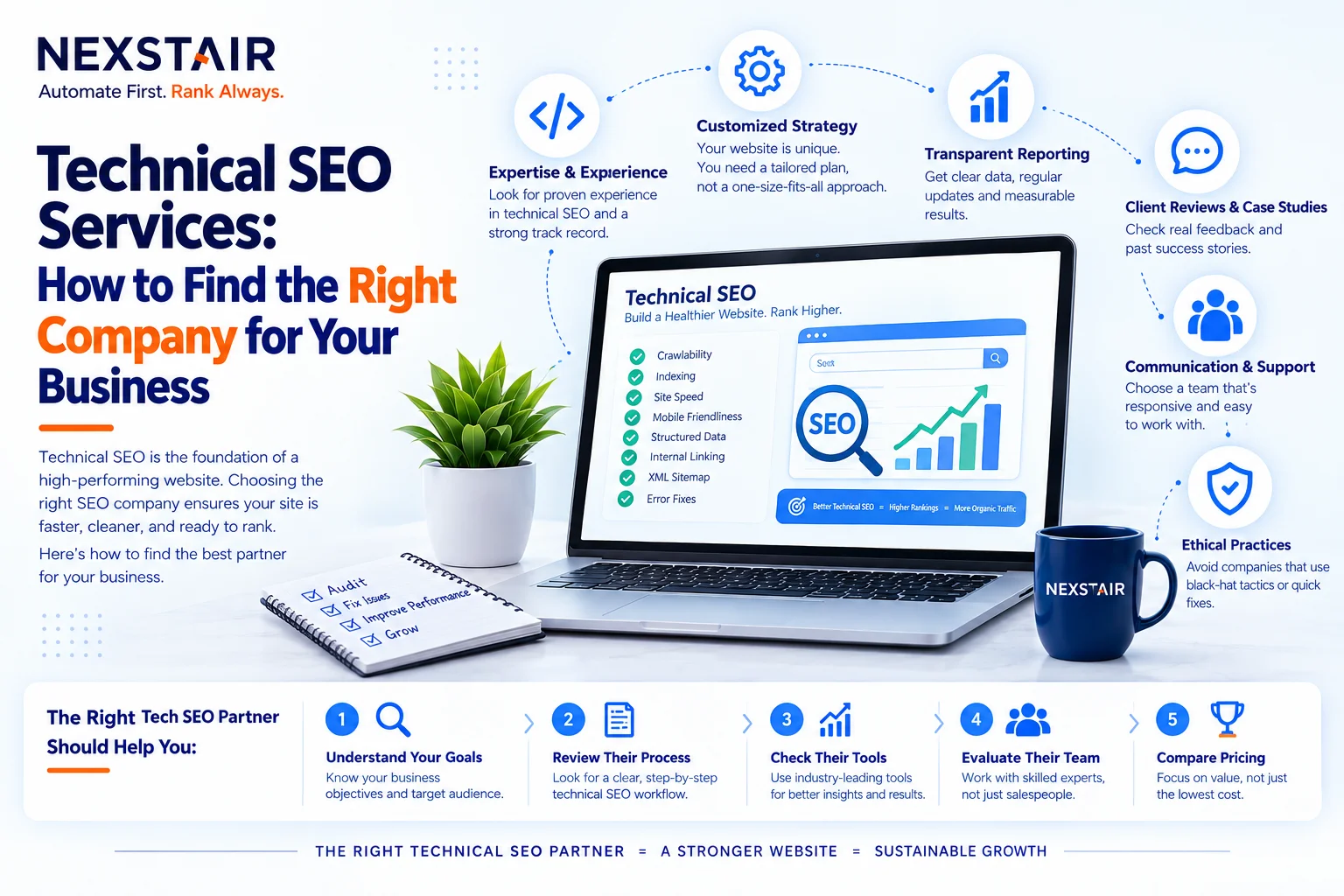
Technical SEO Services: How to Find the Right Company for Your Business
Technical SEO services (also called technical search engine optimization) are the fixes and checks that let search engines crawl, render,...
AI SEO for Small Business: What Changed in 2026 and What to Do About It
AI SEO for small business is no longer a future trend to watch. It is the environment every local shop,...
Are AI Web Crawlers Indexing Your Site Correctly?
For years, web developers have relied on JavaScript to power the modern internet, operating under the assumption that search engines...