
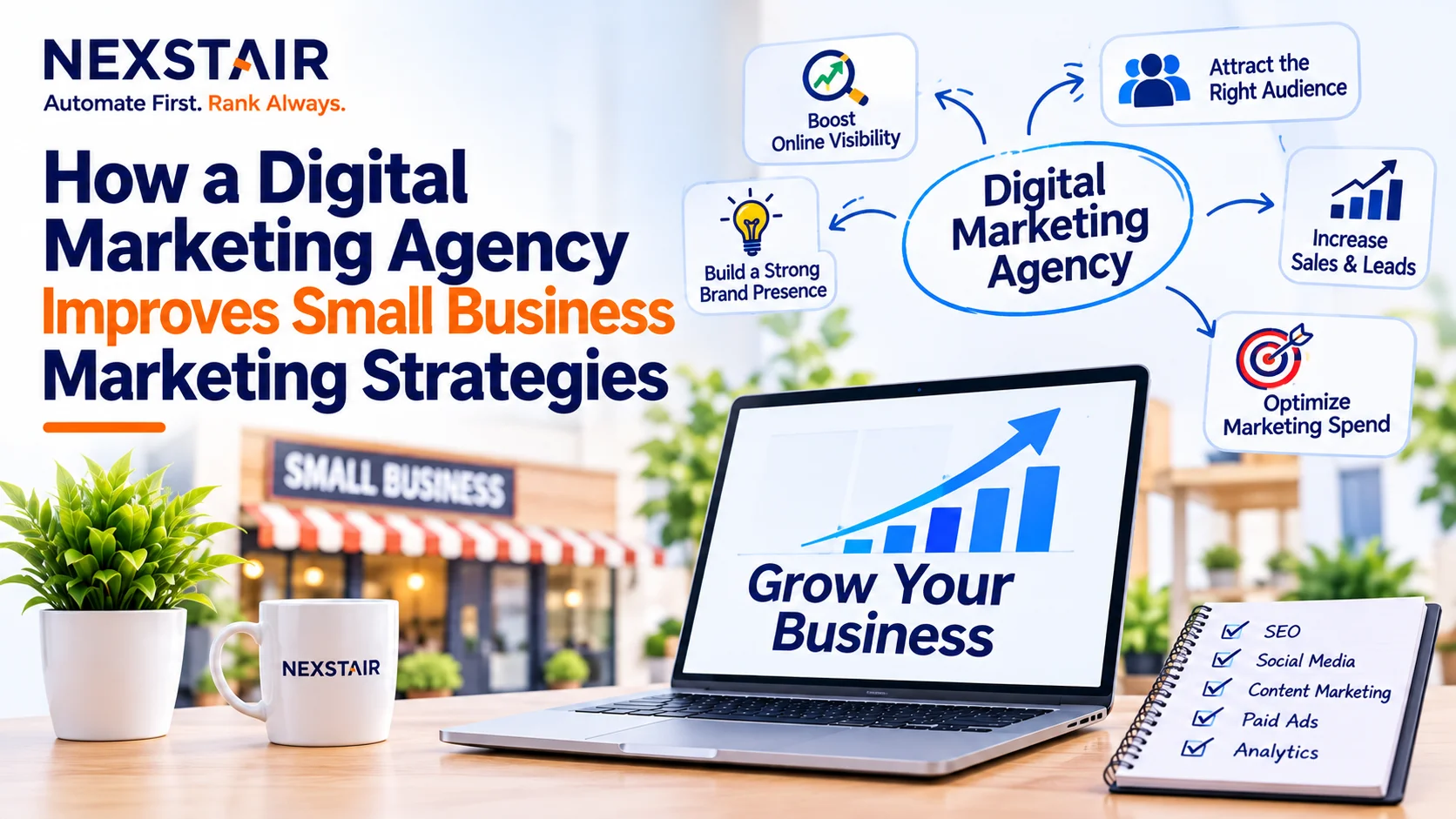
How a Digital Marketing Agency Improves Small Business Marketing Strategies
A digital marketing agency is an outside team that plans, runs, and measures a business’s online marketing across search engine optimization (SEO), social media, paid ads, email, and the website. For a small business, its main job is to replace scattered activity with one marketing strategy: a defined audience, a few chosen channels, a budget, and numbers that show what works.
Most small businesses start with tactics. A social page here, a few ads there, a website nobody has updated in three years. An agency improves the strategy by reversing that order. It audits the current setup, sets goals, picks channels, fixes the website and local listings, builds content, runs social and paid campaigns, and reports results every month. The U.S. Small Business Administration (SBA) advises businesses with revenue under $5 million to set aside 7 to 8 percent of revenue for marketing, so each of those steps competes for a limited budget.
This guide explains what an agency does at each stage of a small business marketing strategy, how the budget gets divided, how long results take, and where an agency can’t help. The sections follow the order an engagement usually runs: audit, audience and goals, channels and budget, website and local presence, content and SEO, social and paid, measurement, and timelines. The FAQs at the end answer questions on value, spend, hiring, and speed.
What a Digital Marketing Agency Actually Does
An agency works as a bundle of specialists a small business couldn’t afford to hire one by one. A single account typically draws on a strategist, an SEO specialist, a content writer, a paid media buyer, a designer, and an analyst. Each role owns one part of the plan.
The agency’s value sits in the sequence, not the headcount. Tactics run without a plan produce activity reports. Tactics run in order produce a strategy that a business owner can read, question, and adjust. The first step in that order is the audit.
Step 1: Audit What Already Exists
An audit is a structured review of every marketing asset a business owns. It covers the website, Google Business Profile, social accounts, email list, ad accounts, analytics setup, and past campaign results. The goal is a baseline, because no one can claim improvement without a starting number.
A typical audit answers a short list of questions:
- Where does current traffic come from, and which sources produce calls or sales?
- Which pages load slowly, break on phones, or hide the contact details?
- Which listings carry the wrong phone number, hours, or address?
- Which competitors outrank the business for its main search terms?
Audits often turn up basic problems first. Analytics may not track form submissions. Two social accounts may split the same audience. An ad account may be spending money on clicks from people outside the service area. Fixing those gaps costs little and often changes the plan before any new spending starts. With the baseline in hand, the next question is who the marketing is for.
Step 2: Define the Audience, Positioning, and Goals
Audience work decides who the business talks to and what it says. An agency interviews the owner, reviews customer records, and studies competitor messaging to write a short profile of the best customers: who they are, what problem sent them searching, and what made them choose a provider.
Positioning follows. It states in one sentence why a buyer should pick this business over the next one, such as faster response, a narrower specialty, or a local guarantee. Vague positioning (“quality service at fair prices”) gives ads and content nothing to say.
Goals come last, and they need numbers. “More visibility” can’t be measured. “Thirty qualified leads a month from organic search within nine months” can. Good goals tie to revenue, so the agency links each one to a lead, a booking, or a sale. Those targets then shape which channels earn a place in the plan.
Step 3: Choose Channels and Split the Budget
Small businesses can’t be everywhere, and an agency’s most useful move is often to say no. Channel choice follows the audience profile. A roofing contractor depends on local search and reviews. A boutique relies on Instagram and email. A software startup may need content and paid search.
The agency ranks channels by two tests: where the target buyer already spends time, and how fast the channel produces measurable results. Paid search and email can show response within weeks, while organic search builds slowly and pays out for longer.
The SBA also recommends dividing the marketing budget between two groups. Brand development covers the website, content, and sales materials, which are assets that keep working. Promotion covers campaigns, advertising, and events, which stop the moment the money stops. An agency uses that split as a check: if everything goes to promotion, nothing lasts, and if everything goes to assets, nothing sells this quarter. The next stage tests those assets, starting with the website.
Step 4: Fix the Website and Local Presence
A website is where every channel ends up, so weak pages waste every dollar sent to them. Agencies check four things first: page speed, mobile layout, a clear call to action on each page, and working forms and phone links. A visitor who can’t find the phone number on a phone screen leaves, and no ad copy fixes that.
Local presence matters as much for businesses that serve a city or region. BrightLocal’s Local Consumer Review Survey, fielded in January 2023 with 1,117 U.S. consumers, found that 87% used Google to evaluate local businesses in 2022, and 76% always or regularly read online reviews when browsing for them. So an agency treats the Google Business Profile as a core asset. It completes every field, selects accurate categories, adds recent photos, and posts updates.
Reviews get their own process. The agency sets up a simple way to ask happy customers for a review, then drafts replies to every review, good or bad. It also cleans up name, address, and phone (NAP) data across directories, because mismatches confuse both customers and search engines. Once the foundation holds, content can build on it.
Step 5: Build Content and Search Visibility
Content turns a website from a brochure into a source of leads. An agency plans content around the questions buyers type into Google, then maps each question to a page: service pages for buying searches, guides for research searches, and location pages for local ones. Every page targets one clear topic, so pages don’t compete with each other.
Search engine optimization ties that content together. The work covers keyword research, page titles and descriptions, internal links, schema markup, site structure, and links from other reputable sites. A small business gets more from a narrow set of searches it can win than from broad terms owned by national brands. Readers who want the full scope of this work can review search engine optimization services, which cover audits, on-page work, and technical fixes.
Content also feeds every other channel. A guide becomes an email, three social posts, and a short video script. That reuse keeps production costs inside a small budget. And since organic search is slow, the agency usually pairs it with faster channels, which brings in social and paid media.
Step 6: Run Social Media and Paid Campaigns
Social media works best when each platform has one job. Instagram might carry photos and short video, Facebook might handle local community and events, and LinkedIn might reach business buyers. An agency sets a posting rhythm the business can sustain, builds a content calendar, and answers comments and messages, because unanswered messages lose leads. Teams that want to see how that work breaks down can read about social media marketing services, including planning, content creation, and community management.
Paid campaigns come in as the amplifier. The agency starts with a small test budget, runs two or three ad versions against each other, and keeps the winners. Targeting begins narrow, such as a city, an age range, or people who already visited the site, and widens only when the numbers justify it. Retargeting, which shows ads to past visitors, usually costs less per lead than cold traffic because those people already know the brand.
Email sits beside both. A short welcome sequence and a monthly newsletter keep past customers returning, and email costs far less per contact than a new ad click. All of these channels need one shared scoreboard, which is where measurement starts.
Step 7: Measure, Report, and Adjust
Measurement separates a strategy from a guess. The agency sets up Google Analytics 4 to record key events: form submissions, phone clicks, bookings, and purchases. It connects Google Search Console for search data, adds call tracking if phone leads matter, and tags campaign links so each lead traces back to a source.
Monthly reports should answer three questions in plain language:
- What did marketing cost this month?
- How many leads and sales came from each channel?
- What changes come next, and why?
Vanity numbers such as followers, impressions, and raw traffic show activity, and they belong in a supporting role. Cost per lead, lead-to-customer rate, and revenue by channel belong at the top. The agency also asks the business which leads turned into customers, since only the owner knows. That feedback loop sharpens targeting each month and shifts money toward what works. How quickly that shift pays off depends on timing.
How Long Results Take
Different channels move at different speeds. Paid ads and email often produce measurable response within the first weeks. Social media builds over several months. SEO typically shows early ranking movement in three to six months and clearer returns closer to a year, depending on competition and how much the site needs.
Because of that gap, early reports mostly show setup work and test results. A fair review checks progress at 90 days, six months, and twelve months. Judging a long-term channel at week six leads to cutting the work that would have paid off later. And that’s why agencies commonly ask for several months at a time, not a single trial month.
Where an Agency Can’t Help
An agency improves marketing, but it can’t fix everything. A weak offer, uncompetitive pricing, slow customer service, or poor product quality will sink even a well-run campaign. The agency can surface these problems, though only the owner can change them.
Capacity matters too. If a business can’t answer leads within a day or handle a spike in orders, more leads make things worse. And an agency needs access: logins, product knowledge, and quick answers to questions. Businesses that hand over a project and disappear usually get generic work back. Scope is the last limit. Before signing, a business should ask what the agency will deliver each month, who owns the ad accounts and analytics logins, how reports get shared, and how to exit the contract. Clear answers protect both sides, and an agency that dodges them signals trouble. With those limits clear, the whole process fits into a short summary.
Conclusion
A digital marketing agency improves small business marketing strategies by working in order: an audit sets the baseline, audience and goals set direction, channels and budget set priorities, and a fixed website and local profile give every channel a place to land. Content and SEO build lasting visibility, social media and paid campaigns add speed, and measurement keeps the plan honest. Timelines run from weeks for ads and email to a year for SEO, and no agency can cover for a weak offer or slow follow up. Used well, the agency turns scattered marketing activity into one measurable strategy that a small business can read, question, and adjust.
Frequently Asked Questions
Is a digital marketing agency worth it for a small business?
It’s worth it when the business can’t run marketing well in house and has a clear goal to measure. Value shows up in cost per lead and lead-to-customer rate, not in follower counts. Without a working offer, tracking, and the capacity to handle new leads, the spend rarely pays back.
What does a digital marketing agency do for a small business?
A digital marketing agency plans, runs, and measures a business’s online marketing across the website, SEO, social media, paid ads, and email. It audits the current setup, sets goals, picks channels, produces content, runs campaigns, and reports results monthly. Many agencies also manage Google Business Profile listings and review requests.
Which marketing channels should a small business start with?
Start with the website, a complete Google Business Profile, and email, then add one growth channel that matches where customers look. Local service firms usually add local SEO. Retail and hospitality brands often add Instagram or Facebook, while B2B firms lean on LinkedIn and search. Add a second growth channel only when the first produces measurable leads.
Is an agency better than hiring an in-house marketer?
An agency is better for breadth, while an in-house hire is better for daily brand knowledge. One salaried marketer rarely covers SEO, design, paid media, and analytics at the same depth, and an agency supplies all four for one monthly fee. Many small businesses start with an agency and add an in-house coordinator as budgets grow.
How long does it take to see results from a digital marketing agency?
Expect weeks for paid ads and email, several months for social media, and three to six months for early SEO movement. Full SEO returns often take closer to a year. Review progress at 90 days, six months, and twelve months, and judge each channel against its own timeline.
How much should a small business spend on digital marketing?
The SBA advises businesses with revenue under $5 million to spend 7 to 8 percent of revenue on marketing, assuming profit margins of about 10 to 12 percent. Agency fees come out of that total, along with ad spend and content costs. Published agency price ranges conflict with each other, so ask for a written scope before comparing quotes.
Recent Posts
Related Posts
A digital marketing agency is an outside team that plans, runs, and measures a business's online marketing across search engine...
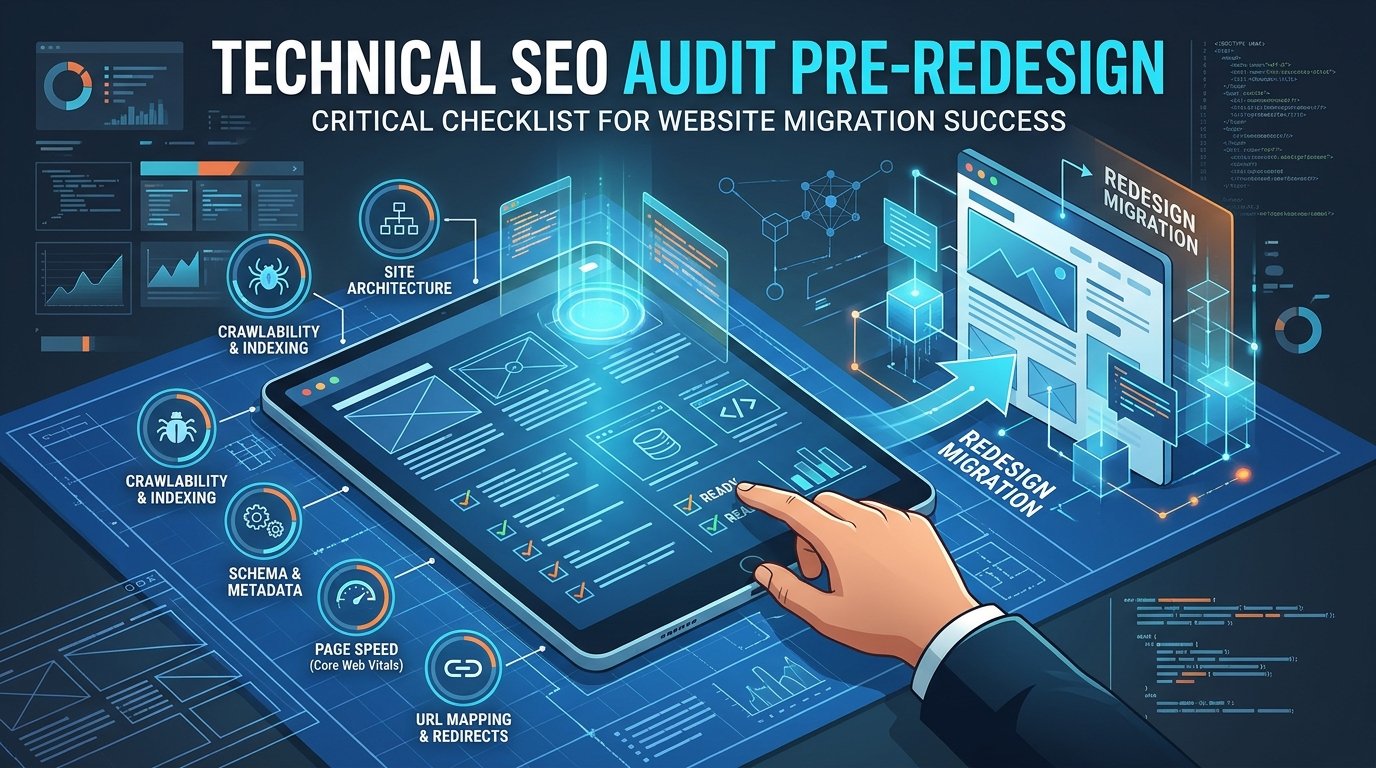
A website redesign is exciting. New layout, fresh branding, better user experience. It is also one of the easiest ways...
Growing a travel brand on Instagram means turning attention on the platform into inquiries and paid bookings, not just a...

AI landing page design services are professional design and build engagements where a team combines AI prototyping and behavior analytics...
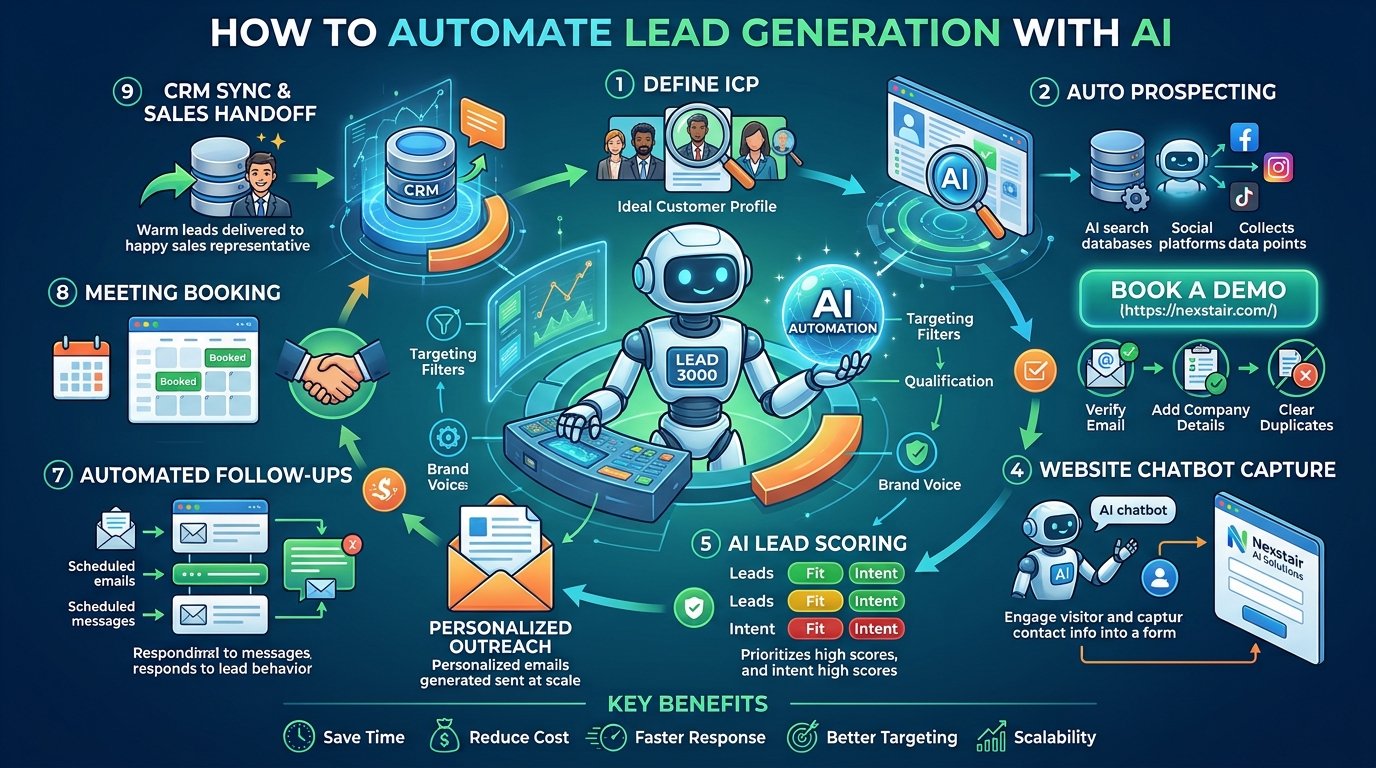
Learn how to automate lead generation with AI, from finding prospects and scoring leads to follow-ups and chatbots. A practical...