
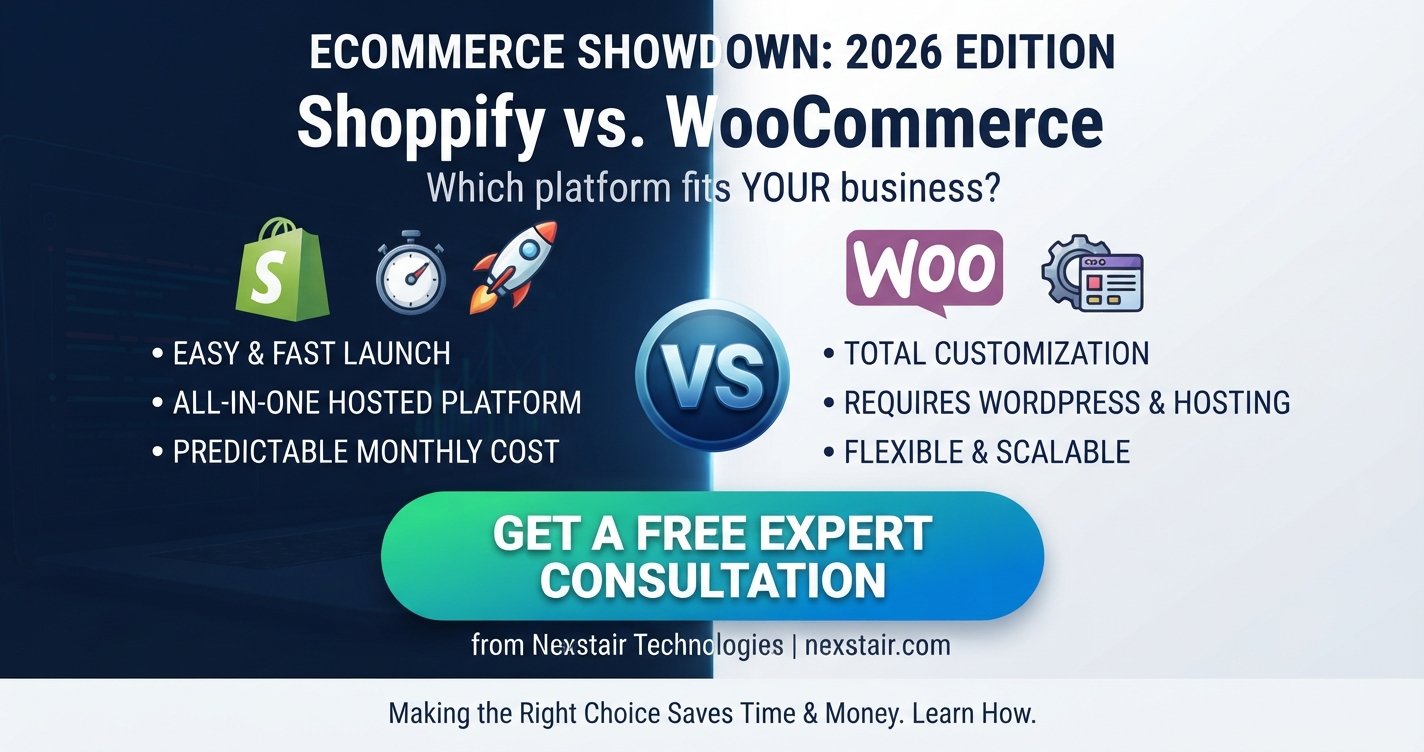
Shopify vs WooCommerce: Choosing the Right Ecommerce Platform
Choosing an eCommerce platform is one of those silent factors that can impact your monthly costs, your developers’ pain, your Google rankings, and your ability to pivot later in the game. If you’ve done your research, then there are two big names that you’ve heard mentioned quite a bit: Shopify vs WooCommerce. The problem is that both are really good platforms, and that’s why the decision to choose or not is so difficult.
One is a comfortable home that one can move into, the other is an empty lot to create the home of one’s imagination. So, which one makes sense for your business, your budget and your growth goals versus the one that has the rooster? Let’s take a look at the actual differences between the prices, ease of use, customization, and SEO, and you can make the right decision with confidence.
Still not sure which platform is right for your product catalog and development? Don’t take the risk of choosing any platform, get a complimentary ecommerce platform consultation from Nexstair Technologies before you sign on with either.
What Is the Core Difference Between Shopify and WooCommerce?
Shopify is a fully hosted, all-in-one ecommerce platform. You pay a monthly subscription, and Shopify handles hosting, security, checkout, and infrastructure for you, so you can launch a store without touching a server or hiring a developer. WooCommerce is a free, open-source plugin that runs on top of WordPress. It turns an existing WordPress site into a store, but you are responsible for finding hosting, managing security, and maintaining the underlying WordPress installation yourself.
The simplest way to frame it: Shopify is a product, and WooCommerce is a framework. Shopify gives you a finished house with the option to renovate within its rules. WooCommerce gives you the land and the raw materials, along with full control over what you build, but also full responsibility for keeping it standing.
How Much Does Shopify Cost Compared to WooCommerce?
Sticker price comparisons are where most Shopify vs WooCommerce articles go wrong, since the real cost of each platform includes far more than the headline number.
What does Shopify actually cost per month?
Shopify’s 2026 pricing runs across several tiers: a free Agentic plan limited to selling through AI shopping assistants, a $5 per month Starter plan for simple checkout links, then Basic at $39 per month, Grow at $105 per month, Advanced at $399 per month, and Plus starting at roughly $2,300 to $2,500 per month for large-scale enterprise stores. Using Shopify Payments avoids additional transaction fees; using a third-party payment gateway adds a percentage on top of your plan cost.
What does a WooCommerce store actually cost once everything is included?
The WooCommerce plugin itself is free, but running a functional store requires paid hosting (roughly $10 to $120 per month depending on traffic and provider), a domain, a premium theme in many cases, and essential plugins for SEO, security, backups, and performance, typically $100 to $400 per year combined. Add developer maintenance if you’re not technical yourself, often $100 to $500 per month for ongoing updates, bug fixes, and security patches. A basic, production-ready WooCommerce store typically starts around $800 per year, while a feature-rich mid-market store can run $5,000 to $15,000 per year once premium extensions and development time are factored in.
Which platform is cheaper overall? | Shopify vs WooCommerce
It depends on your technical resources. If you or your team can handle hosting, security, and plugin management yourselves, WooCommerce is often genuinely cheaper at lower volumes. If you would otherwise need to pay a developer for ongoing maintenance, that cost frequently erases WooCommerce’s price advantage, and Shopify’s predictable flat fee becomes the more economical option in practice, not just the simpler one.
Which Platform Is Easier to Set Up and Use?
Shopify is built for speed of launch. Its setup wizard, drag-and-drop store builder, and built-in payment processing let a non-technical business owner get a store live in days, not weeks. Adding products, configuring shipping, and managing inventory all happen inside a single, guided admin panel.
WooCommerce requires more setup work upfront. You need a WordPress installation, hosting configured correctly, and the WooCommerce plugin installed and connected to a theme before you can start adding products. For anyone comfortable with WordPress already, this is a manageable, one-time hurdle. For someone starting from zero technical experience, it is a meaningfully steeper climb than Shopify’s guided setup, and it often makes sense to bring in a developer for the initial build even if you plan to manage the day-to-day store yourself afterward.
Which Platform Offers Better Customization and Flexibility?
This is where WooCommerce most clearly pulls ahead. Because it runs on open-source WordPress code, you can modify virtually any part of the store’s functionality, design, and checkout flow, provided you or a developer can write the code to do it. The WordPress plugin ecosystem also gives WooCommerce stores access to tools well beyond ecommerce, advanced content marketing, membership systems, and custom booking flows among them.
Shopify offers strong customization within its own ecosystem, with over a thousand themes and a large app marketplace, but you are ultimately working within Shopify’s platform rules. Certain structural elements, like URL path structures, cannot be changed no matter which plan you’re on. For most standard ecommerce stores this limitation rarely matters, but for businesses with highly specific technical requirements, WooCommerce’s open architecture offers a ceiling Shopify simply does not.
Not sure which platform actually fits your product catalog and growth plans? Get a free ecommerce platform consultation from Nexstair Technologies before you commit to either one.
Which Platform Has Better SEO Capabilities?
Search engine optimization has historically been WooCommerce’s strongest advantage, and that largely holds true in 2026. Because WooCommerce runs on WordPress, which powers a substantial share of all websites, it inherits WordPress’s mature blogging engine, flexible URL structures, and access to established SEO plugins like Yoast SEO and Rank Math, giving site owners granular control over metadata, schema, and content structure.
Shopify handles the SEO fundamentals well, including automatic sitemaps and clean meta tag management, and its hosting infrastructure delivers genuinely fast page loads out of the box. Its limitation is structural: Shopify hard-codes certain URL paths, so you cannot remove “/products/” from product URLs or “/collections/” from category URLs, which frustrates advanced SEO practitioners working with large catalogs. For stores where organic search traffic is a primary growth channel, WooCommerce generally offers a stronger long-term SEO foundation, while Shopify remains solid for stores that rely more heavily on paid acquisition, social commerce, or marketplace integrations.
How Do Shopify and WooCommerce Compare on Speed and Performance?
Site speed data from early 2026 shows Shopify stores transferring a smaller median page size than comparable WooCommerce stores, an advantage that comes from Shopify’s built-in asset pipeline automatically minifying JavaScript and CSS, something WooCommerce merchants have to add manually through plugins or build tools. For large catalogs, Shopify’s managed database infrastructure also tends to handle product queries faster than a self-managed WooCommerce store running on a standard VPS, unless that WooCommerce installation has been carefully optimized and properly indexed.
In practice, this means Shopify delivers strong performance by default with minimal effort, while WooCommerce can match or potentially exceed that performance, but only with deliberate technical investment in hosting quality, caching, and database optimization.
Which Platform Is Better for AI-Powered Shopping and Automation?
Both platforms have leaned into AI features. Shopify Magic provides AI-generated product descriptions, automated email subject lines, and AI-powered store analytics built natively into the platform at no additional cost, and Shopify’s infrastructure has been built to support AI-driven shopping agents and automated commerce integrations without additional engineering work. WooCommerce stores can access similar AI capabilities, but typically through third-party plugins rather than a natively integrated suite, which means more setup and evaluation work to reach feature parity.
For businesses actively planning around AI-assisted shopping experiences or automated commerce workflows, Shopify currently offers a more turnkey path, while WooCommerce offers the same capability with more assembly required.
Building or migrating an ecommerce store is a big technical lift either way. Nexstair Technologies can handle the setup, SEO, and AI integration so you launch on the right platform the first time.
Which Platform Should You Choose Based on Your Business Type?
- Choose Shopify if you want a fast, predictable launch, prefer a fixed monthly cost over variable maintenance expenses, sell in person and need integrated POS hardware, or don’t have in-house technical resources to manage hosting and security.
- Choose WooCommerce if you already run on WordPress, want maximum control over design and functionality, prioritize long-term organic SEO performance, or have developer support available to handle hosting, maintenance, and custom development.
- Consider a hybrid evaluation if your business is content-heavy, since a WordPress-based content strategy paired with WooCommerce can create a stronger combined SEO and ecommerce engine than running a blog separately from a Shopify store.
FAQs About Shopify vs WooCommerce
Is Shopify or WooCommerce better for beginners?
Shopify is generally better for beginners because it handles hosting, security, and checkout automatically, letting a non-technical business owner launch a store without hiring outside help. WooCommerce requires more upfront technical setup, including hosting and WordPress configuration, before a store can go live.
Is WooCommerce really free?
WooCommerce the plugin is free, but running a production-ready store requires paid hosting, a domain, and typically premium plugins or themes, bringing real annual costs to roughly $800 or more for a basic store. “Free” refers only to the core software, not the full cost of operating a functional store.
Which platform is better for SEO, Shopify or WooCommerce?
WooCommerce generally offers stronger SEO capabilities because it runs on WordPress and provides more granular control over URL structure, metadata, and content, supported by mature plugins like Yoast SEO and Rank Math. Shopify handles core SEO well but hard-codes certain URL paths that limit advanced customization.
Can I switch from Shopify to WooCommerce or vice versa later?
Yes, migration between Shopify and WooCommerce is possible using dedicated migration tools or developer support, though it typically requires careful planning to preserve SEO rankings, product data, and customer information. Choosing the right platform upfront avoids the cost and risk of a full migration down the line.
Which platform is cheaper for a small business just starting out?
For most first-time sellers without in-house technical support, Shopify is typically cheaper and simpler to budget because its flat monthly fee includes hosting, security, and maintenance that WooCommerce requires you to manage or pay for separately. WooCommerce can become more cost-effective at scale for businesses with existing developer resources.
Does Shopify or WooCommerce load faster?
Shopify stores generally load faster out of the box due to a built-in asset pipeline that automatically optimizes JavaScript and CSS, while WooCommerce can match that performance but requires additional plugins and hosting optimization to get there. For large catalogs specifically, Shopify’s managed infrastructure typically handles product queries more efficiently by default.
Key Takeaways | Shopify vs WooCommerce
Shopify and WooCommerce solve the same core problem in fundamentally different ways. Shopify trades some flexibility for speed, predictability, and a managed infrastructure that requires no technical maintenance. WooCommerce trades a steeper setup and ongoing maintenance responsibility for full control, stronger native SEO potential, and no platform fees. Neither platform is universally right, the correct choice depends on your technical resources, your growth plans, and how much of the underlying infrastructure you want to own versus rent.
If you’re still weighing the decision, or you’ve already chosen a platform and want it set up correctly from the start, talk to Nexstair Technologies about building or optimizing your ecommerce store (https://nexstair.com/) and get a recommendation based on your actual business, not a generic comparison chart.
Recent Posts
Related Posts
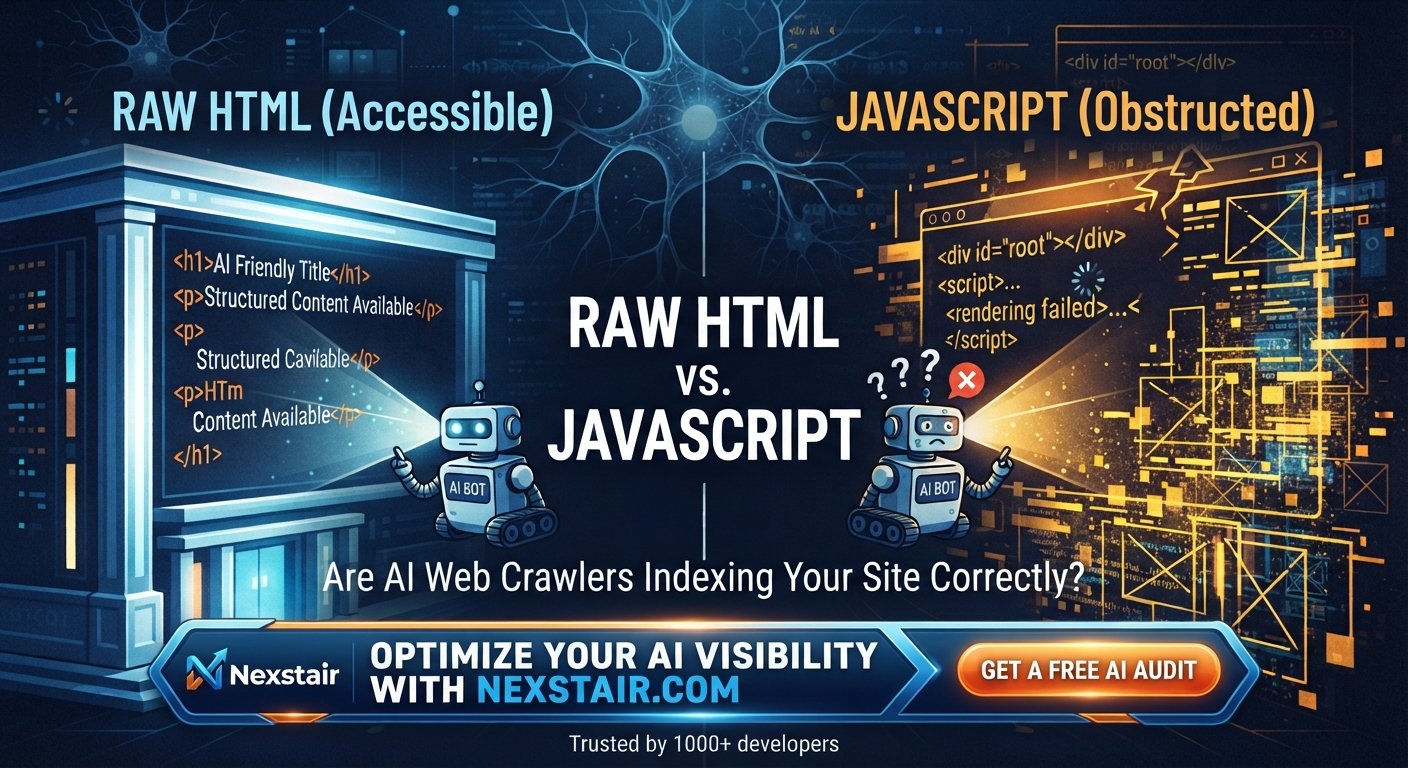
Are AI Web Crawlers Indexing Your Site Correctly?
For years, web developers have relied on JavaScript to power the modern internet, operating under the assumption that search engines...
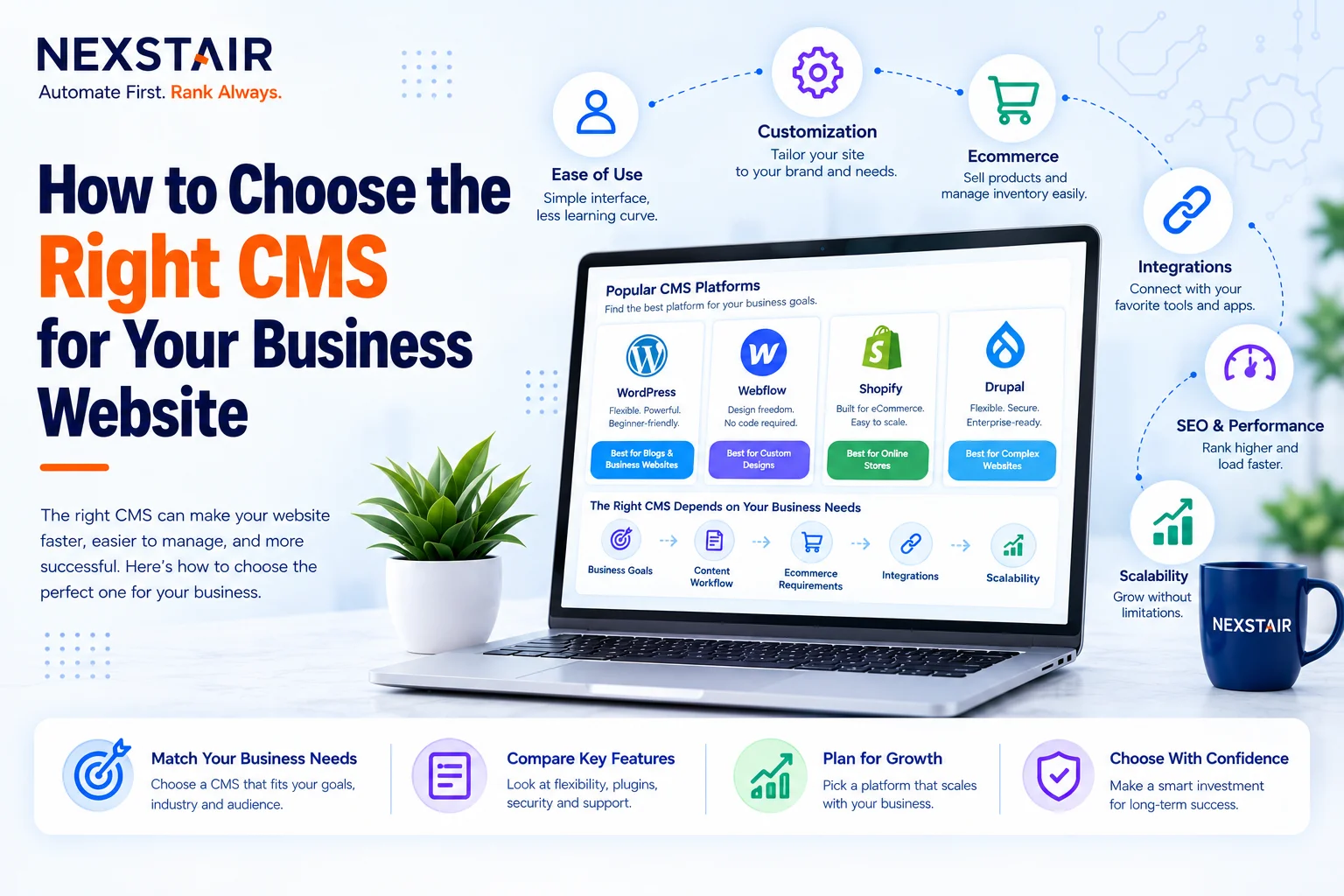
How to Choose the Right CMS for Your Business Website
Choosing a CMS for business use is an architectural decision, not a design decision, even though most business owners approach...

How to Manage Social Media Marketing for Small Business
Learn how to manage social media marketing for small business effectively & proven strategies, planning tips, and tools to grow...
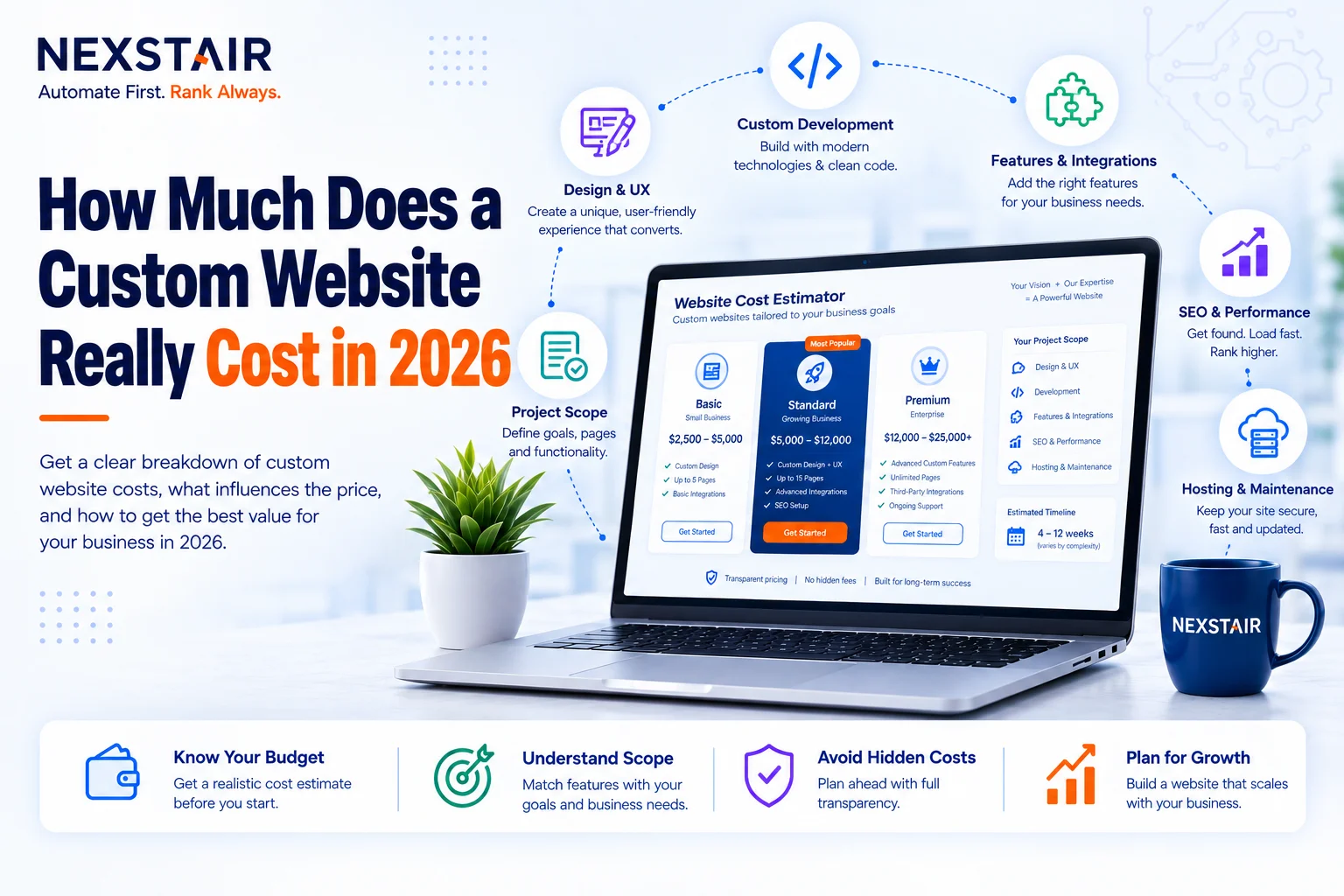
How Much Does a Custom Website Cost in 2026
Ask five agencies what a custom website costs and you’ll get five different numbers, and none of them will be...
Shopify vs WooCommerce: Choosing the Right Ecommerce Platform
Choosing an eCommerce platform is one of those silent factors that can impact your monthly costs, your developers' pain,...