
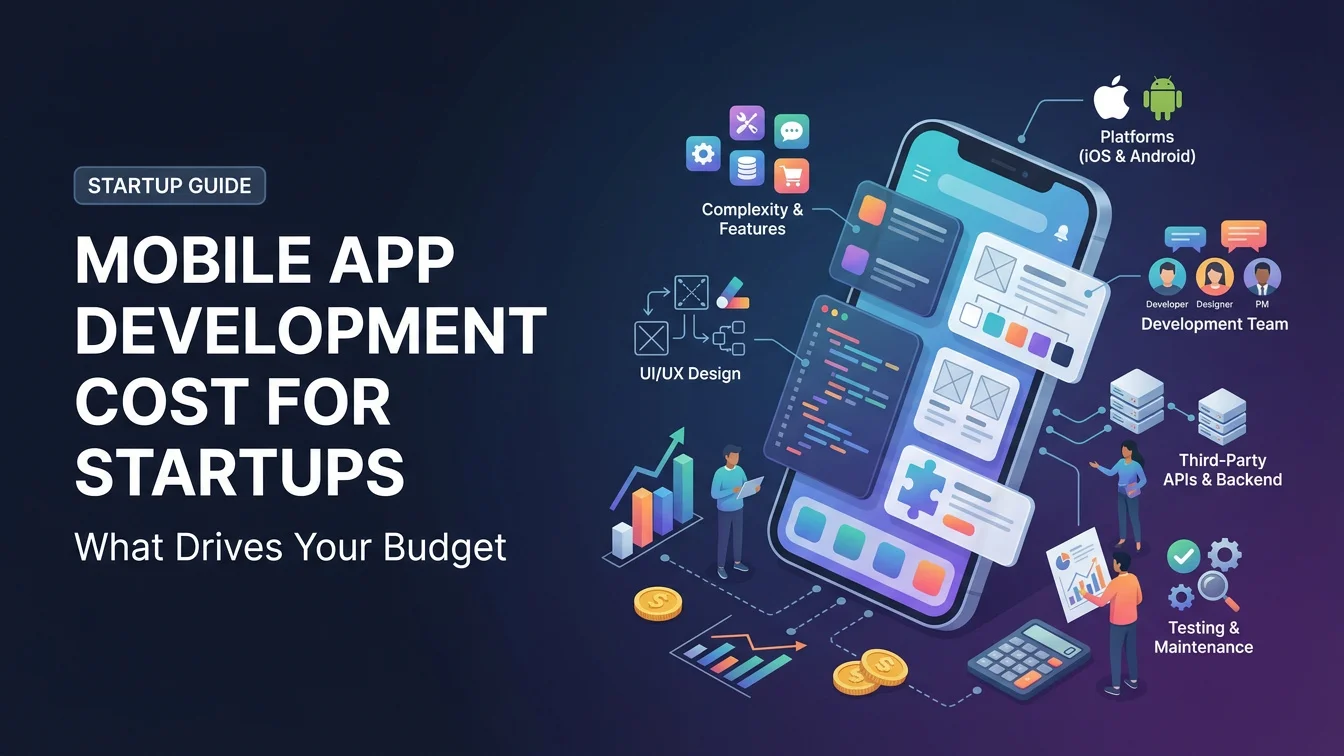
Mobile App Development Cost for Startups: What Drives Your Budget
Mobile app development cost is the total amount a startup spends to plan, design, build, test, launch, and maintain an app. It is not one number. It is the sum of decisions about features, platforms, design depth, team structure, integrations, and the months after launch. Two apps that look similar on a phone screen can have very different budgets because of what sits behind the screen.
For a startup, the cost question matters more than it does for an established company. You are spending money before you know whether people want the product. The goal is not to build the cheapest app. The goal is to buy the answer to “will users care?” as fast and as cheaply as you can, then invest more once the evidence is in.
Most pages on this topic open with price tables, but a table can’t tell you what applies to your idea. Prices also depend on region, seniority, and scope, so any single figure is a guess. This guide skips fixed numbers and shows you what moves your budget up or down, so you can judge any quote you receive.
You will see what drives mobile app development cost, how to scope a minimum viable product (MVP), how native and cross-platform builds differ, how team and contract choices change risk, which hidden costs surprise founders, what you pay for after launch, and how to keep a budget under control.
What Mobile App Development Cost Is Made Of
Think of the budget as six layers. Every quote you receive should account for each one.
- Discovery and planning. Research into users, competitors, and technical needs, followed by a scope, architecture, and timeline.
- Design. User flows, wireframes, a clickable prototype, and final screens.
- Development. The app itself, plus the backend, database, and APIs that power it.
- Quality assurance. Functional, performance, and security testing across devices.
- Launch. Store submissions, backend setup, analytics, and push notifications.
- After launch. Bug fixes, updates, hosting, support, and marketing.
Founders often budget for layer three and treat the rest as extras. In practice, discovery and design reduce risk in the expensive layers, and the layers after launch recur for as long as the app exists. If you want a deeper walk through the stages, our guide on how the mobile app development process works covers each one.
The Seven Biggest Cost Drivers
1. Feature scope
Every feature adds design, development, and testing time. Login, a profile, and a simple list are cheap to build. Payments, chat, maps, video, and real-time updates are not, because each one adds logic, edge cases, and third-party dependencies. Scope is the strongest lever you control, and cutting it early saves far more than negotiating rates later.
2. Platform choice
You can build for iOS, Android, or both. Native apps use separate codebases (Swift for iOS and Kotlin for Android, for example). Cross-platform tools such as React Native and Flutter share one codebase across both platforms. The shared approach usually lowers the mobile app development cost for a first version, while native builds can offer deeper access to device features and the smoothest performance. We compare the two in a later section.
3. Design depth
Standard interface components cost less than custom animation, unusual navigation, and branded illustration. Strong design is not optional, because it shapes whether people stay, but a startup can start with clean, simple screens and invest in polish after real users show where it counts.
4. Backend and integrations
The app on the phone is half the work. Accounts, data storage, notifications, admin panels, and payment or maps services need a backend. Third-party services often charge usage fees that grow with your user base, and each integration adds build and testing time.
5. Technology choices
Mainstream tools have large talent pools and predictable effort. Newer or specialized technology such as on-device AI, augmented reality, or blockchain features needs rarer skills and more experimentation, which raises cost and risk.
6. Compliance and security
Apps that handle payments, health information, or children’s data carry legal and security duties. Regulations such as GDPR, HIPAA, and PCI DSS can add audits, extra safeguards, and legal review. Decide early whether your idea falls into one of these categories.
7. Team structure and location
Who builds the app matters as much as what you build. We cover this in its own section below.
Scope an MVP Before You Ask for a Quote
An MVP is the smallest version of your product that lets real users do the one thing they came for, so you can learn from them. It is not a broken or half-finished app. It is a focused one.
Use this method to define yours:
- Write the core promise in one sentence. For example: “Customers book a home service in under a minute.”
- List every feature you imagine, without filtering.
- Mark each feature: must have for the promise, nice to have, or later.
- Keep only the must-haves. If a feature doesn’t help a user complete the core promise, it waits.
- Describe the user journey from opening the app to finishing the main task, screen by screen.
- Ask what you can fake manually. A founder handling orders by hand behind the scenes can replace a complex admin system in version one.
A tight scope gives you two benefits. You launch sooner, and you get a quote you can compare line by line instead of a vague range.
Native vs Cross-Platform: Cost and Trade-offs
| Factor | Native (iOS and Android separately) | Cross-platform (React Native or Flutter) |
|---|---|---|
| Codebases | Two | One shared |
| Early build effort | Higher | Lower for most apps |
| Device feature access | Deepest | Good, sometimes needs native code |
| Performance | Best for heavy graphics or complex animation | Strong for most business apps |
| Maintenance | Two codebases to update | One main codebase to update |
| Best fit | Hardware heavy or performance critical apps | MVPs and typical business apps |
For many startups, cross-platform is a sensible starting point because it tests the idea on both platforms with one team. Choose native first if your app depends on advanced camera work, heavy 3D, or tight hardware integration. Another common path is to launch on a single platform first, based on where your target users are, and expand once the product works.
Team and Contract Choices Change Your Risk
Who builds it
- Freelancers can cost less but may lack the full set of skills (design, backend, testing, project management) and can become a single point of failure.
- Agencies cost more per hour but bring a coordinated team and a defined process, which reduces risk for a first product.
- In-house teams give you control and long-term knowledge but carry salaries, hiring time, and overhead before you have proven the idea. Many startups move in-house after validation.
Where they are
Rates differ by region, and seniority changes cost too. A cheaper hourly rate does not guarantee a cheaper project, because experience affects speed, bugs, and rework. Judge a team on its track record, communication, and process, not rate alone.
How you pay
- Fixed scope. You agree on features and deliverables up front. This gives budget certainty, but changes are handled through a formal request.
- Time and materials. You pay for effort as it happens. This is flexible, but costs can drift without strict priorities.
- Milestone or sprint based. Work is delivered in short cycles with a working build at each step. This lets you review progress and adjust before money is spent in the wrong direction.
Ask any team how it handles changes in scope. The answer tells you how overruns will be shared.
Hidden Costs That Surprise Founders
These items often sit outside the first quote, yet they change the real mobile app development cost.
- Scope creep. New ideas during development stretch both time and budget. A written priority list and a “version two” parking lot help.
- Developer accounts and fees. Apple and Google charge for developer accounts, and stores take a share of in-app purchases.
- Third-party services. Maps, messaging, payments, analytics, and hosting often bill by usage.
- Rework from skipped design. Building before the flows are tested usually means rebuilding.
- Shortcuts in testing. Skipped testing shifts cost to your users and your reputation.
- Legal and policy work. Privacy policies, terms of service, and store review requirements take time.
- Feedback changes. Early users will ask for changes you didn’t plan, so leave room for them.
What You Pay for After Launch
An app is never finished. Plan for these ongoing costs from day one:
- Maintenance. Operating systems update every year, and apps must keep working with them. Security patches and bug fixes continue.
- Hosting and infrastructure. Backend costs grow with users and data.
- Support. Someone answers users, tracks issues, and prioritizes fixes.
- New features. Real usage will show what to add next.
- Marketing. Downloads don’t come automatically. App store optimization, content, and paid campaigns all take budget, and many founders underestimate this. Our guide to AI SEO for small business shows how search visibility supports growth, and the same thinking applies to an app’s website.
A useful rule is to reserve budget for the first months after launch, not just the build.
How to Keep Mobile App Development Cost Under Control
- Validate before building. Test the idea with interviews, a landing page, or a clickable prototype.
- Ship one core flow first. Launch the smallest useful version.
- Prototype before coding. Changing a design is far cheaper than changing finished code.
- Use proven technology. Mainstream stacks reduce risk and speed up hiring.
- Work in short sprints. Reviewing a working build every two weeks catches wrong turns early.
- Own your assets. Make sure you hold the source code and the store accounts.
- Track real usage. Add analytics so the next round of spending follows evidence.
- Keep a change log. Record every scope change and its effect on time and budget.
If a web version could prove your idea first, consider that route. Our guide on web development best practices shows how to build fast, reliable web products that can validate demand before you commit to apps.
How Nexstair Approaches App Projects
Nexstair’s mobile app development team builds iOS apps with Swift and SwiftUI, Android apps with Kotlin and Jetpack Compose, and cross-platform apps with React Native or Flutter. The process starts with research into your goals, users, and competitors, then moves through planning, UI and UX prototyping, development with quality assurance, and launch with post-launch support. Work is delivered in two-week sprints with a working build each time, and you keep ownership of the source code and your Apple and Google developer accounts. The team works with industries including e-commerce, healthcare, real estate, travel, and logistics.
If you are weighing an app idea and want to scope an MVP before committing a budget, you can talk to the Nexstair team about your idea.
Frequently Asked Questions
What affects mobile app development cost the most?
Feature scope has the biggest effect, followed by platform choice, design depth, backend needs, and team structure. Cutting low-value features early saves more than any rate negotiation.
Why do app quotes vary so much between companies?
Quotes differ because teams assume different scopes, platforms, design levels, team seniority, and post-launch support. Compare line items, not totals.
Is cross-platform cheaper than native?
Cross-platform usually costs less for a first version because one codebase serves both platforms. Native can be the better choice for hardware heavy or graphics heavy apps.
What is an MVP in app development?
An MVP is the smallest working version of an app that lets real users complete its core task. It exists to test demand before you invest in a full product.
Does mobile app development cost stop after launch?
No, apps need ongoing maintenance, hosting, support, updates, and marketing. Plan for these costs before you start building.
Should a startup hire freelancers or an agency?
Freelancers can suit small, well-defined tasks, while agencies offer a full team and process for a first product. Choose based on the skills you need and how much delivery risk you can accept.
How can a startup reduce app development risk?
Validate the idea first, build only the core flow, prototype before coding, and review progress in short sprints. These steps limit the money spent on unproven features.
The Bottom Line
Mobile app development cost depends on choices you can control: how focused your scope is, which platform you start on, how much design you need, who builds it, and how you plan for life after launch. Define one core promise, scope an MVP around it, prototype before coding, work in short sprints, and budget for maintenance and marketing from the start. Treat the first version as a way to buy evidence, then invest more once users prove the idea.
Recent Posts
Related Posts
Mobile app development cost is the total amount a startup spends to plan, design, build, test, launch, and maintain an...
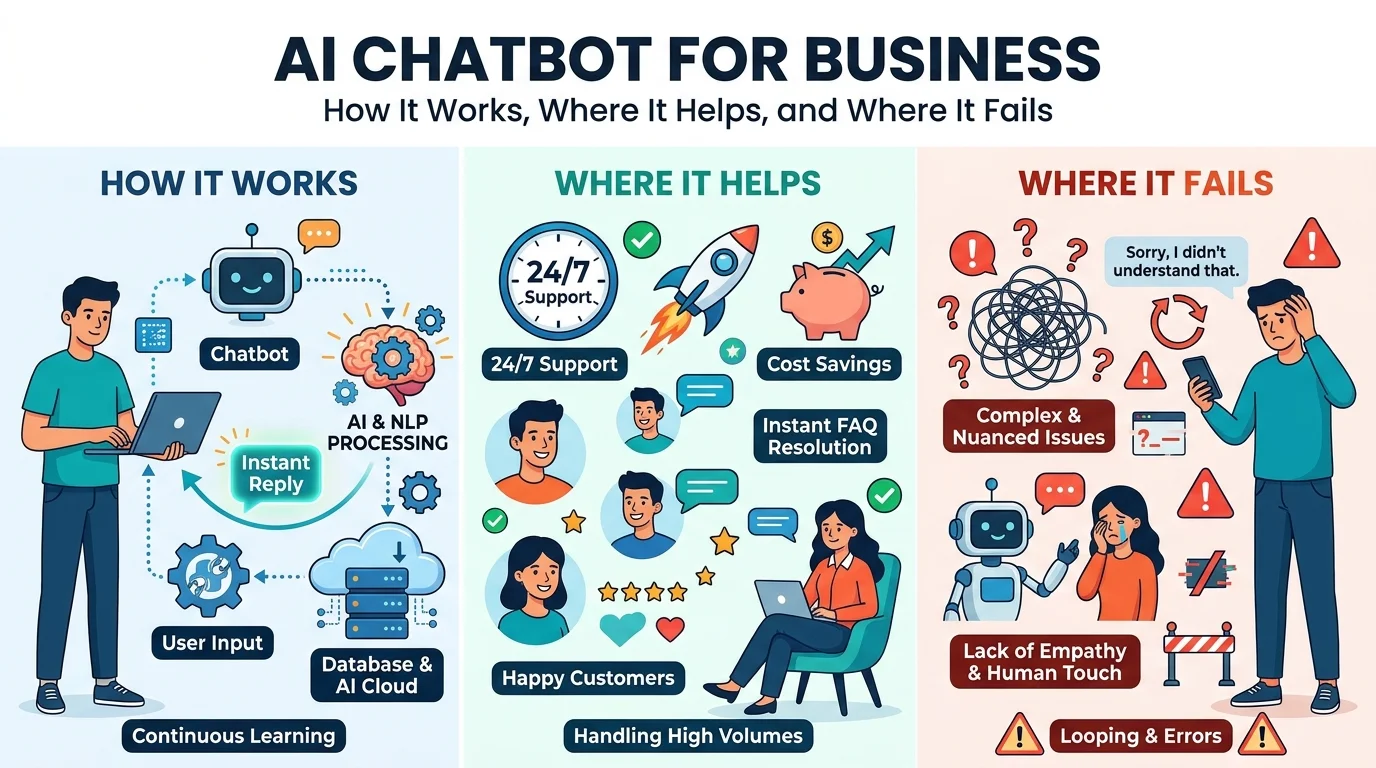
An AI chatbot for business is software that talks with customers, leads, or employees in natural language, understands what they...

If you sell to other businesses, LinkedIn is where your buyers already spend time. Decision makers scroll their feeds between...

SEO for real estate agents is the process of improving a website and online profiles so they appear in Google...
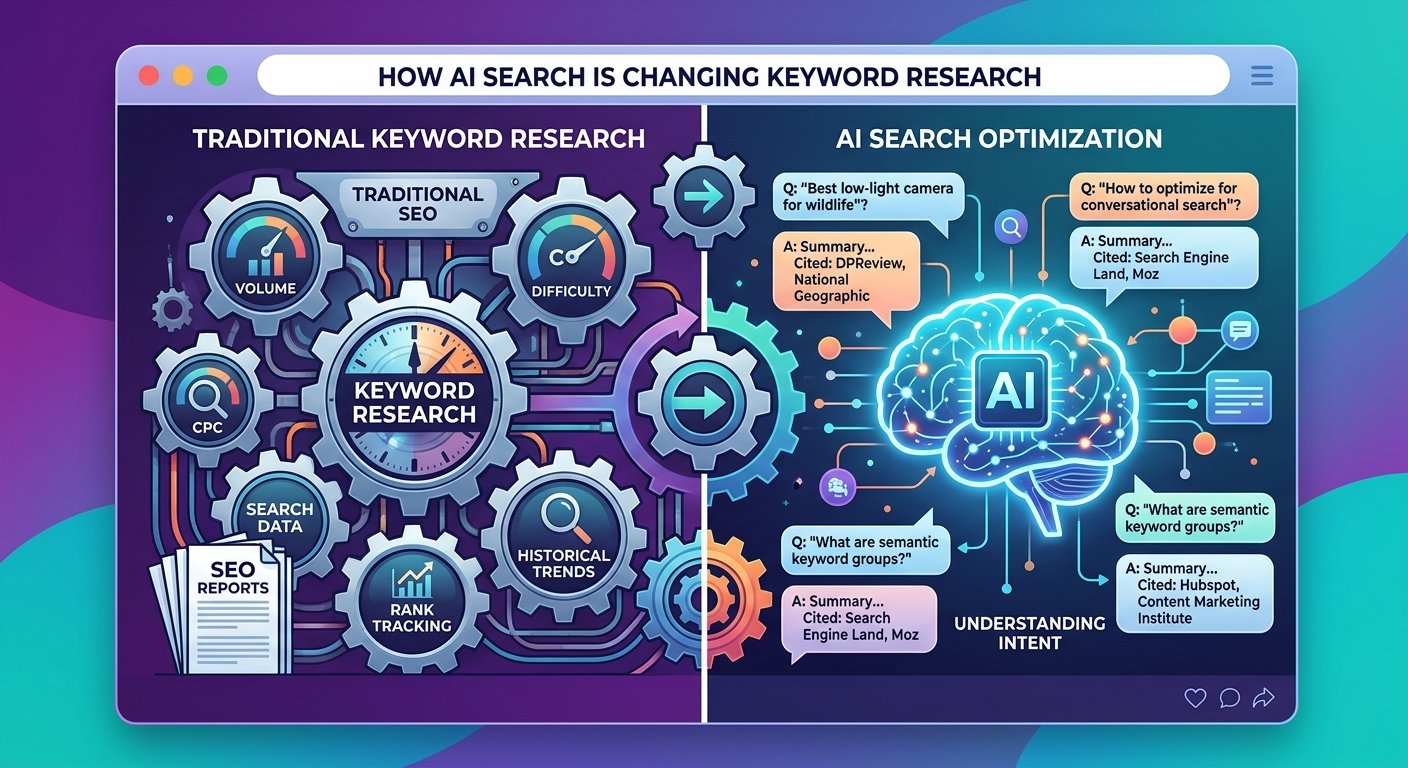
AI search is rewriting how people find answers. Learn how AI Search Is Changing Keyword Research , what to track...