
The Role of a Digital Marketing Strategist in Business Growth
Behind every successful digital marketing campaign is a clear strategy — and behind every clear strategy is usually a skilled digital marketing strategist. While tactics like social media posts, ads, and blog content are the visible parts of marketing, the strategist is the person (or team) responsible for connecting those tactics into a cohesive plan that drives real business results.
At Nexstair Technologies, our strategists work as the architects behind every campaign, ensuring that marketing efforts align with business goals rather than existing as disconnected activities. In this article, we’ll explore what a digital marketing strategist actually does, why the role is so critical, and how to know when your business needs one.
What Is a Digital Marketing Strategist?
A digital marketing strategist is a professional responsible for researching, planning, and overseeing a business’s overall marketing direction across digital channels. Unlike specialists who focus on a single channel (like SEO or paid ads), a strategist takes a holistic view — analyzing the market, competitors, customer behavior, and business objectives to build an integrated marketing roadmap.
Key responsibilities typically include:
- Conducting market research and competitive analysis
- Defining target audiences and buyer personas
- Setting measurable marketing goals aligned with business objectives
- Choosing the right mix of channels (SEO, paid media, content, email, social)
- Allocating budget across channels for maximum ROI
- Overseeing execution teams or specialists
- Analyzing performance data and adjusting strategy accordingly
Why Businesses Need a Digital Marketing Strategist
Many businesses invest in individual marketing tactics — running some ads here, posting on social media there — without a unifying strategy. This often leads to wasted spend, inconsistent branding, and missed opportunities. A digital marketing strategist solves this by:
1. Creating Alignment Between Marketing and Business Goals
A strategist ensures that every campaign ladders up to broader business objectives, whether that’s increasing revenue, expanding into a new market, or improving customer retention.
2. Prioritizing the Right Channels
Not every business needs to be active on every platform. A strategist identifies where your target audience actually spends time and focuses resources accordingly.
3. Making Data-Driven Decisions
Strategists rely on analytics and performance data to continuously refine campaigns, rather than relying on guesswork or industry assumptions.
4. Managing Budget Efficiently
By understanding which channels deliver the best return, a strategist helps allocate marketing budget where it will have the greatest impact.
5. Adapting to Market Changes
Digital marketing is dynamic — algorithm updates, new competitors, and shifting consumer behavior all require ongoing strategic adjustments.
Core Skills of an Effective Digital Marketing Strategist
A strong digital marketing strategist typically combines several skill sets:
- Analytical thinking – interpreting data to identify trends, opportunities, and problem areas
- Cross-channel expertise – understanding how SEO, paid media, content, and email marketing work together
- Project management – coordinating multiple campaigns, deadlines, and team members
- Communication skills – translating complex marketing data into clear insights for business stakeholders
- Creativity – developing unique positioning and campaign ideas that stand out in a crowded market
- Business acumen – understanding how marketing efforts directly impact revenue and growth
The Strategic Planning Process
A typical strategic planning process led by a digital marketing strategist includes:
- Discovery and Research – Understanding the business, industry, competitors, and current marketing performance.
- Audience Definition – Building detailed buyer personas based on demographics, behavior, and pain points.
- Goal Setting – Establishing clear, measurable objectives (e.g., increase qualified leads by 30% in six months).
- Channel Strategy – Determining which digital channels will be used and how they’ll work together.
- Content and Campaign Planning – Mapping out the messaging, creative, and content needed to execute the strategy.
- Execution and Optimization – Launching campaigns and continuously monitoring performance to make data-informed adjustments.
- Reporting and Analysis – Regularly reviewing results against goals and refining the strategy as needed.
Digital Marketing Strategist vs. Digital Marketing Manager
These titles are sometimes used interchangeably, but there are subtle differences:
- A strategist typically focuses on high-level planning, research, and direction-setting.
- A manager often oversees the day-to-day execution of campaigns, coordinating specialists and ensuring deadlines are met.
In smaller organizations or agencies, one person may fulfill both roles. In larger organizations, these responsibilities are often split between different team members.
Signs Your Business Needs a Digital Marketing Strategist
- Your marketing efforts feel disconnected or inconsistent across channels
- You’re spending money on ads or content without a clear understanding of ROI
- Your competitors seem to be outperforming you online despite similar budgets
- You’re entering a new market or launching a new product and need a go-to-market plan
- Your internal team lacks the bandwidth or expertise to plan and execute a comprehensive strategy
LSI Concepts Related to Digital Marketing Strategy
To fully understand the strategist’s role, it helps to be familiar with related concepts such as marketing funnel, customer journey mapping, competitive analysis, brand positioning, key performance indicators (KPIs), go-to-market strategy, and marketing ROI. These concepts form the analytical foundation that strategists rely on when building and refining marketing plans.
How Nexstair Technologies Approaches Strategy
At Nexstair Technologies, our digital marketing strategists don’t just create plans — they build systems designed for measurable, sustainable growth. We start every engagement with deep research into your business, industry, and audience, then design a channel strategy tailored specifically to your goals and budget. Throughout every campaign, we continuously monitor performance and refine our approach, ensuring that strategy isn’t a one-time document but an evolving, living framework for growth.
Frequently Asked Questions
Q1: What does a digital marketing strategist do on a daily basis?
Daily responsibilities can include analyzing campaign performance data, researching market trends, coordinating with execution teams, and refining strategic plans based on results.
Q2: How is a digital marketing strategist different from an SEO specialist?
An SEO specialist focuses specifically on improving organic search visibility, while a strategist oversees the broader marketing plan across multiple channels, including SEO.
Q3: Do small businesses need a dedicated digital marketing strategist?
While small businesses may not need a full-time in-house strategist, working with an agency that provides strategic planning can be highly valuable for aligning marketing efforts with growth goals.
Q4: How do I measure the success of a digital marketing strategy?
Success is typically measured through KPIs aligned with business goals, such as lead volume, conversion rate, customer acquisition cost, and overall return on marketing investment.
Q5: Can a digital marketing strategist help with rebranding or new product launches?
Yes. Strategists play a key role in go-to-market planning, ensuring that positioning, messaging, and channel strategy align with the goals of a launch or rebrand.
Final Thoughts
A skilled digital marketing strategist bridges the gap between scattered marketing tactics and a cohesive, results-driven plan. Whether you’re a growing startup or an established business looking to scale, having the right strategic guidance can be the difference between marketing that simply exists and marketing that truly drives growth.
Looking for expert strategic guidance for your digital marketing efforts? Visit nexstair.com to connect with our team of strategists.
Recent Posts
Related Posts

Are AI Web Crawlers Indexing Your Site Correctly?
For years, web developers have relied on JavaScript to power the modern internet, operating under the assumption that search engines...
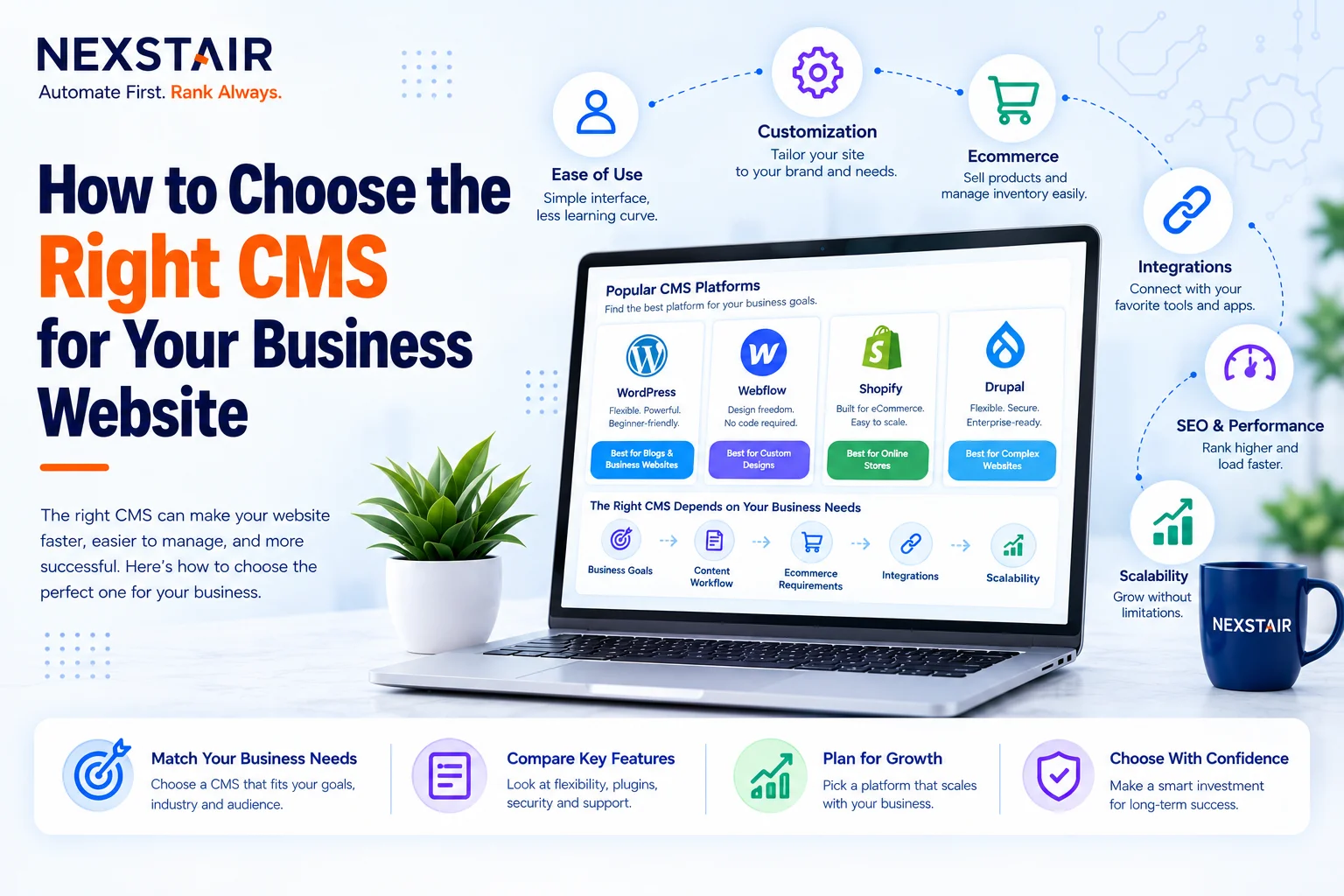
How to Choose the Right CMS for Your Business Website
Choosing a CMS for business use is an architectural decision, not a design decision, even though most business owners approach...

How to Manage Social Media Marketing for Small Business
Learn how to manage social media marketing for small business effectively & proven strategies, planning tips, and tools to grow...
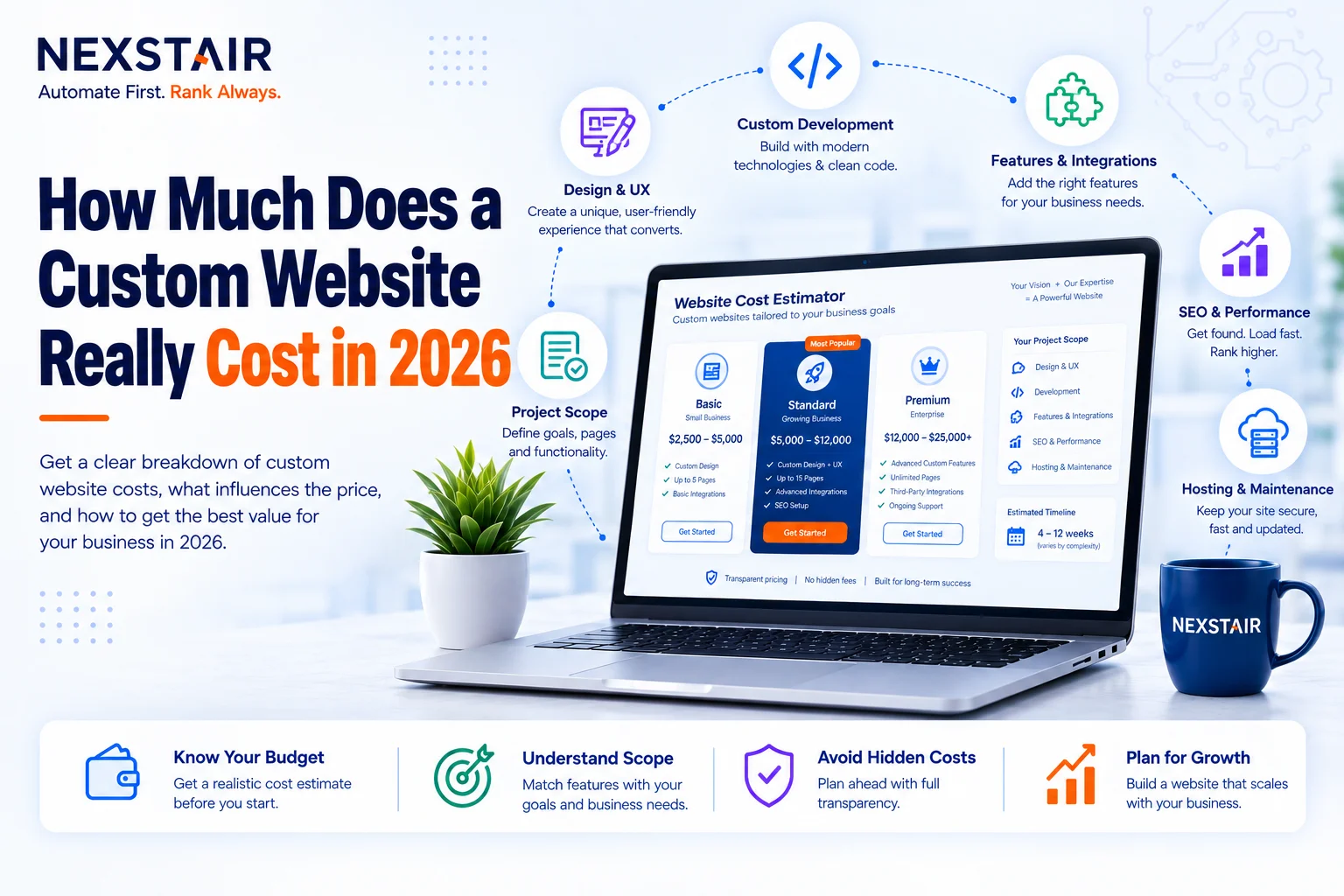
How Much Does a Custom Website Cost in 2026
Ask five agencies what a custom website costs and you’ll get five different numbers, and none of them will be...

Shopify vs WooCommerce: Choosing the Right Ecommerce Platform
Choosing an eCommerce platform is one of those silent factors that can impact your monthly costs, your developers' pain,...