

What Is Digital Marketing? A Simple Guide for Businesses
Digital marketing is the practice of promoting products, services, and brands through internet-connected channels like search engines, social media, email, and websites. It replaces guesswork with data. Every click, view, and sale can be measured, so a boutique retailer or a B2B software company knows exactly what its money bought.
The field covers a handful of core channels. Search engine optimization (SEO) earns free traffic from Google. Paid search and social ads (PPC) buy attention on Google, Facebook, Instagram, and TikTok. Social media marketing builds an audience. Content marketing answers the questions buyers type before they purchase. Email keeps customers coming back. Together these channels move a stranger from “never heard of you” to “paying customer.”
Most of this activity runs on a few large platforms. Google handles the majority of search worldwide. Meta owns Facebook, Instagram, and WhatsApp. ByteDance runs TikTok, one of the fastest-growing platforms anywhere. Each one lets a business target people by age, location, interest, and behavior, then reports what happened.
This guide answers the questions business owners actually ask: what digital marketing includes, how it works, the main types, how it compares to traditional advertising, what it costs, and how to start. If your goal is a site that turns that traffic into revenue, our web development services are built for exactly that.
What digital marketing actually means
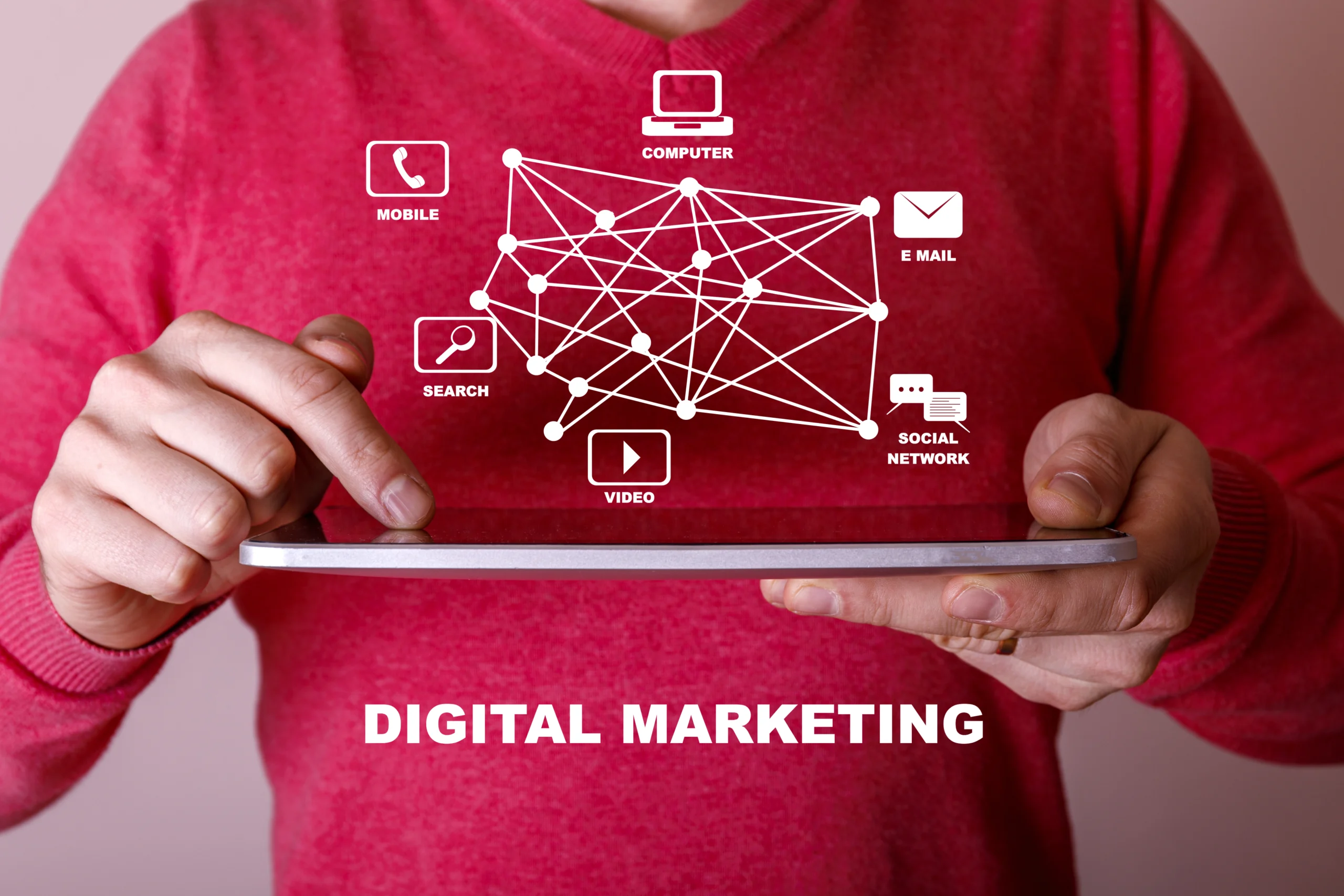
Digital marketing groups every promotional activity that happens on an internet-connected device. That includes a Google search result, a Facebook reel, an email broadcast, a YouTube pre-roll ad, and the checkout page on your website. If a screen and a connection are involved, it counts.
The discipline splits into two families. Owned and earned channels, like SEO, your website, and an email list, cost time and skill rather than media spend. Paid channels, like Google Ads and Meta Ads, cost money per click or per thousand views. Strong programs use both, because paid traffic delivers speed while owned traffic delivers durability.
One trait separates digital from every older form of advertising: measurement. A billboard cannot tell you how many buyers it produced. A Google Ads campaign reports impressions, clicks, cost per click, and sales, down to the keyword. That feedback loop lets you cut what fails and fund what works, usually within days.
The main channels of digital marketing
Channels are the routes your message travels to reach a buyer. Most businesses rely on six that carry the bulk of results.
- Search engine optimization (SEO): earns unpaid Google rankings for terms buyers search. Our AI-powered SEO services cover the technical foundation and content strategy end to end.
- Paid search and social ads (PPC): buy clicks and views on Google, Facebook, Instagram, and TikTok.
- Social media marketing: grows a following and drives sales on Meta and TikTok.
- Content marketing: publishes guides, videos, and comparisons that answer buyer questions and feed SEO.
- Email marketing: re-engages past customers with offers and updates at almost zero cost per message.
- Website and conversion: the page where clicks turn into orders. A slow site wastes every other channel, which is why solid web development and conversion-focused design underpin the rest.
Each channel plays a role at a different stage of the buyer journey.
How digital marketing works
Digital marketing works by moving people through three stages: awareness, consideration, and conversion. A first-time visitor rarely buys. The job is to earn attention, build trust, then ask for the sale at the right moment.
Awareness starts the funnel. A TikTok video, a Google result, or a Facebook ad puts your brand in front of someone who has a problem you solve. Reach here is cheap and wide.
Consideration is the middle. The prospect compares options, reads reviews, and checks your prices. Content and retargeting ads do the heavy lifting, keeping you in view while the buyer decides.
Conversion closes the loop. A landing page or checkout button turns interest into revenue. This stage is small in traffic but decides whether the budget paid off.
The funnel only works when the stages connect, and connection is exactly what traditional media struggles to prove.
Digital marketing vs traditional marketing
Digital marketing beats traditional marketing on cost, targeting, and proof, while traditional still wins on mass brand recall for very large budgets. For most small and medium businesses, the honest answer is that you get more per dollar online.
Cost favors digital. A social campaign can run on a modest monthly budget and reach tens of thousands of targeted people. A single prime-time TV slot or billboard costs many times that with no way to track sales.
Targeting favors digital. Print reaches everyone who buys the paper. Meta Ads reach a specific age, location, and interest group. That precision cuts waste.
Proof favors digital. TV, radio, and print report estimated audiences. Digital reports actual clicks and sales, so you can calculate return, not guess it.
Traditional media keeps one edge: a huge, undivided audience for brand campaigns from companies with very large budgets. For everyone else, measurable channels win.
Why digital marketing matters for businesses
Buyers now research on a phone before they spend. For most companies, the first place a customer meets your business is Google, Instagram, or TikTok, not a storefront.
Low barriers matter. A home-based brand can open an online shop, run a small ad budget, and take orders without a physical location. That was impossible under traditional media economics.
Local intent matters too. Searches like “best marketing agency near me” or “AC repair in [city]” carry buyers ready to act. Ranking or advertising for those terms puts you in front of demand that already exists.
The catch is budget. Owners want to know what all this costs before they commit.
How much digital marketing costs
Digital marketing costs vary widely based on channels, ad spend, and whether you hire in-house, a freelancer, or an agency. The work itself is what drives the range.
Ad spend is separate from management. You set a monthly budget for Meta or Google ads, then pay a management fee on top to plan, run, and report on it. Bundling the two into one number is the most common budgeting mistake.
SEO sits on a longer clock. It costs more upfront and pays back longest, with results building over three to six months as rankings climb. Adding AI automation to nurture and follow up on leads raises efficiency without adding headcount.
Freelancers cost less and carry more risk. A single freelancer rarely covers SEO, ads, content, and web together, so scope is what decides price.
How to start digital marketing
Starting digital marketing takes five steps, and you can complete the first three this week.
- Set one clear goal: more leads, more online orders, or more calls. A single target keeps the budget focused.
- Fix the website first: make it load fast on mobile and show a clear call to action above the fold.
- Pick one or two channels: most businesses start with Meta Ads plus a Google Business Profile, not everything at once.
- Set a test budget: enough to gather data without betting the quarter.
- Measure and adjust: track leads and cost per lead weekly, then move money toward what converts.
Do those five and you have a working program. Scaling it is where an agency or specialist earns its fee.
Mistakes that waste digital marketing budgets
Wasted budgets usually trace to a few repeatable errors, and every one is avoidable.
Boosting posts with no goal burns money first. A boosted reel buys views, not buyers, unless it points to an offer and a next step.
Sending traffic to a weak page wastes the click. If ads land on a slow homepage instead of a focused offer, most visitors leave. Match every campaign to a page built to convert.
Ignoring measurement hides the truth. Without a Meta Pixel or Google conversion tag, you cannot see which ad produced a sale, so you keep funding losers. Set up tracking before you scale.
Tools you will actually use
Digital marketing runs on a small set of free and low-cost tools, not an expensive stack.
- Google Business Profile: free local listing that wins map and “near me” searches.
- Meta Business Suite: manages Facebook and Instagram posts, ads, and messages in one place.
- Google Analytics and Search Console: show traffic, keywords, and what visitors do on your site.
- Email platform: handles offers, updates, and automated follow-up sequences.
- Canva: produces on-brand creatives without a designer for simple posts.
These cover most of what a small business needs. The skill to combine them is what separates a busy account from a profitable one.
Digital marketing terms you should know
A few terms appear in every plan, and knowing them keeps you in control of the budget.
- Impression: one view of your ad or post. Reach counts people, impressions count views.
- CTR, click-through rate: the share of viewers who click.
- CPC, cost per click: what you pay for each click on a paid ad.
- CPL, cost per lead: what you pay for each inquiry.
- ROAS, return on ad spend: revenue earned for every dollar spent on ads.
- Conversion: the action you want, like a call, a form fill, or an order.
- Retargeting: ads shown to people who already visited you, usually the cheapest sales to win.
Learn these seven and any agency report becomes readable.
Frequently asked questions
What is digital marketing in simple words?
Digital marketing is promoting a business through the internet, using channels like Google, social media, email, and websites. It reaches buyers on their phones and tracks every click and sale, so you know what your money produced.
Is digital marketing worth it for a small business?
Yes. A modest monthly budget can reach tens of thousands of targeted people on Facebook and Instagram, far more than a print ad of the same price, with sales you can actually measure.
What are the main types of digital marketing?
The main types are SEO, paid ads (PPC), social media marketing, content marketing, email marketing, and video marketing. Most businesses combine SEO for free traffic with paid ads for fast reach.
How long does digital marketing take to show results?
Paid ads can produce leads within days, while SEO usually takes three to six months to move rankings. A blended plan gives quick wins from ads and durable growth from search at the same time.
Do I need a website for digital marketing?
Yes, most digital marketing needs a website or a strong landing page to turn clicks into orders. Weak pages waste ad money, which is why web development comes first.
Which is better, SEO or paid ads?
Paid ads win for speed and SEO wins for cost over time. Ads deliver traffic today for a price per click, while SEO delivers free traffic once rankings hold. Growing brands run both.
Can I do digital marketing myself?
Yes, you can run basic digital marketing yourself, especially a Google Business Profile and boosted Facebook posts. Complex work like technical SEO, ad scaling, and conversion tracking usually needs a specialist to avoid wasted spend.
What is the difference between digital and social media marketing?
Digital marketing is the whole field, and social media marketing is one channel inside it. Social media covers Facebook, Instagram, and TikTok, while digital also includes SEO, Google Ads, email, and your website.
How do I measure digital marketing results?
Measure results by leads, cost per lead, and return on ad spend, not by likes. Set up Google Analytics and the Meta Pixel, then track how many sales each channel produced against what it cost.
Digital marketing in summary
Digital marketing promotes a business through internet channels and measures every result, the trait that sets it apart from billboards and print. It runs on a few core channels — SEO, paid ads, social media, content, email, and your website — and moves buyers from awareness to consideration to conversion. Start with one goal, a fast mobile site, and one or two channels, then let the data decide where the budget grows.
When you are ready to scale, talk to Nexstair about a plan built around your goals.
Recent Posts
Related Posts
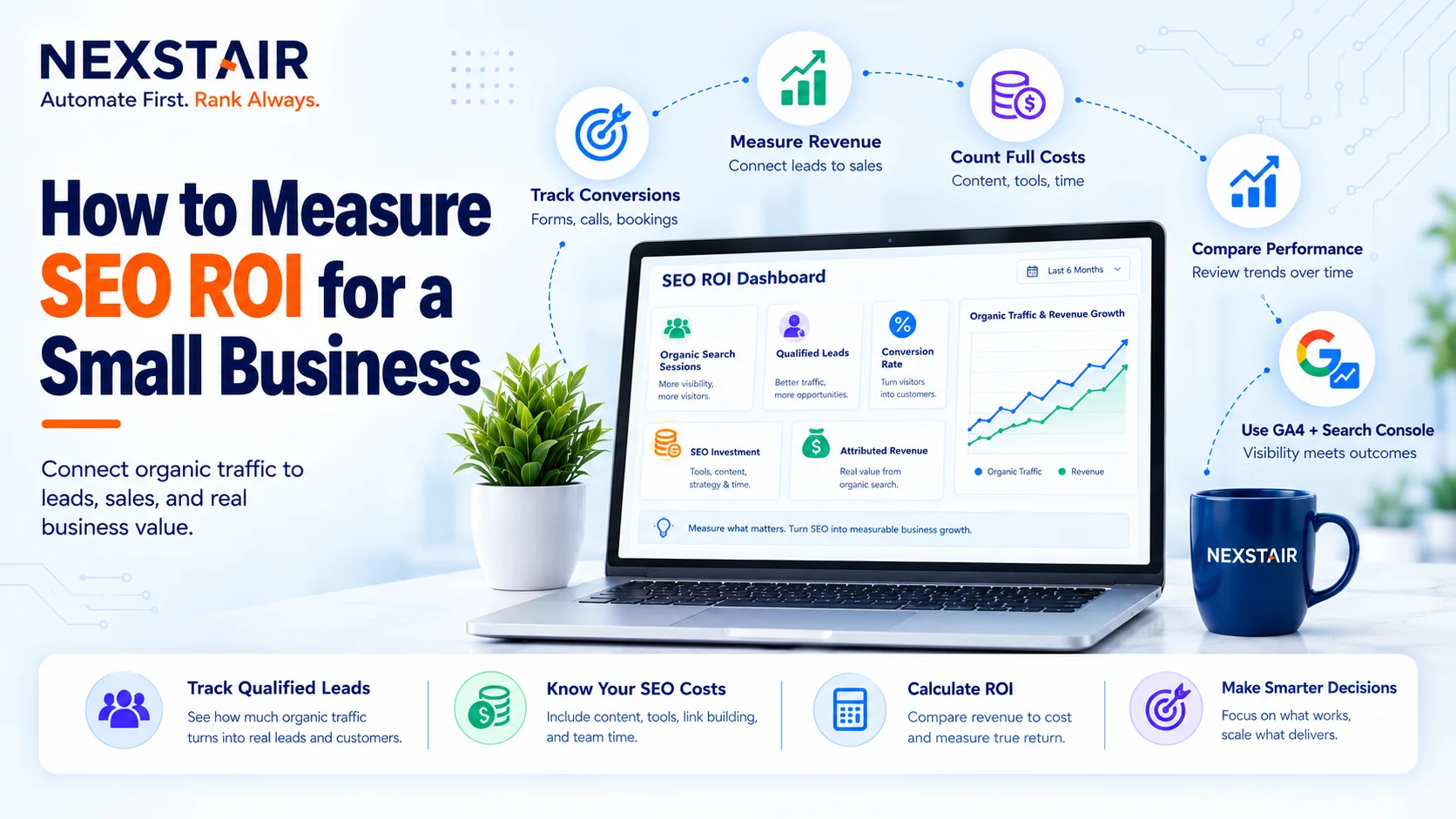
How to Measure SEO ROI for a Small Business
SEO ROI (search engine optimization return on investment) is the profit your organic search work returns, expressed as a percentage...
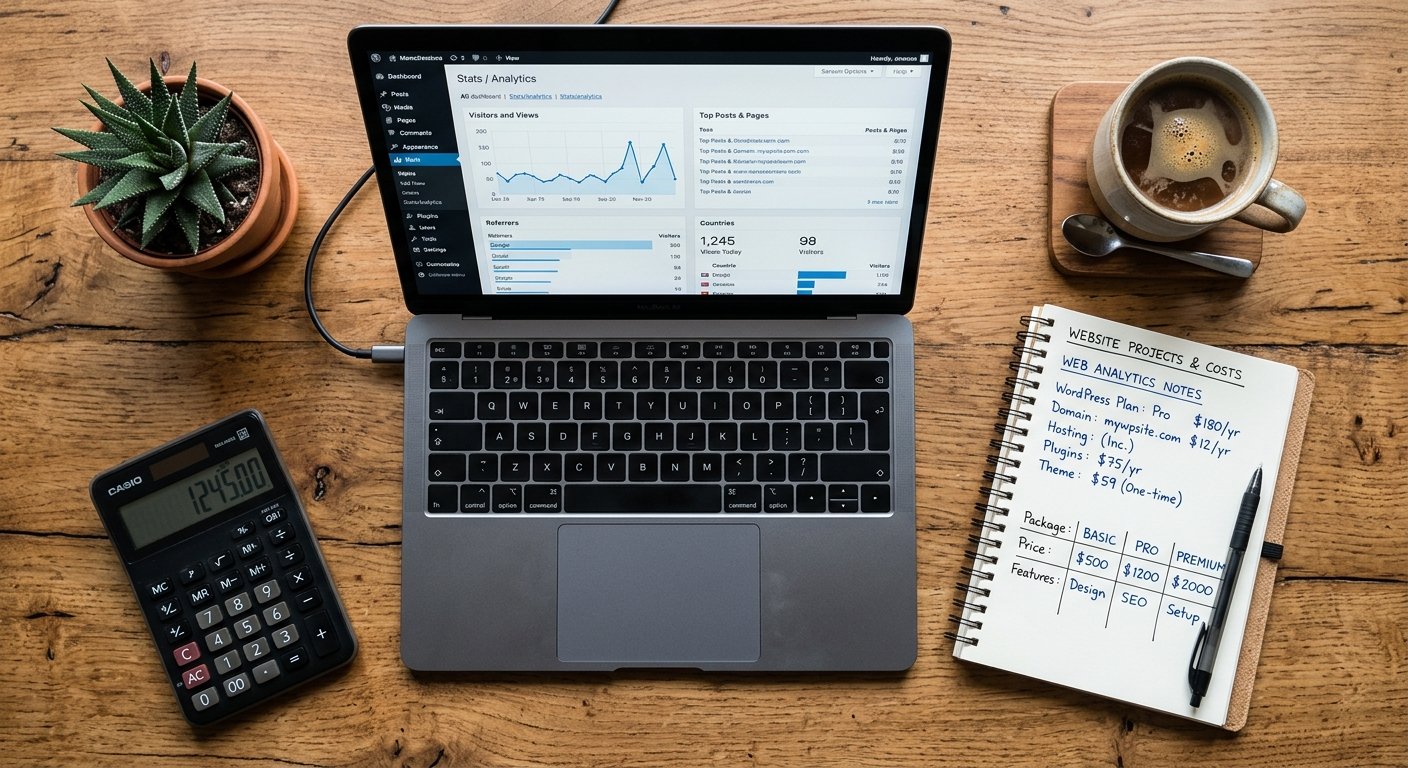
How Much Does a WordPress Website Cost in 2027?
If you search for the WordPress Website Cost, you will see answers ranging from $50 to $50,000. Nobody is lying...
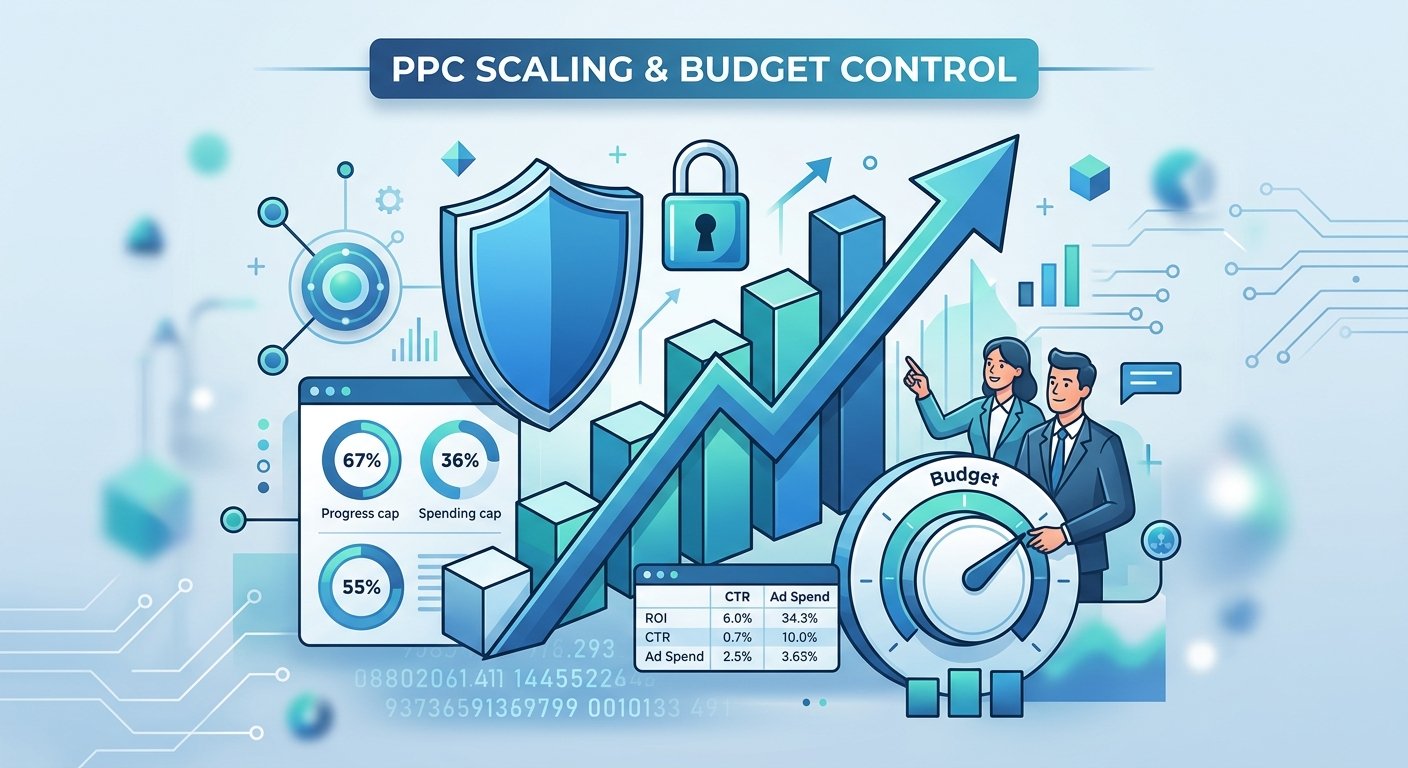
Scale Your PPC Campaign Without Losing Budget
Scale your PPC campaign presents one of the most persistent dilemmas in digital marketing. When budgets increase, ad spend can...
Social Media Strategy for Small Business in 2026: Platforms, Budgets and AI Search Visibility
A social media strategy is a written plan that ties one business goal to a defined audience, two or three...
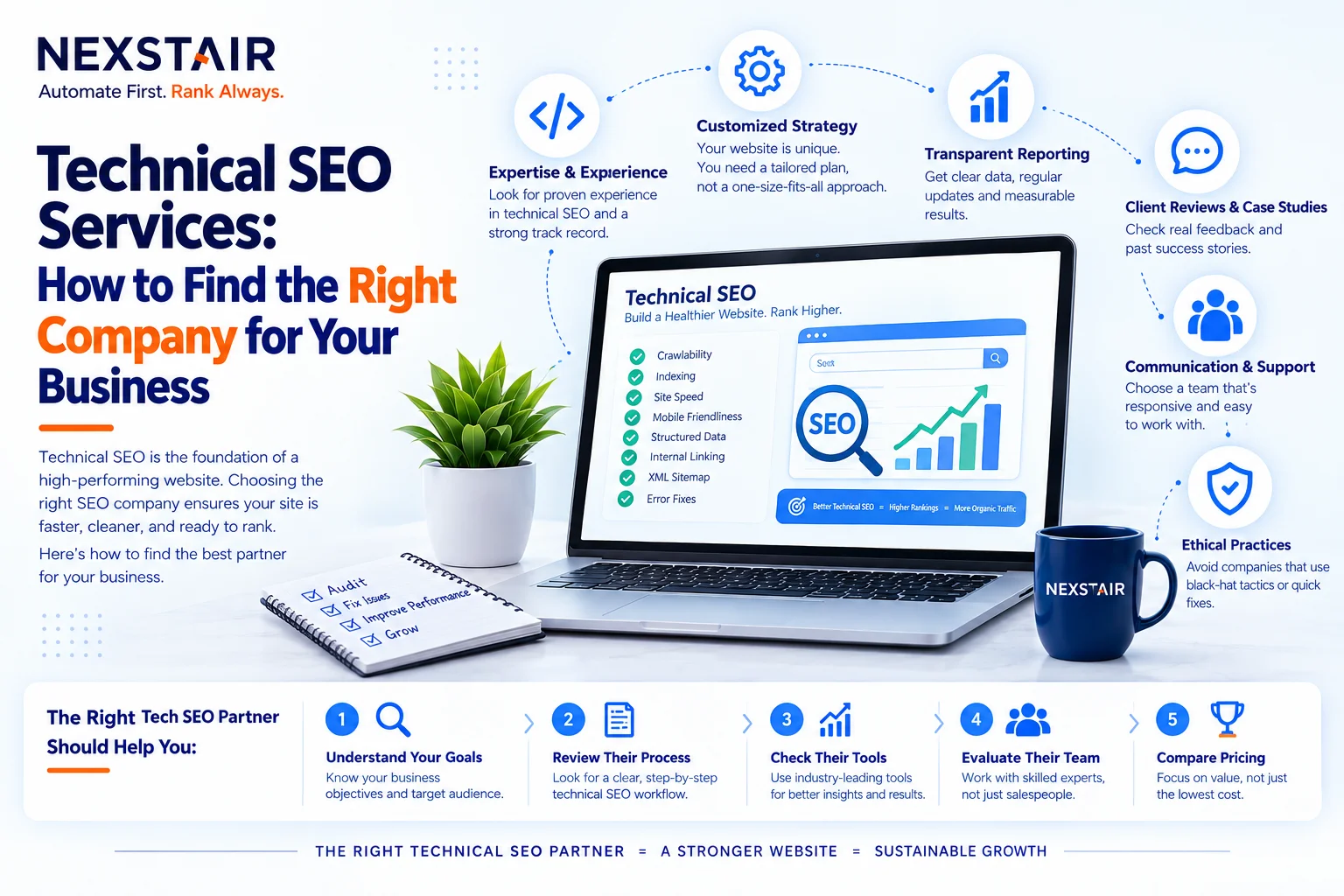
Technical SEO Services: How to Find the Right Company for Your Business
Technical SEO services (also called technical search engine optimization) are the fixes and checks that let search engines crawl, render,...