
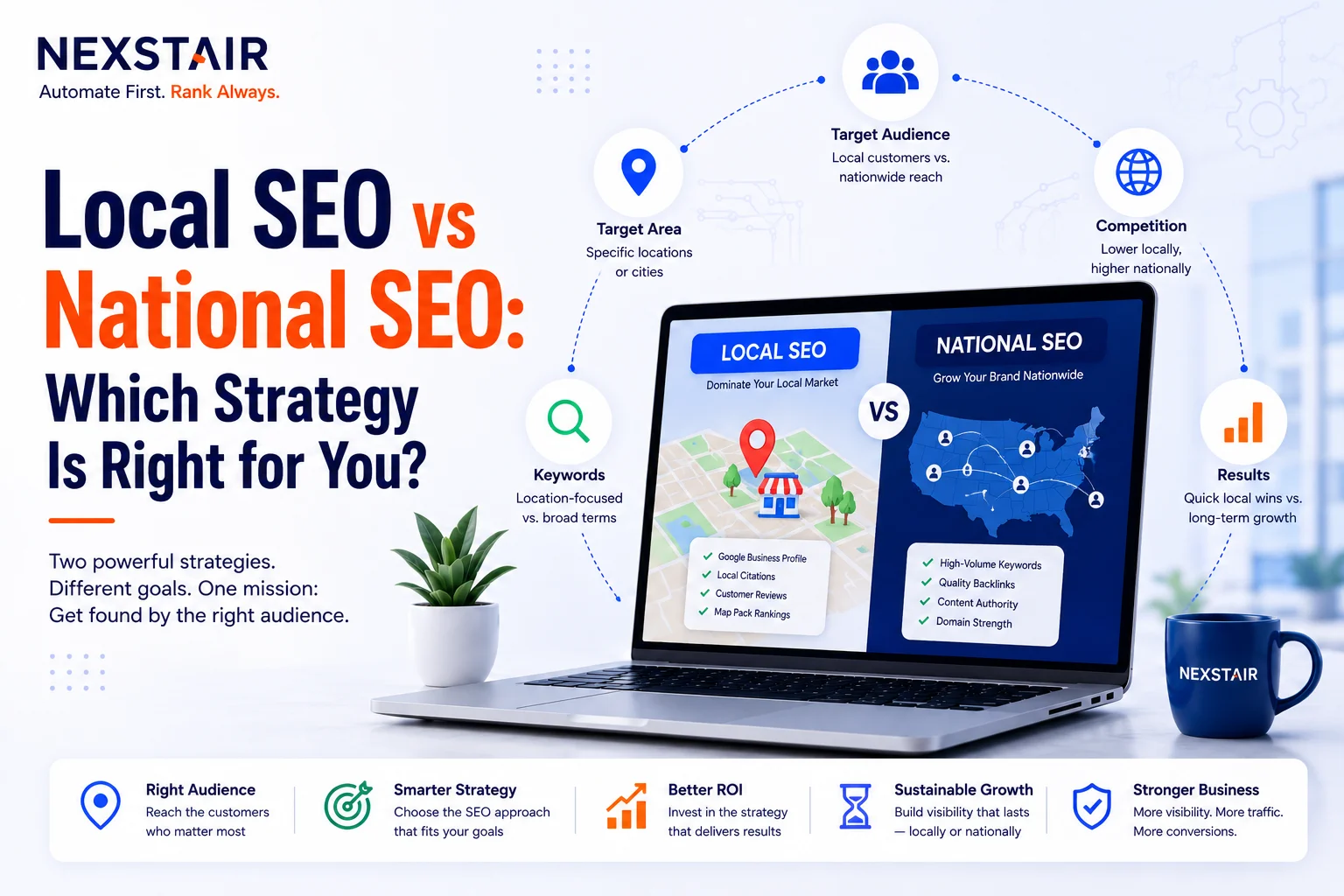
Local SEO vs National SEO: Which Strategy Is Right for You?
Local SEO gets a business ranking for a city or a service area. National SEO gets a business ranking across an entire country. The two use different keywords, different ranking signals, and different budgets, and picking the wrong one wastes months of work. A Casper plumber competing for “emergency plumber Casper WY” needs local SEO. A SaaS company selling nationwide needs national SEO. Most established brands eventually need both.
Local SEO leans on Google Business Profile, NAP consistency, and location pages. National SEO leans on domain authority, broad keyword targeting, and large-scale content and link building. The right choice depends on how a business actually serves customers: from one storefront, from several locations, or entirely online. This article breaks down what separates the two strategies, how Google treats them differently, which businesses fit each model, and how a hybrid approach lets a growing company capture both.
What Is Local SEO?
Local SEO optimizes a website so it ranks for searches tied to a specific city, neighborhood, or service radius. A search for “roofing contractor near me” or “dentist in Casper” triggers Google’s local algorithm, which weighs proximity, relevance, and prominence rather than pure domain authority. That’s why a small local business can outrank a national chain for a “near me” query even with a fraction of the backlinks.
Three signals drive local rankings. Google Business Profile optimization controls how a business appears in the Map Pack, the three-listing block that sits above organic results for local intent searches. NAP consistency, meaning the business’s name, address, and phone number match exactly across the website, directories, and review platforms, tells Google the listing is legitimate. Local citations, meaning mentions of the business on directories like Yelp, the Better Business Bureau, and industry-specific listings, reinforce that same trust signal.
Local SEO suits businesses with a physical location or a defined service area: contractors, medical practices, law firms, restaurants, and home service companies. A Kansas City plumber only has to outrank other Kansas City plumbers, not every plumber in the country, which usually means faster rankings and a lower cost per lead than a national campaign aimed at the same keyword.
What Is National SEO?
National SEO targets keywords without a geographic qualifier: “project management software,” “running shoes,” “pet supplies.” The goal is visibility across every state, not one metro area, which means the competition includes every company selling that product or service anywhere in the country.
Because the competitive pool is larger, national SEO relies more heavily on domain authority, comprehensive content, and off-site link building than on Google Business Profile or citations. A national campaign typically needs topic clusters that cover a subject in depth, backlinks from high-authority publishers, and technical SEO strong enough to support hundreds or thousands of indexed pages. E-commerce retailers, SaaS platforms, and franchises with a nationwide footprint are the most common fit.
National SEO also costs more and takes longer to show results. Ranking a single city page for a mid-competition local term can happen in two to three months. Ranking a broad national keyword against established competitors often takes six months or longer, because the content and backlink profile have to compete against every player in that market, not just the ones in one city.
Local SEO vs National SEO: The Key Differences
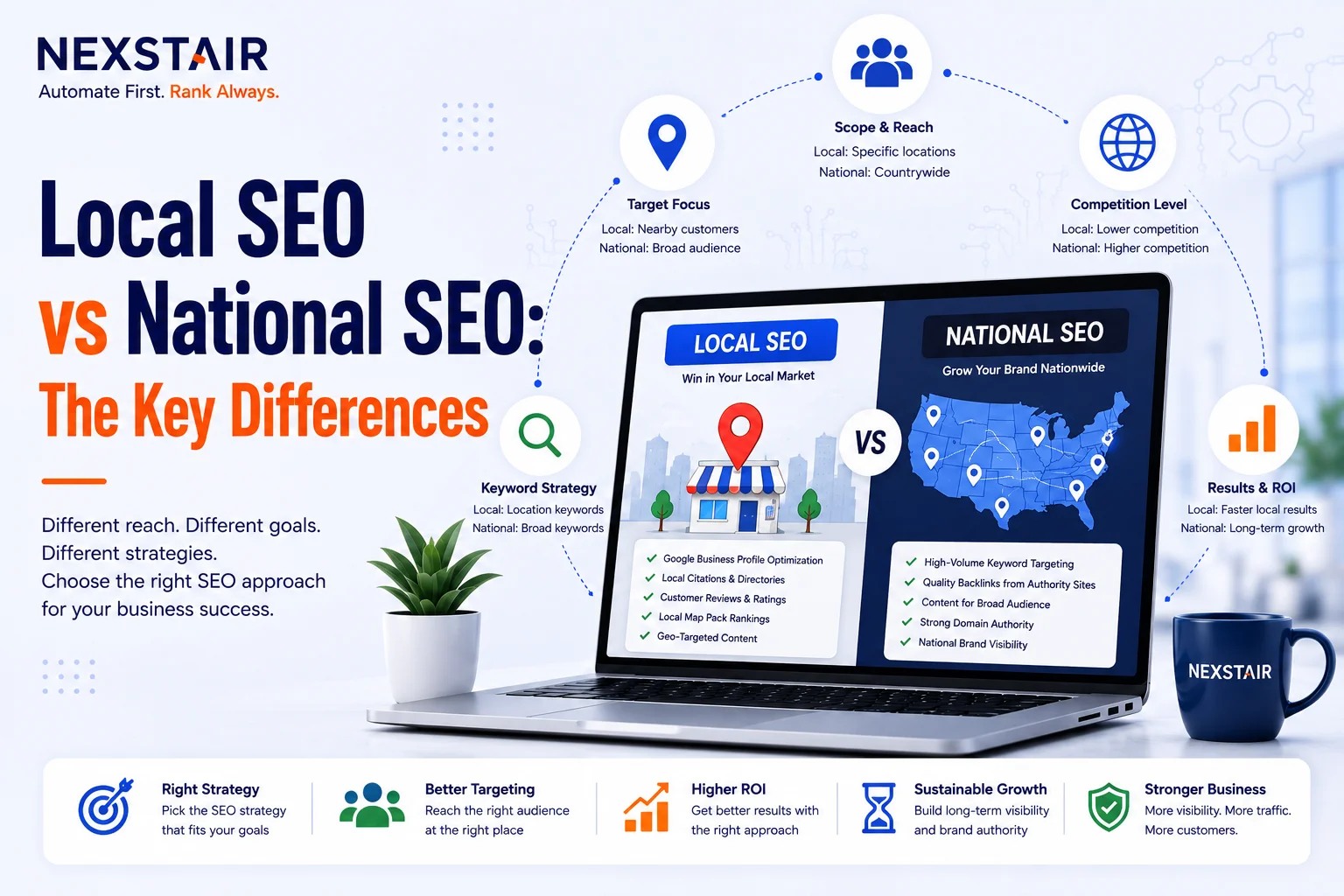
Target Audience and Search Intent
Local SEO targets people ready to act nearby: someone typing “HVAC repair near me” usually wants a call within the hour. National SEO targets a broader, often earlier-stage audience researching options before deciding on a brand. That difference in intent shapes everything downstream, from the keywords chosen to the content written to match them.
Keyword Research
Local keyword research centers on geography: “electrician in Casper,” “Casper WY electrician,” “electrician near me.” National keyword research strips the geography out and focuses on volume and commercial intent instead: “commercial electrician,” “electrical contractor services,” “hire an electrician.” A business that serves multiple regions but writes only broad, ungeo-tagged pages will miss the local searches its nearest competitors are winning.
Google Business Profile and the Map Pack
Local SEO depends on Google Business Profile in a way national SEO simply doesn’t. An optimized profile, complete with accurate categories, service areas, photos, and regularly answered questions, is often the single biggest lever for Map Pack visibility. National SEO doesn’t chase the Map Pack at all; it competes purely in organic results.
Content Strategy
Local content strategy builds dedicated pages for each city or neighborhood served, each with unique details rather than the same copy swapped with a new city name. National content strategy builds topic clusters: a pillar page on a broad subject supported by dozens of related articles that establish depth and authority across the whole topic. Duplicate, thin location pages hurt local rankings; thin national content loses to competitors with genuinely comprehensive coverage.
Link Building
Local link building targets local sources: chambers of commerce, local news sites, community sponsorships, and industry directories tied to a specific region. National link building targets high-authority, often national publishers, guest posts on industry sites, and digital PR campaigns designed to earn coverage from outlets with a nationwide audience.
Ranking Factors and Algorithm
Google runs local results through a separate ranking system weighted by proximity, relevance, and prominence. Nearly half of all Google searches carry local intent, which is why the Map Pack sits above organic results on so many queries. National rankings run through the standard organic algorithm, where domain authority, content quality, backlink profile, and technical performance carry the most weight.
Cost and Timeline
Local SEO is generally the more affordable, faster-moving strategy because the competitive pool is smaller. National SEO usually costs more per month and takes longer to show measurable gains, since it’s competing against every business chasing the same broad terms nationwide. Neither is inherently better; the right budget depends on which pool of customers the business actually needs to reach.
Which Strategy Fits Your Business?
Choose local SEO if:
- The business operates from one or a handful of physical locations
- Customers typically search with “near me” or a city name attached
- The service area is limited to a metro area, county, or state
- Foot traffic, phone calls, or in-person visits drive revenue
Choose national SEO if:
- The business ships products or delivers services anywhere in the country
- There’s no physical storefront customers need to visit
- Competitors are other national or online-only brands, not neighborhood businesses
- The goal is broad brand visibility across every region at once
Choose both if:
- The business has multiple locations across different cities or states
- The company sells online nationally but also wants walk-in traffic to physical stores
- Growth plans include expanding from a single market into new regions over time
Combining Local and National SEO
Local and national SEO aren’t mutually exclusive, and treating them as an either-or choice usually leaves opportunity on the table. A multi-location retailer, for example, needs local pages optimized for each city it serves and a strong national domain that ranks for the broader category terms tying those locations together.
The two strategies also reinforce each other. Strong national content and a healthy backlink profile raise a site’s overall domain authority, and Google factors that authority into how confidently it ranks the site’s local pages too. A well-built national blog covering a product category in depth doesn’t just capture broad searches; it also lends credibility to every city page hanging off the same domain.
The practical approach for a growing business is to start where the revenue is. A single-location service business should build out local SEO first: Google Business Profile, citations, and city-specific content. A business planning to expand into new markets should layer in national-level content and authority-building alongside the local foundation, so the domain is ready to support new city pages as new locations open.
How Nexstair Approaches Local and National SEO
Nexstair builds SEO strategy around how a business actually serves its customers, not a one-size-fits-all package. Local engagements include Google Business Profile optimization, citation building, and geo-targeted content designed to win Map Pack visibility in a specific city or service area. National and multi-location engagements add technical SEO audits, topic cluster content, and off-site authority building aimed at competing for broader, ungeo-tagged keywords.
Every engagement starts with a technical SEO audit and a competitor analysis, so the strategy reflects the actual gap between a site and the pages currently outranking it, whether those competitors are three blocks away or across the country. Keyword research follows, mapping each target term to the right intent stage and content type before a single page is built, which keeps local pages from competing against national pages on the same domain for the same search.
Packages range from a Starter tier built for single-location small businesses, covering Google Business Profile management and a set number of target keywords, up to Enterprise contracts for multi-location and national brands that need unlimited keyword targets and weekly performance reviews. Every tier includes monthly reporting tied to rankings, organic traffic, and leads rather than vanity metrics, so a business can see whether the local pages or the national content are actually driving the growth.
Frequently Asked Questions
Is local SEO cheaper than national SEO?
Yes, local SEO usually costs less than national SEO. The competitive pool for a local keyword is limited to nearby businesses, so a smaller budget can still produce Map Pack visibility, while national keywords compete against every company in that category nationwide, which typically demands a larger content and link-building budget.
Can a business do local and national SEO at the same time?
Yes, a business with multiple locations or national ambitions can run both strategies together. Local pages target each city or service area while national content and authority-building target the broader category terms, and the two typically reinforce each other through shared domain authority.
Does national SEO help local rankings?
Yes, indirectly. A strong national content and backlink profile raises overall domain authority, and Google factors that authority into how it ranks a site’s local pages, though Google Business Profile and citations still matter most for the Map Pack itself.
How long does local SEO take to show results?
Local SEO typically shows initial ranking movement within 60 to 90 days, faster than most national campaigns, because the competitive pool is smaller and Google Business Profile changes can affect Map Pack visibility relatively quickly.
What is the difference between local SEO and national SEO keywords?
Local keywords include a geographic qualifier, such as a city name or “near me,” while national keywords target the product or service category without any location attached. A local plumber targets “plumber in Casper WY”; a national plumbing supply retailer targets “plumbing fixtures.”
Do I need a Google Business Profile for national SEO?
Not necessarily. A Google Business Profile matters most for businesses competing in the Map Pack for local searches. A purely online national business without a physical location customers visit can still benefit from a profile for brand trust, but it isn’t the primary ranking lever the way it is for local SEO.
Which industries benefit most from local SEO?
Home service contractors, medical and dental practices, law firms, restaurants, and retail stores with physical locations benefit most from local SEO, since their customers typically search with location intent and complete a purchase or booking nearby.
Which industries benefit most from national SEO?
E-commerce retailers, SaaS companies, and franchises with a nationwide footprint benefit most from national SEO, since their customers aren’t tied to one metro area and their competitors are other national or online-only brands.
Is national SEO the same as international SEO?
No. National SEO targets one country’s search results without geographic qualifiers inside that country. International SEO goes further, using hreflang tags and multilingual content to target multiple countries or languages at once, which is a separate strategy with its own technical requirements.
Can a small business afford national SEO?
It depends on the competition. A small business entering a low-competition national niche can compete on a modest budget, but most small businesses without a national customer base get a faster return by starting with local SEO and expanding once the local market is saturated.
Yes. A national brand with physical retail locations gains from building a dedicated page per store, complete with local address, hours, and store-specific content, because that page can win Map Pack visibility in each metro area while the main domain continues competing for the broader national keywords.
The Bottom Line
Local SEO wins nearby customers who are ready to act, built on Google Business Profile, NAP consistency, and city-specific content. National SEO wins visibility across an entire country, built on domain authority, topic clusters, and broad off-site link building. A single-location service business should build local first. A business with multiple locations or nationwide ambitions needs both working together, since a strong national domain lends authority to every local page attached to it.
Choosing between local SEO vs national SEO isn’t really a choice between two competitors; it’s a decision about where the next customer is searching from and what it takes to be the answer they find. Nexstair audits both sides of that equation, from Map Pack visibility to national keyword competition, before recommending which one to build first.
Recent Posts
Related Posts

Scale Your PPC Campaign Without Losing Budget
Scale your PPC campaign presents one of the most persistent dilemmas in digital marketing. When budgets increase, ad spend can...

Social Media Strategy for Small Business in 2026: Platforms, Budgets and AI Search Visibility
A social media strategy is a written plan that ties one business goal to a defined audience, two or three...
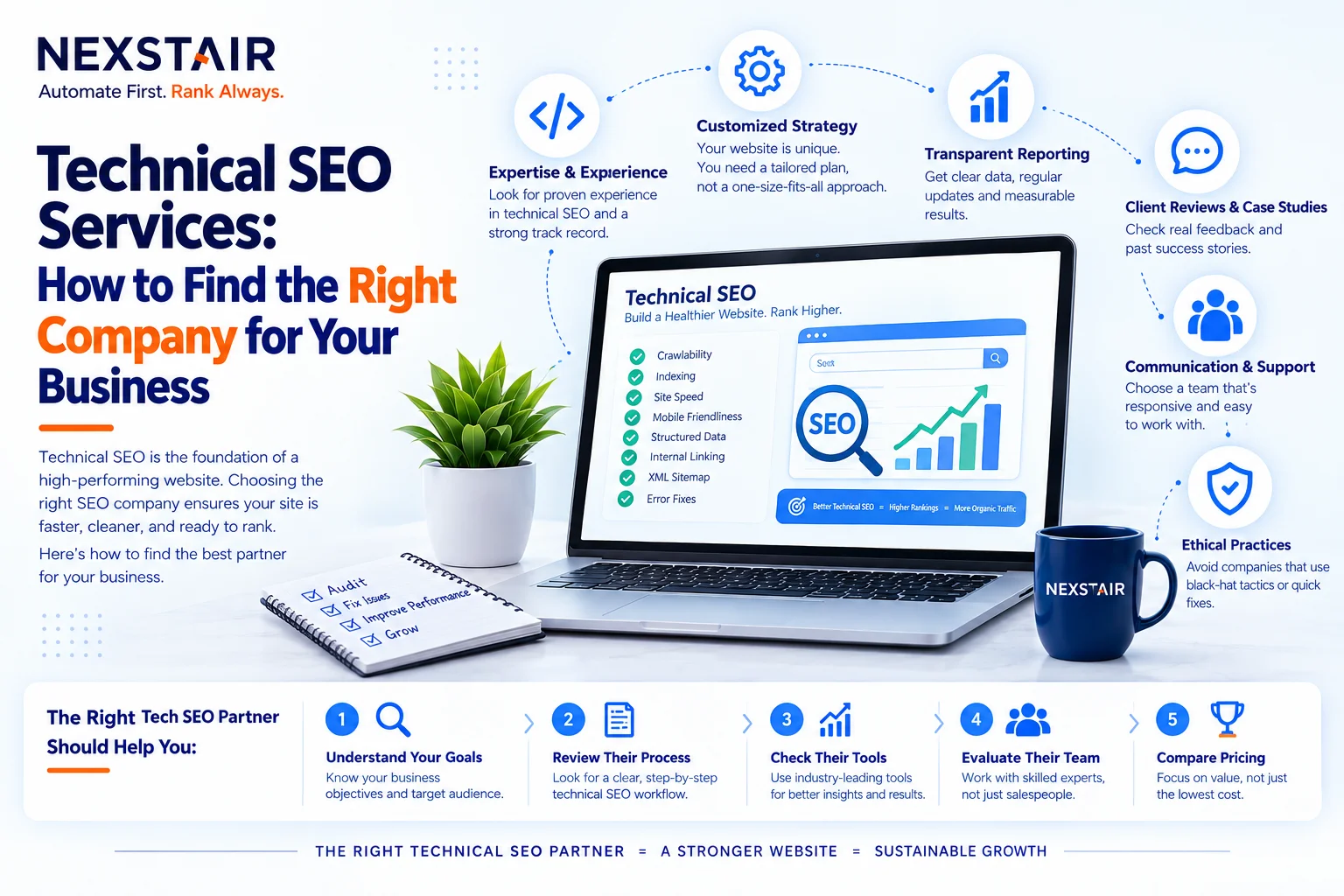
Technical SEO Services: How to Find the Right Company for Your Business
Technical SEO services (also called technical search engine optimization) are the fixes and checks that let search engines crawl, render,...
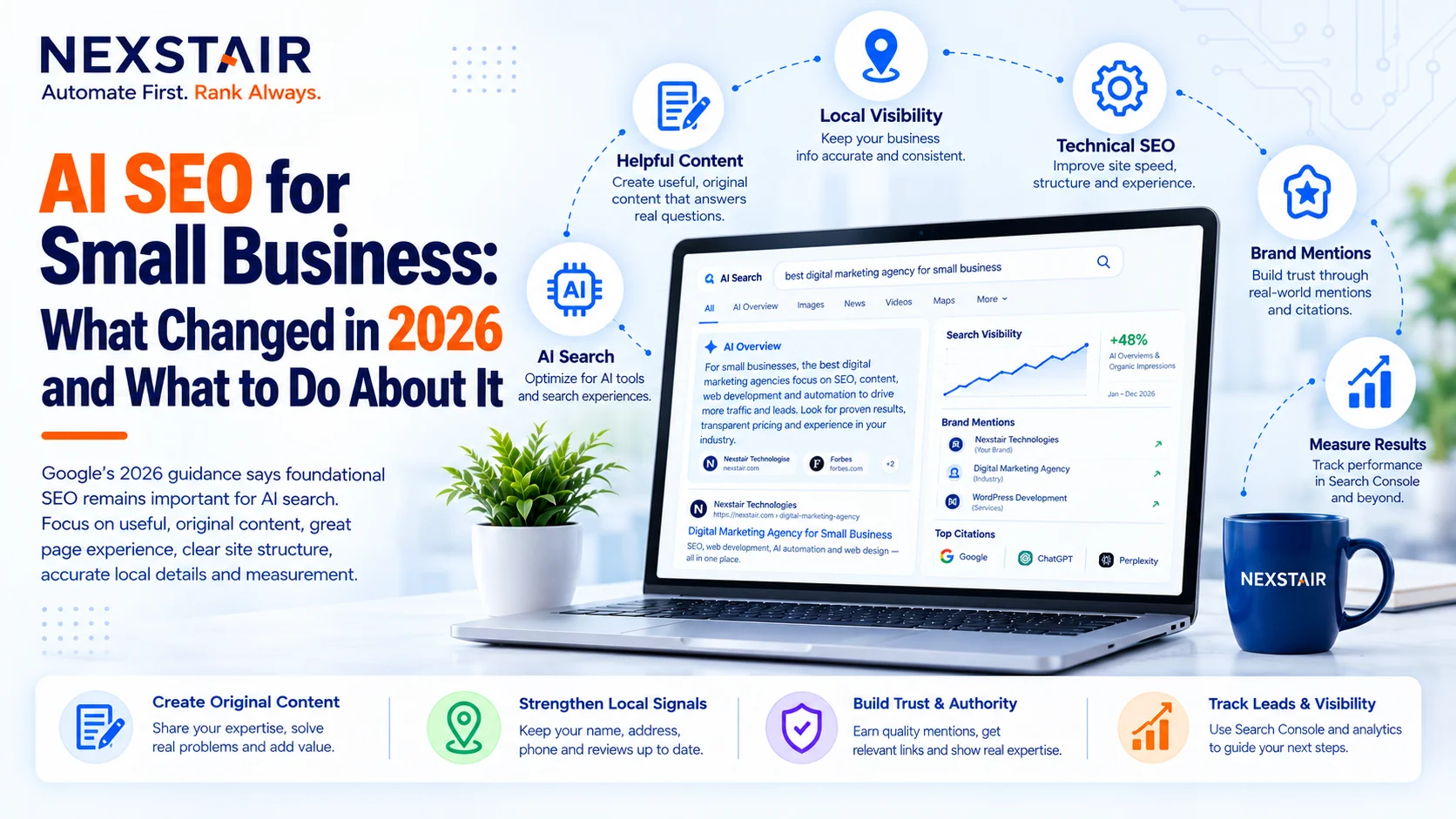
AI SEO for Small Business: What Changed in 2026 and What to Do About It
AI SEO for small business is no longer a future trend to watch. It is the environment every local shop,...

Are AI Web Crawlers Indexing Your Site Correctly?
For years, web developers have relied on JavaScript to power the modern internet, operating under the assumption that search engines...