
Social Media Strategy for Small Business in 2026: Platforms, Budgets and AI Search Visibility
A social media strategy is a written plan that ties one business goal to a defined audience, two or three platforms, a content calendar, and a monthly budget. In 2026 it also decides whether AI answer engines mention your brand. Google AI Overviews (AIO), ChatGPT, Perplexity and Gemini pull citations from places your customers already scroll: YouTube, Reddit, LinkedIn and Facebook.
That shift has a number attached. SparkToro’s early 2026 data shows about 68% of Google searches end without a click. So a post quoted inside an answer now earns attention a blue link no longer delivers. Answer engine optimization (AEO) and generative engine optimization (GEO) describe how you earn those quotes.
A weekly routine needs one monthly batching session and about 15 minutes of daily replies, which Nexstair’s step-by-step guide to managing social media for a small business breaks down task by task.
This guide covers goals and audience, the platforms US buyers use, content formats, posting frequency, paid ads, monthly budgets in dollars, and how AIO, AEO and GEO connect to everyday posting. It suits local shops, ecommerce brands and B2B firms alike.
Set the goal and audience first
Goals come before platforms. Pick one outcome with a number attached: 40 booked calls a month, 200 online orders, or 1,000 email signups. “More awareness” gives you nothing to measure.
Audience comes second. Write down age range, region, the problem they search for, and the app they open first. A dental practice in Ohio and a software firm in Austin need different answers. With both inputs fixed, the platform choice follows.
Choose platforms by where buyers already spend time
Pew Research Center’s 2025 survey found that 84% of US adults use YouTube, 71% use Facebook, 50% use Instagram and 37% use TikTok. Adults under 30 skew toward Instagram and TikTok. Only YouTube and Facebook draw a majority in every age group.
- Pick Facebook for local services, events and community groups.
- Choose Instagram for food, beauty, fashion and home goods.
- Use LinkedIn for B2B sales and hiring.
- Post long-form video on YouTube for how-to topics.
Two or three platforms beat five thin ones. Formats then decide what each platform returns.
Build content around questions and video
Content works when it answers one specific question in a native format. Short reels win views. Long videos, LinkedIn articles and detailed Reddit replies win citations. Rotate three pillars: education, product proof and customer stories.
Write captions as answers. Lead with the direct response, add one number, and stop under 80 words. Add a plain-language video title and a transcript, because AI systems read text, not footage. How much of this you can sustain depends on your rhythm.
Post on a rhythm you can keep
Posting three to five times a week per platform suits most small teams. In practice, consistency beats volume. Film a month of clips in two sessions, schedule them in Meta Business Suite, and keep a few slots open for timely offers. Organic posts build trust slowly, so ads fill the gap.
Run ads once an offer converts
Ads pay off after one organic offer has proven itself. Skip boosting posts that earned no saves or comments. Start a conversion campaign in Meta Ads Manager, then add retargeting for site visitors and video viewers, the cheapest sales you’ll win. Campaigns beat boosted posts because they offer clearer objectives and tracking. Spend needs a ceiling, which the budget sets.
Set a monthly budget in dollars
Done-for-you management costs $500 to $3,000 a month for most small businesses in 2026, per published agency and freelancer rates. Ad spend sits on top. WebFX puts the average at $850 to $2,000, and local firms can test from $200 to $500. Scheduling software adds $6 to $50 for solo owners. Start with one test platform, then scale what returns leads. AI visibility needs structure, not extra spend.
Connect AIO, AEO and GEO to your posts
The three terms describe layers of one job: becoming the source an answer gets built from.
- AIO: Google’s summary box above the results. Reddit and YouTube supply most social citations there.
- AEO: formatting so one passage answers one question. FAQ posts, short definitions and numbered steps fit.
- GEO: earning brand mentions across sources that ChatGPT, Perplexity and Gemini read.
Meltwater data reported by Digiday ranked YouTube as the most-cited platform across eight AI products in August 2026, ahead of Reddit. Profound-based tracking shows long-form videos take about 94% of YouTube citations. Citations also fade, falling roughly 43% within a month, so refresh winners monthly.
- Publish one long video per topic, with chapters and a transcript.
- Answer real questions on Reddit and LinkedIn under a named profile.
- Match your business name, services and bio on every profile.
- Link each post to a site page holding the full answer.
Measurement shows which of these works.
Measure leads, then AI mentions
Track leads, sales and cost per lead before follower counts. Install the Meta Pixel and add UTM tags for Google Analytics 4. Then ask ChatGPT, Perplexity and Google ten buyer questions each month and record whether your brand appears. Ahrefs Brand Radar automates that check.
Frequently asked questions
Can social posts get a business cited in AI answers?
Yes, YouTube, Reddit and LinkedIn posts appear regularly as AI sources. Clear answers, named profiles, consistent business details and transcripts raise your odds of being the passage an engine quotes.
What is generative engine optimization?
Generative engine optimization (GEO) is the practice of earning mentions and citations inside AI-written answers. It covers brand mentions, source quality and fresh content.
Which platforms matter most for AI citations?
YouTube, Reddit and LinkedIn lead the published citation studies. Facebook and TikTok still matter for reach and sales, though far fewer AI citations trace back to them.
Is AEO or GEO the better starting point?
AEO comes first. Fix your own posts and pages so each answers one question, then widen mentions across other sites with GEO. The order matters because outside mentions only help when your own answer is clear.
Do follower counts affect AI citations?
No. A YouTube citation study found no correlation between views, likes or subscribers and citation frequency. Answer quality matters more.
How long until results show?
Paid ads can produce leads within days, while organic growth takes weeks to months. Review AI visibility every 30 days, since citations fade fast.
Should I post the same content on every platform?
No, reshape each idea per platform. Cut a reel for Instagram and TikTok, a long video for YouTube, and a written takeaway for LinkedIn. One shoot can fill all three slots.
The written plan starts with one goal and one audience, then picks two or three platforms where buyers already watch. Question-led video, a steady weekly rhythm and ads behind a proven offer follow, all inside a monthly budget in dollars. AIO, AEO and GEO reward that same work, because AI answer engines quote clear, repeated, well-sourced posts. Measure leads first, then mentions.
Want a team to run it? See Nexstair’s social media services or talk to Nexstair Technologies about running your social channels.
Recent Posts
Related Posts
Scale Your PPC Campaign Without Losing Budget
Scale your PPC campaign presents one of the most persistent dilemmas in digital marketing. When budgets increase, ad spend can...
Social Media Strategy for Small Business in 2026: Platforms, Budgets and AI Search Visibility
A social media strategy is a written plan that ties one business goal to a defined audience, two or three...
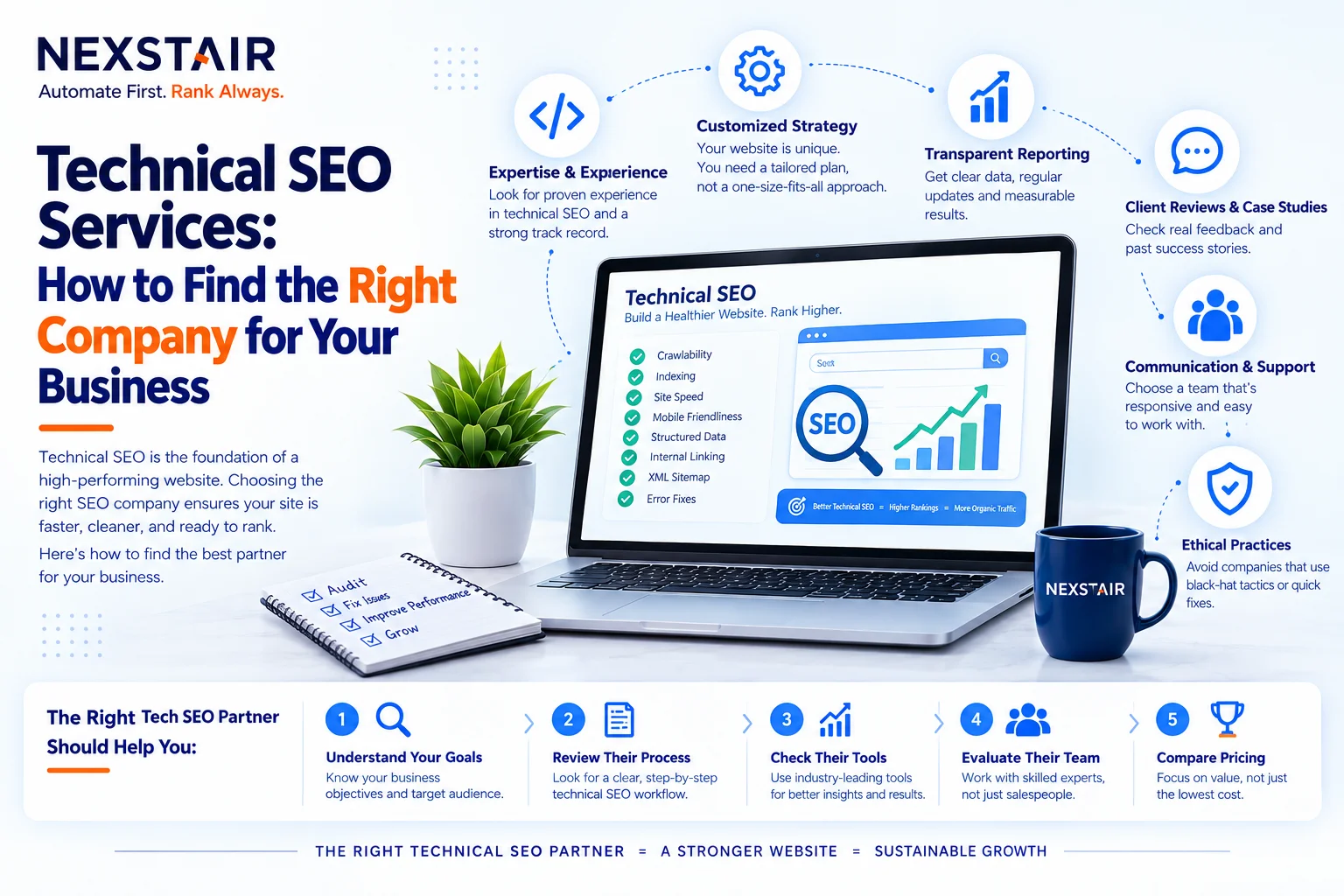
Technical SEO Services: How to Find the Right Company for Your Business
Technical SEO services (also called technical search engine optimization) are the fixes and checks that let search engines crawl, render,...
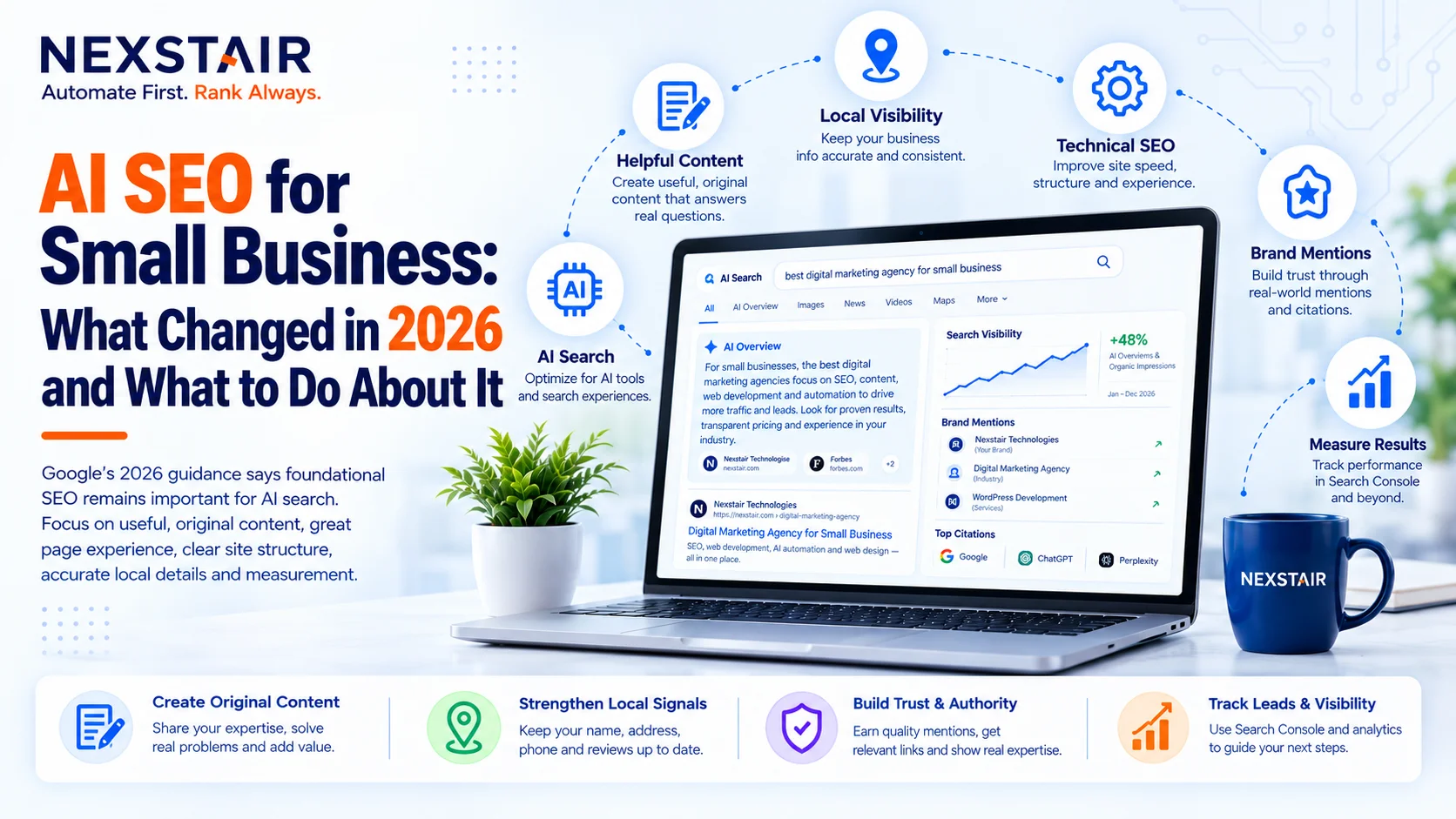
AI SEO for Small Business: What Changed in 2026 and What to Do About It
AI SEO for small business is no longer a future trend to watch. It is the environment every local shop,...
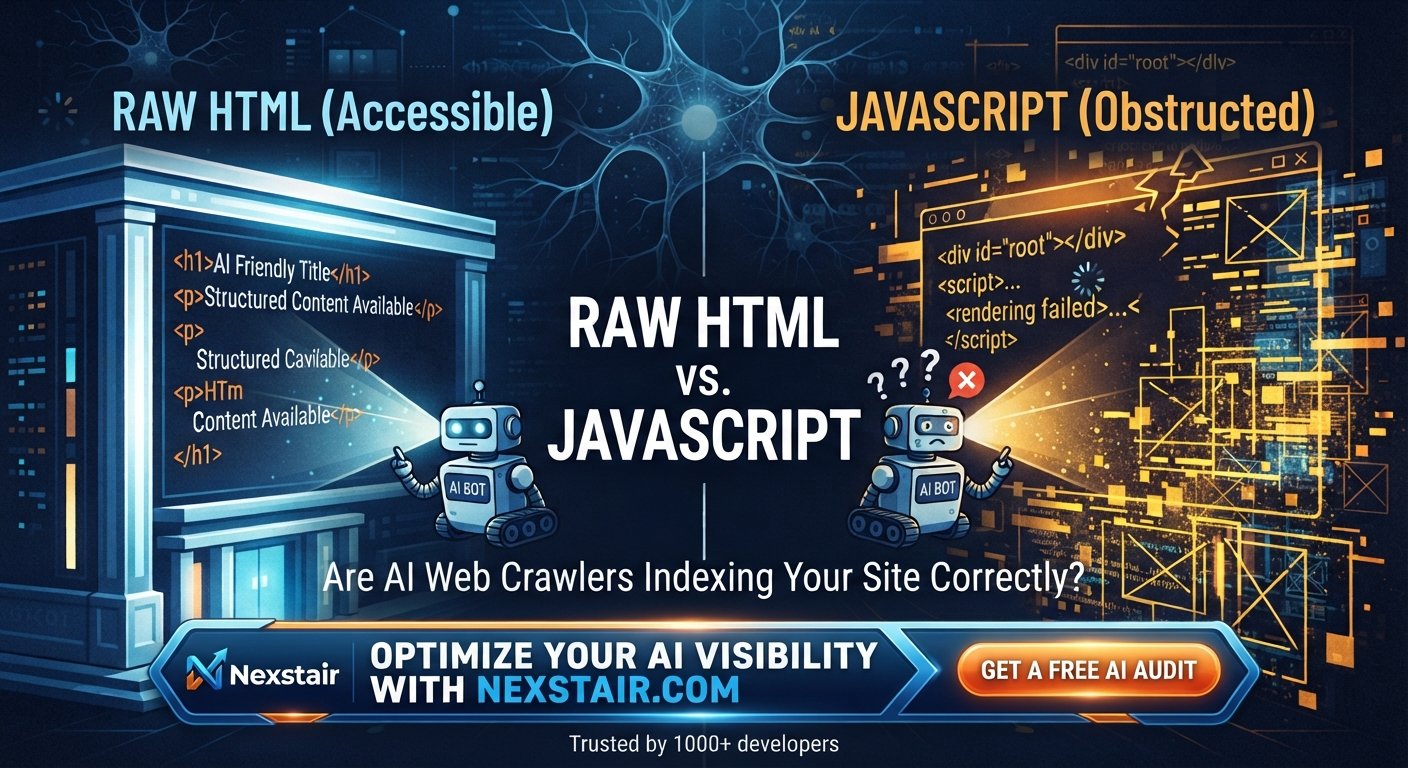
Are AI Web Crawlers Indexing Your Site Correctly?
For years, web developers have relied on JavaScript to power the modern internet, operating under the assumption that search engines...