
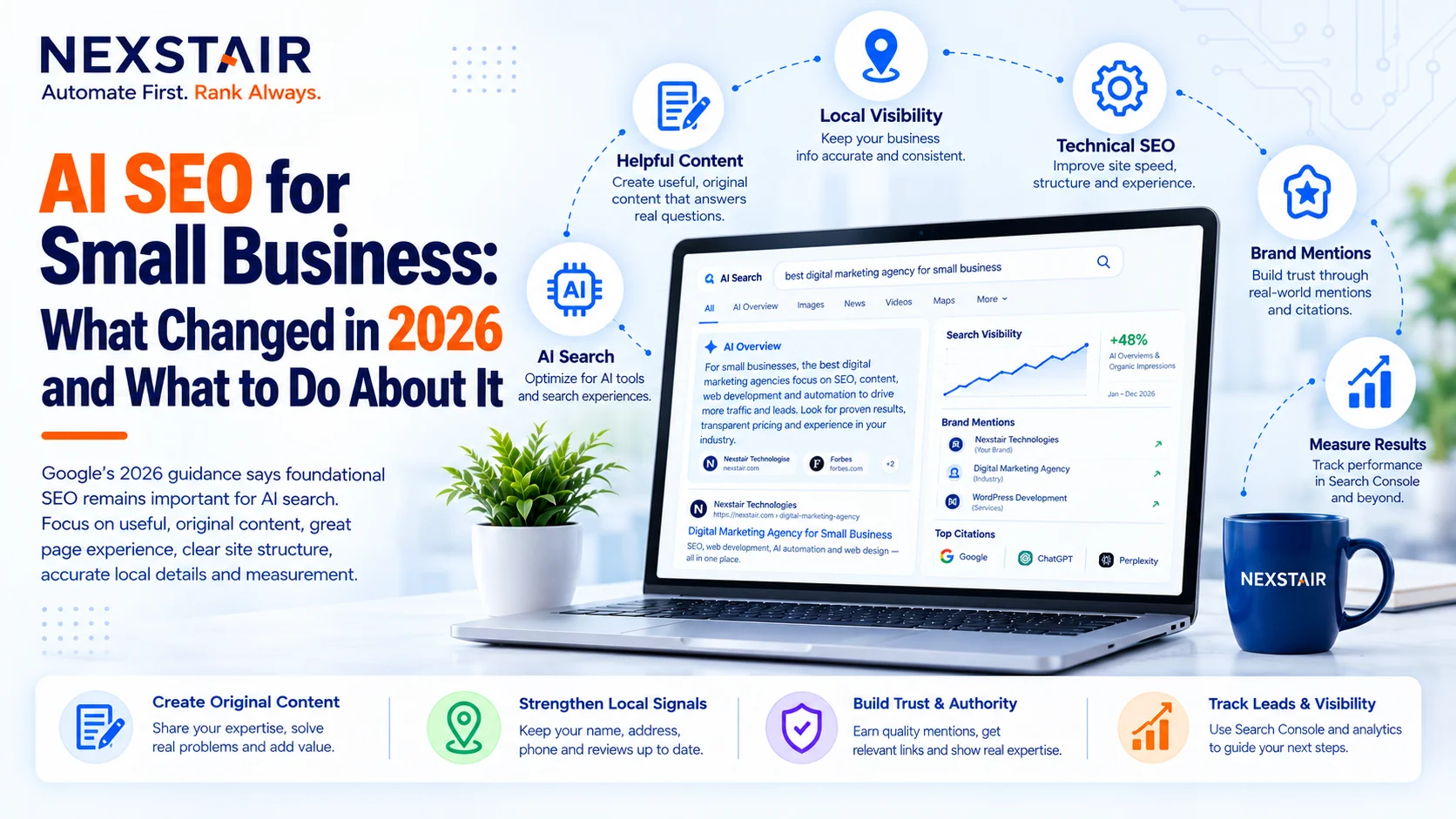
AI SEO for Small Business: What Changed in 2026 and What to Do About It
AI SEO for small business is no longer a future trend to watch. It is the environment every local shop, service company, and online store is already competing in. Search results now open with AI-written summaries, conversational search modes answer questions without sending anyone to a website, and customers increasingly ask ChatGPT or Perplexity for recommendations instead of scrolling through ten blue links.
That shift hurts businesses that kept doing SEO the 2022 way. It also opens a real opening for small businesses willing to adapt, because AI systems often cite specific, well-structured pages from smaller sites rather than only the biggest brands. This guide explains what changed, what the 2026 data says, and the practical steps that matter most.
What AI SEO Actually Means in 2026
The phrase covers two different things, and mixing them up leads to wasted effort.
The first is using AI tools to do SEO work faster: keyword research, content briefs, technical audits, and rank tracking. The second is optimizing for AI-powered search, meaning your pages get found, understood, and cited by systems like Google’s AI Overviews, AI Mode, ChatGPT, and Perplexity. The second is often called generative engine optimization, or GEO.
Good AI SEO for small business covers both. The tools help you work efficiently with a small team, and the optimization side keeps you visible as more searches get answered before anyone clicks.
How AI Search Is Changing Small Business Traffic
More Searches End Without a Click
SparkToro’s data on U.S. Google searches found that roughly 68 percent ended without a click to any destination in early 2026. That figure includes clicks to ads and Google’s own properties, so it does not mean organic traffic fell by that amount, but the direction is clear: fewer searches turn into website visits.
AI Overviews are a major contributor. A randomized field experiment published in April 2026, which covered 1,065 U.S. desktop users, found that AI Overviews reduced outbound organic clicks by about 38 percent on queries where they appeared. Zero-click behavior on those queries rose from 54 percent to 72 percent. Google disputes the broader conclusion and argues the clicks that remain are higher quality, but the study found the clicks lost were no lower in quality than the ones that stayed.
AI Mode Goes Further
Google confirmed at I/O 2026 that AI Mode passed one billion monthly users and that it is merging AI Overviews and AI Mode into a single AI search experience. Semrush’s research found that 92 to 94 percent of AI Mode sessions end without a click to an external site.
In that environment, ranking number three matters less than being named inside the answer itself. This is the part of AI SEO for small business that most owners have not planned for yet.
The Upside: Citations Carry Real Value
Seer Interactive’s analysis of 25.1 million impressions found that brands cited inside an AI Overview earned roughly 35 percent more organic clicks than brands that were not cited on comparable results pages. The same analysis reported ChatGPT referral traffic converting at 15.9 percent, compared with 1.76 percent for Google organic. That is one analysis rather than settled fact, and conversion rates vary by industry, but it matches what many marketers report: smaller volumes of AI-referred visitors tend to arrive with higher intent.
SEO vs. GEO: What Stays and What Changes
| Area | Traditional SEO | AI search (GEO) |
|---|---|---|
| Goal | Rank high in a results list | Get cited inside a generated answer |
| Unit of competition | The whole page | The individual passage |
| Key signals | Keywords, links, page speed | Clear answers, structure, trust, third-party mentions |
| Success metric | Rankings and clicks | Citations, branded searches, qualified leads |
| Content format | Long-form articles | Lists, tables, direct answers, FAQs |
The takeaway is that GEO builds on SEO rather than replacing it. Pages that are crawlable, fast, and authoritative still get picked up first. What changes is how the content is written and structured once it is found.
Seven Practical Steps for AI SEO for Small Business
1. Fix Your Technical Foundation First
AI systems pull from pages they can crawl and understand. Check that your site loads quickly, works on mobile, uses HTTPS, and has a clean structure. Slow or broken pages get skipped by both Google and AI crawlers. If your site has deeper technical problems, web development work is often the fastest fix before any content strategy can pay off.
2. Answer Questions Directly
AI answers lift passages that state a clear answer near the top of a section. Open each section with a one or two sentence direct answer, then add detail. Use headings phrased like the questions customers actually ask, such as “How much does X cost?” or “How long does X take?”
3. Use Structure That Machines Can Read
Lists, tables, and numbered steps are far easier for AI systems to extract than long unbroken paragraphs. Add FAQ sections with short, definitive answers. Add schema markup for your business type, products, reviews, and FAQs so search engines understand exactly what each page represents.
4. Strengthen Your Google Business Profile
For local businesses, this is often the highest-return move. Keep your name, address, phone number, hours, categories, and services accurate and consistent everywhere they appear online. Reviews matter here too: a steady flow of genuine, recent reviews feeds both local rankings and the signals AI tools use when recommending businesses.
5. Build Mentions Beyond Your Own Website
AI systems look at what the wider web says about you, not only your site. Industry directories, local press, community forums, and relevant partner sites all contribute. A small business that is mentioned consistently in credible places looks more trustworthy to a model than one that only talks about itself.
6. Publish Original, Specific Content
Generic content that restates what ten other pages already say gives an AI system no reason to cite you. Add what only you can: your own pricing ranges, local knowledge, process photos, customer results, or data from your own work. Specific beats general every time.
7. Check How AI Describes You
Spend fifteen minutes a month asking ChatGPT, Perplexity, and Google’s AI search the questions a customer would ask, such as “best [your service] in [your city].” Note whether you are mentioned, which sources are cited instead, and what those sources do differently. This is free competitive research that most small businesses never do.
How to Use AI Tools Without Hurting Your Rankings
AI tools can speed up SEO work considerably, but they work best on tasks where speed matters more than judgment. Useful applications include:
- Keyword and topic research: grouping search terms by intent and finding gaps competitors missed
- Content briefs: outlining what a page should cover based on what already ranks
- Technical audits: flagging broken links, missing metadata, and speed problems at scale
- Reporting: summarizing Search Console and analytics data into plain-language updates
Where AI tools cause trouble is publishing raw, unedited output. Content written entirely by a model without human review tends to be generic, occasionally inaccurate, and indistinguishable from competitors’ pages. Treat AI as a first draft and research assistant, then add real expertise, accurate details, and your own voice before anything goes live.
Common Mistakes Small Businesses Make
- Chasing rankings alone. A first-page ranking that sits below an AI Overview may bring far less traffic than it did two years ago. Track impressions, branded searches, and leads alongside rankings.
- Publishing unreviewed AI content at scale. Volume without quality dilutes your site rather than strengthening it.
- Ignoring local signals. For service businesses, an outdated Business Profile can cost more leads than any blog post earns.
- Expecting overnight results. Both traditional SEO and GEO compound over months, and anyone promising instant citations is overselling.
- Skipping measurement. Without tracking, you cannot tell which changes actually helped.
How to Measure Whether It Is Working
Rankings alone no longer tell the full story, so widen the dashboard:
- Impressions and clicks in Google Search Console, watching the gap between them as AI summaries expand
- Branded search volume, since being cited by AI often prompts people to search for your name directly
- AI referral traffic in your analytics, from sources like chatgpt.com and perplexity.ai
- Leads and revenue from organic sources, which matter more than any traffic number
- Manual citation checks, repeating your monthly AI search test and logging the results
How Long Does It Take?
Most businesses see early ranking movement within 60 to 90 days of focused work, with meaningful traffic growth typically arriving between months four and eight, depending on competition and the site’s starting condition. Citation gains in AI answers follow a similar pattern: they build as your content, reviews, and third-party mentions accumulate.
Nexstair’s own client results show what steady work can do. A luxury wedding brand running local SEO and content marketing gained about 99,900 new organic impressions in six months. An eco-tour company using structured on-page work and international SEO reached roughly 26,900 organic clicks over the same period. A destination wedding brand picked up around 93,100 new organic impressions in six months through combined on-page and off-page work. Results vary by industry and market, but they show the compounding effect of consistent effort.
If you would rather hand this work to a team, Nexstair’s SEO services combine technical audits, local SEO, content, and AI-assisted monitoring, with starter packages built around small business budgets.
Frequently Asked Questions
What is AI SEO for small business?
AI SEO for small business means using AI tools to run SEO work more efficiently while also optimizing your website so AI search systems like Google AI Overviews, ChatGPT, and Perplexity can find, understand, and cite your pages. It combines traditional SEO fundamentals with newer practices like direct-answer content and structured data.
Is SEO still worth it with AI Overviews and AI Mode?
Yes, SEO is still worth it because AI systems draw from pages that are crawlable, fast, and authoritative, which are the same foundations SEO builds. Clicks are shrinking on some queries, but businesses that get cited inside AI answers can still earn visibility and higher-intent visitors.
What is the difference between SEO and GEO?
SEO aims to rank your page in a list of search results, while GEO (generative engine optimization) aims to get your content cited inside AI-generated answers. The two overlap heavily, and most small businesses should run them together rather than choosing one.
Can AI write my SEO content for me?
AI can draft outlines and first versions, but publishing unedited AI output usually produces generic content that competitors can easily match. The strongest approach is to use AI for research and drafting, then add original details, accurate facts, and human review before publishing.
How do I get my business mentioned by ChatGPT or Perplexity?
Publish clear, well-structured answers to customer questions, keep your Google Business Profile and directory listings accurate, earn reviews and mentions on credible third-party sites, and add schema markup. No method guarantees a citation, but these steps improve the odds as AI systems look for trustworthy, specific sources.
How long does AI SEO take to show results?
Most small businesses see early movement in 60 to 90 days, with stronger traffic and lead growth between months four and eight. Competitive markets and technically weak sites generally take longer.
The Bottom Line
AI has changed how people find businesses, but it has not changed what makes a business worth finding: accurate information, genuine expertise, and a website that works well. The small businesses that win with AI SEO for small business in 2026 are the ones that keep their fundamentals strong, structure content so machines can read it, build trust beyond their own site, and measure more than rankings.
Start small. Check how AI describes your business today, fix your Google Business Profile, rewrite one key page to answer customer questions directly, and track what changes. Each step compounds, and the gap between businesses that adapt and those that wait grows wider every quarter.
Recent Posts
Related Posts
AI SEO for Small Business: What Changed in 2026 and What to Do About It
AI SEO for small business is no longer a future trend to watch. It is the environment every local shop,...
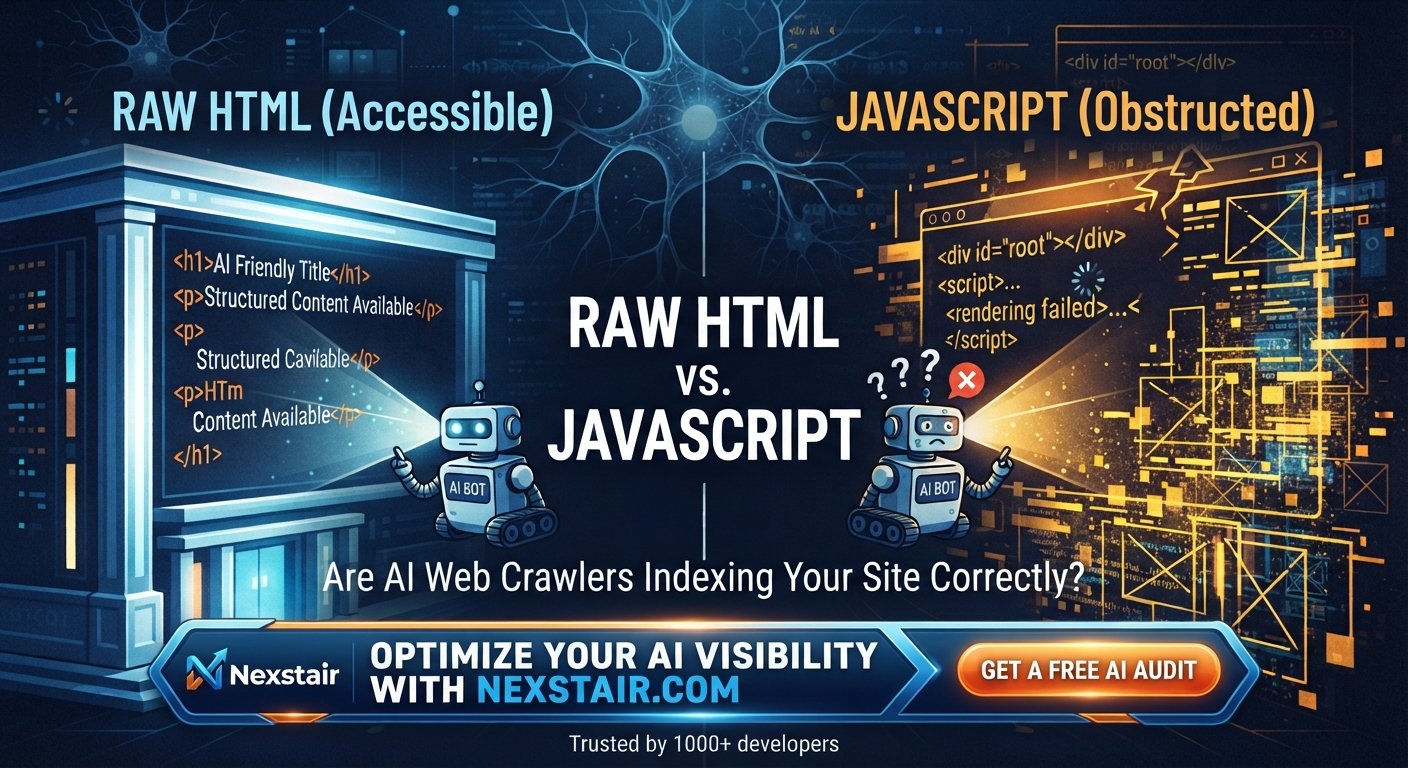
Are AI Web Crawlers Indexing Your Site Correctly?
For years, web developers have relied on JavaScript to power the modern internet, operating under the assumption that search engines...
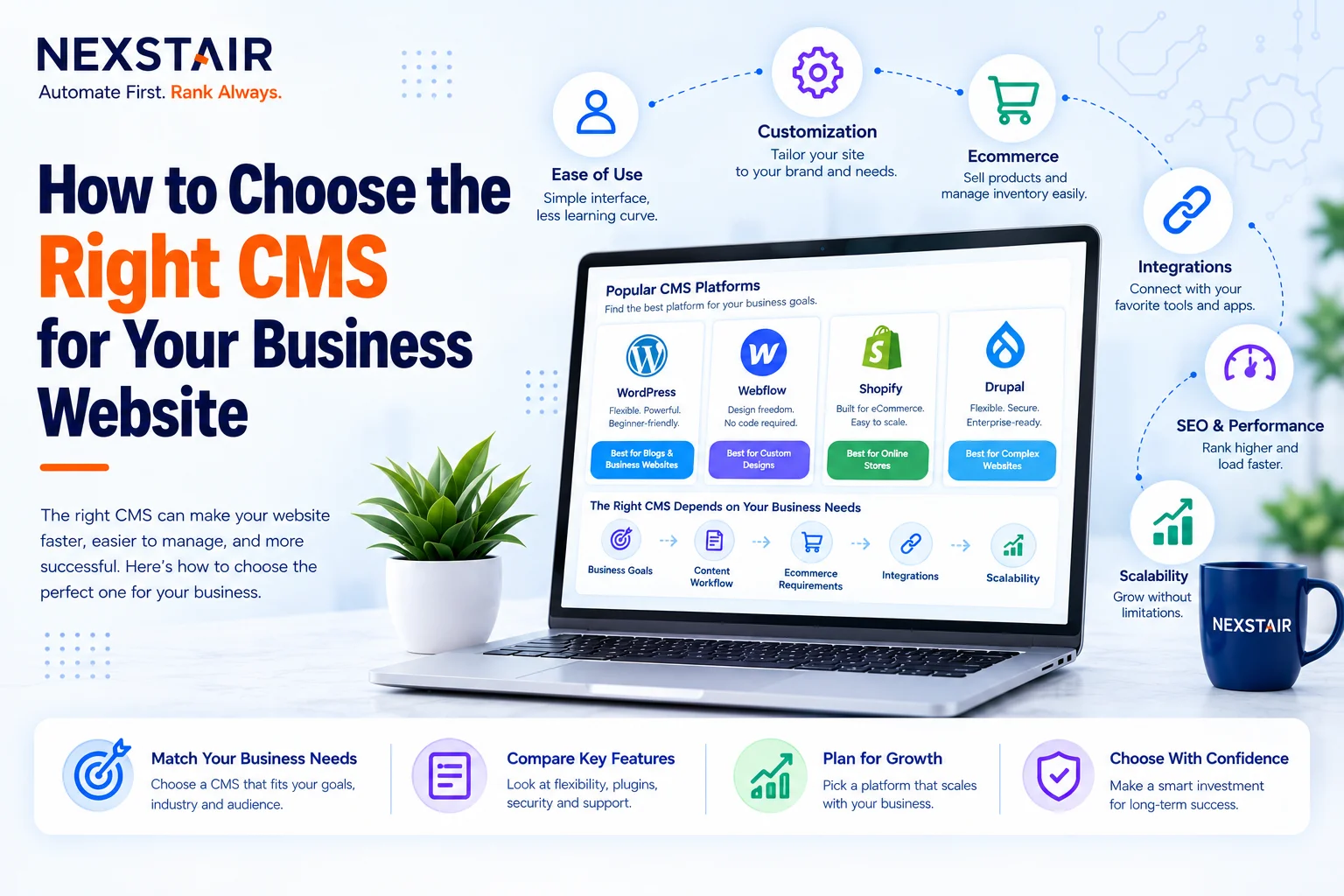
How to Choose the Right CMS for Your Business Website
Choosing a CMS for business use is an architectural decision, not a design decision, even though most business owners approach...

How to Manage Social Media Marketing for Small Business
Learn how to manage social media marketing for small business effectively & proven strategies, planning tips, and tools to grow...
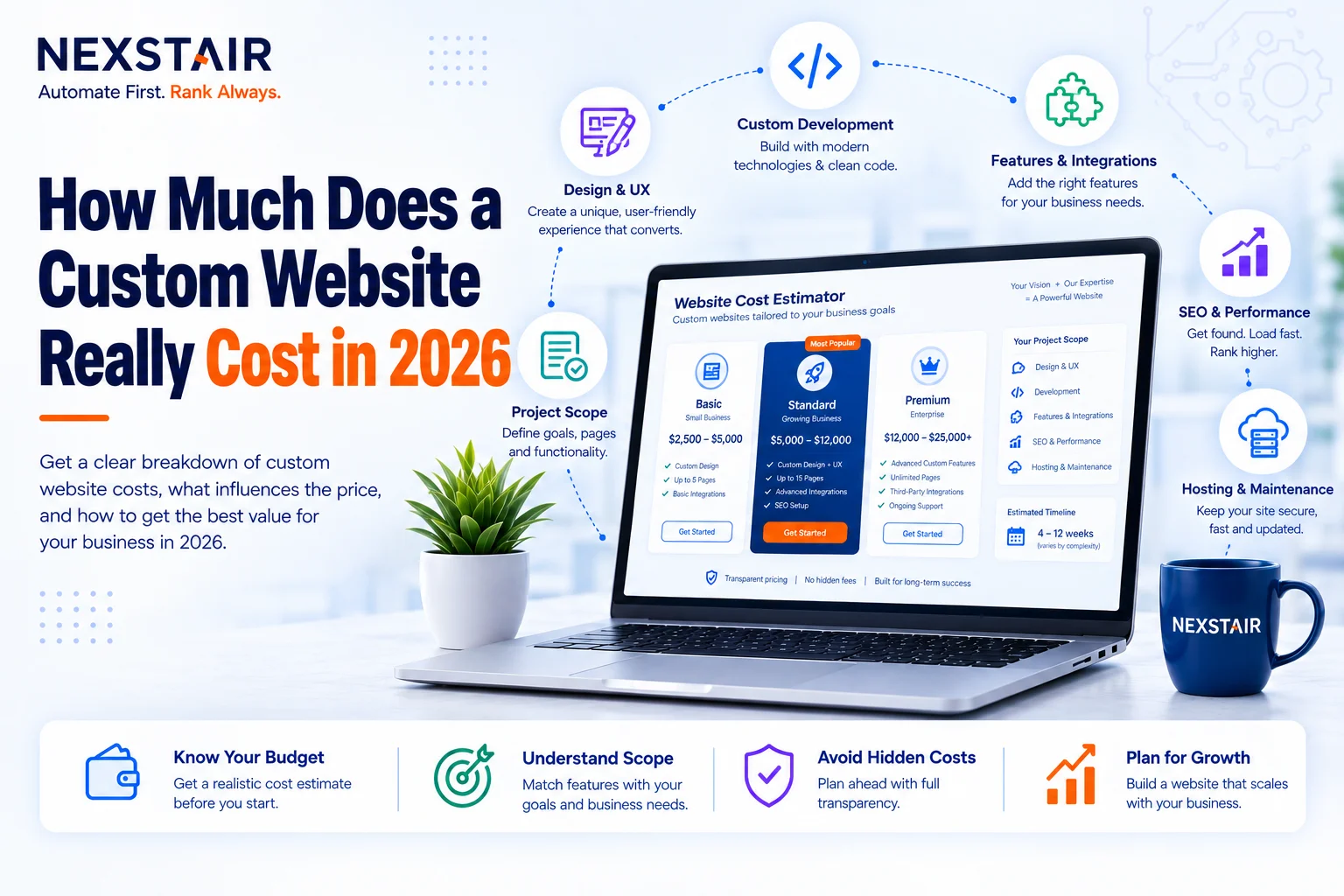
How Much Does a Custom Website Cost in 2026
Ask five agencies what a custom website costs and you’ll get five different numbers, and none of them will be...