
Optimize Content for Google Featured Snippets in 2026 | Full Guide
In the ever-evolving industry of search engine optimization, featured snippets have emerged as one of the most coveted positions in Google’s search results. Often called “position zero,” these highlighted answers appear above traditional organic listings, offering massive visibility and click-through potential for websites that earn them.
If you’re looking to dominate search results, Optimize Content for Google Featured Snippets in 2026, and drive more qualified traffic to your website, understanding how to optimize your content for featured snippets is no longer optional it’s essential. This comprehensive guide will walk you through proven strategies to Optimizing content for Google’s featured snippets and ai answer bots.
What Are Featured Snippets?
Featured snippets are concise answers that Google extracts from web pages and displays prominently at the top of search results. They’re designed to provide users with quick, authoritative answers to their queries without requiring them to click through to a website though many users still do click for more detailed information.
Google pulls these snippets from pages that are already ranking on the first page of search results, typically from positions 1-5, though exceptions exist. The snippet includes a summary of the answer, the page title, URL, and sometimes an image.
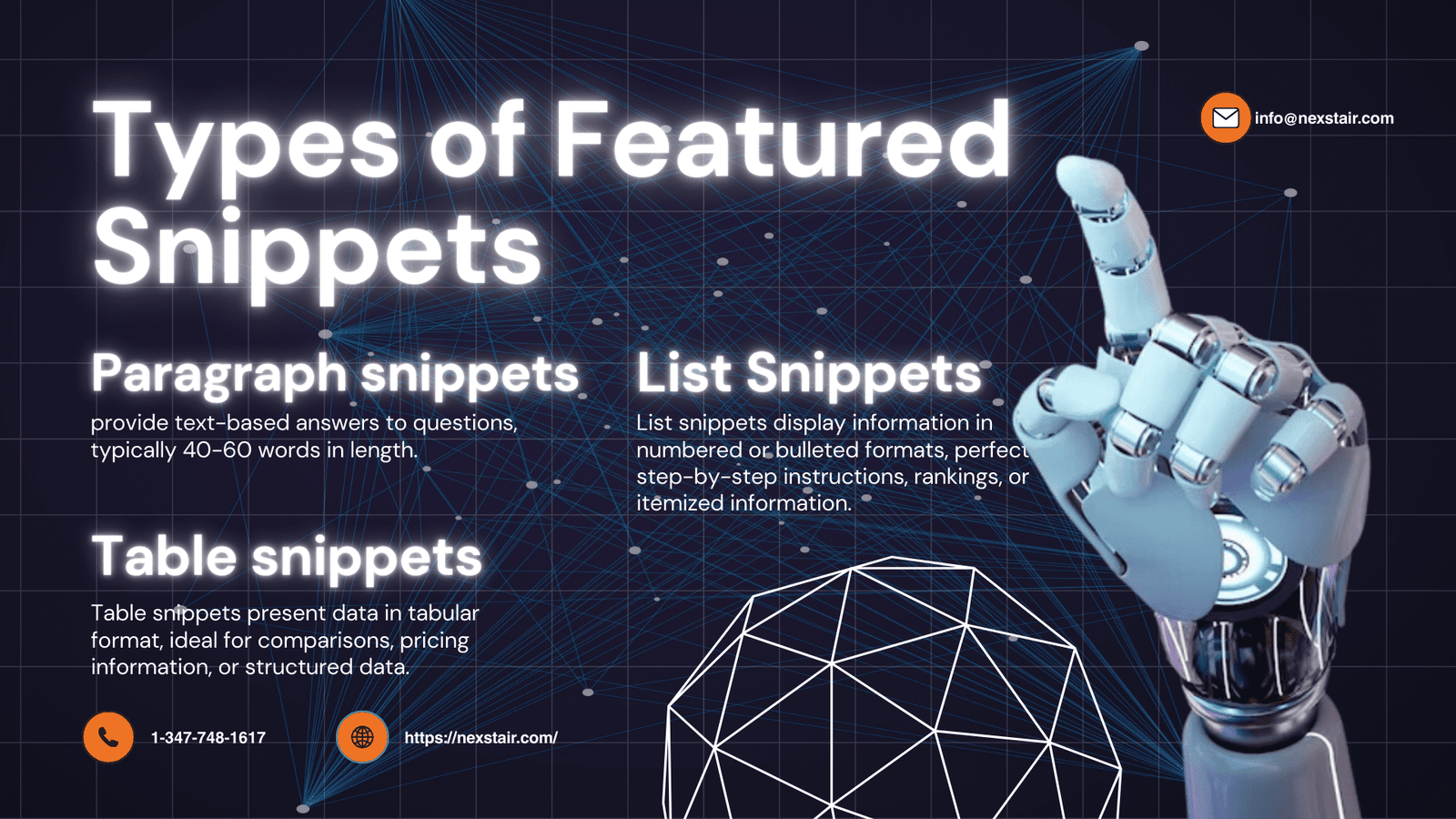
There are several types of featured snippets:
Paragraph snippets provide text-based answers to questions, typically 40-60 words in length. These are the most common type and appear for queries seeking definitions, explanations, or quick answers.
List snippets display information in numbered or bulleted formats, perfect for step-by-step instructions, rankings, or itemized information.
Table snippets present data in tabular format, ideal for comparisons, pricing information, or structured data.
Video snippets feature video content with a specific timestamp, answering visual or tutorial-based queries.
Why Featured Snippets Matter for Your Business
Securing a featured snippet position offers multiple strategic advantages. First, it dramatically increases your visibility in search results. Research indicates that featured snippets can increase click-through rates by over 30%, depending on the query type and industry.
Featured snippets also establish your brand as an authoritative voice in your industry. When Google selects your content to answer user queries, it signals trust and expertise to potential customers. Optimizing content for Google’s feature snippets enhanced credibility can translate into higher conversion rates and stronger brand recognition.
Additionally, featured snippets are increasingly important for voice search optimization. When users ask questions through smart speakers or voice assistants, these devices often read featured snippet content as the answer. As voice search continues to grow, optimizing for snippets positions your content for this expanding search behavior.
Ready to dominate search results with optimized content? Nexstair Technologies specializes in advanced SEO strategies that help businesses capture featured snippets and increase organic visibility. Let our experts develop a custom optimization plan for your website.
Research and Identify Snippet Opportunities
Before you can Optimize Content for Google Featured Snippets, you need to identify which queries present opportunities for your business. Start by analyzing your current search rankings using tools like Google Search Console, SEMrush, Ahrefs, or Moz.
Look for keywords where you’re already ranking on the first page, particularly in positions 2-10. These represent your quickest wins, as Google typically selects featured snippet content from pages already ranking well. Pay special attention to question-based queries starting with “what,” “how,” “why,” “when,” or “where,” as these frequently trigger featured snippets.
Use the “People Also Ask” section in Google search results to discover related questions that users are searching for. These PAA boxes often indicate opportunities where featured snippets already exist or could potentially appear.
Analyze your competitors who have already captured featured snippets in your industry. Examine their content structure, format, and approach to understand what Google values for those particular queries. Tools like Ahrefs’ “Organic Keywords” report can show you which featured snippets your competitors own, helping you identify gaps and opportunities.
Create a prioritized list of target queries based on search volume, relevance to your business goals, and competitiveness. Focus your initial efforts on lower-competition, high-relevance queries where you have the best chance of quick wins.
How to Structure Your Content for Featured Snippets
The way you structure your content significantly impacts your chances of earning featured snippets. Google’s algorithms look for clear, well-organized information that directly answers user queries.
Start with a clear, concise answer to the target question near the beginning of your content, ideally within the first or second paragraph. This answer should be 40-60 words for paragraph snippets short enough to be extracted as a snippet but comprehensive enough to be useful. Think of this as your “snippet-optimized paragraph.”
Use descriptive headings that match common search queries. If users are searching “how to change a tire,” use that exact phrase as a heading (H2 or H3) in your content. This signals to Google that your content directly addresses the query.
For list-based content, use proper HTML markup with ordered (numbered) or unordered (bulleted) lists. Keep individual list items concise typically one sentence or short phrase each. Aim for 5-8 items in your lists, as this is the range Google most commonly features.
When creating table-based content, use proper HTML table markup with clear headers and well-organized data. Tables should be simple and scannable, avoiding unnecessary complexity that might prevent extraction.
Break up long paragraphs into shorter, more digestible chunks. Featured snippets favor content that’s easy to read and understand at a glance. Use plenty of white space and consider using bold text to highlight key terms or concepts.
How to Optimize Your Content Format and Language
Beyond structure, the language and formatting choices you make can significantly influence whether Google selects your content for featured snippets.
Write in a clear, conversational tone that mirrors how people actually speak and search. Avoid jargon and overly technical language unless your target audience specifically uses those terms. Remember, featured snippets aim to provide quick, accessible answers.
Use the exact keywords and phrases that appear in search queries. If people search for “best time to post on Instagram,” use that exact phrase in your content rather than “optimal Instagram posting schedule.” Google looks for precise query matches when selecting snippet content.
Define terms clearly when appropriate. Definitional snippets often appear for “what is” queries, so if you’re targeting these searches, provide a concise, encyclopedic definition early in your content.
Include relevant statistics, data points, and specific examples that add credibility to your answers. Featured snippets that include concrete information tend to perform better than vague generalizations.
Front-load your most important information. Don’t bury the answer after lengthy introductions or background information. Users want immediate answers, and so does Google.
Want to transform your content strategy and capture more featured snippets? Nexstair Technologies provides data-driven content optimization services that align with Google’s latest algorithm updates. Our team of SEO specialists will audit your existing content and create a roadmap for snippet domination.
Leverage Schema Markup and Technical SEO
Technical optimization plays an important supporting role in featured snippet success, though it’s not a guaranteed ranking factor.
Implement structured data markup using Schema.org vocabulary to help Google understand your content better. While schema markup doesn’t directly cause featured snippets to appear, it provides additional context about your content’s meaning and organization.
FAQ schema is particularly valuable for question-and-answer content. When you mark up your FAQs with proper schema, you increase the likelihood that Google will recognize and potentially feature this content.
How-to schema is ideal for instructional content and step-by-step guides. This markup helps Google understand the sequential nature of your content and can lead to enhanced rich results in addition to featured snippets.
Ensure your website has excellent technical SEO fundamentals. Fast loading speeds, mobile responsiveness, secure HTTPS protocol, and clean site architecture all contribute to overall rankings, which in turn influence snippet eligibility.
Create a clear content hierarchy with proper heading tags. Use H1 for your main title, H2 for major sections, and H3 for subsections. This logical structure helps Google understand your content organization and extract relevant portions for snippets.
Struggling with technical SEO implementation? Nexstair Technologies offers comprehensive technical SEO audits and implementation services to ensure your website meets all the requirements for featured snippet eligibility. Contact us today for a free consultation.
How to Create Authoritative Content to Optimize Content for Google Featured Snippets?
While featured snippets extract brief answers, they come from comprehensive, authoritative content that thoroughly addresses topics. Google wants to feature content from pages that provide genuine value to users.
Aim for depth and completeness in your content. Cover topics thoroughly, addressing related questions and providing context beyond the immediate query. Comprehensive content signals expertise and increases your chances of ranking for multiple related snippets.
Back up your claims with credible sources and citations. Link to authoritative external resources when appropriate, as this demonstrates that your content is well-researched and trustworthy.
Update your content regularly to maintain accuracy and freshness. Google favors current, up-to-date information for featured snippets, especially for topics that change over time. Set reminders to review and refresh your content quarterly or biannually.
Include original insights, expert opinions, or unique data when possible. Content that offers something distinctive beyond what competitors provide has a better chance of standing out and earning featured positions.
Address multiple related queries within a single piece of content. This increases the number of potential snippet opportunities from one page and demonstrates comprehensive topic coverage.
Monitor, Measure, and Refine Your Strategy
Optimizing for featured snippets is an ongoing process that requires regular monitoring and adjustment.
Track your featured snippet performance using Google Search Console and third-party SEO tools. Monitor which queries trigger snippets for your content, what position you hold, and how your snippet presence changes over time.
Analyze your click-through rates for pages with featured snippets compared to those without. While snippets increase visibility, the impact on CTR can vary. Some snippets answer queries completely, reducing clicks, while others generate curiosity that drives traffic.
Study competitor movements in the featured snippet landscape. If you lose a snippet to a competitor, analyze what they did differently and adjust your content accordingly.
Conduct A/B testing with different content formats and structures. Try varying your answer length, format type, or heading structure to see what produces the best results for your target queries.
Expand your snippet portfolio over time. Once you’ve captured initial wins, identify new opportunities and apply your successful strategies to additional content pieces.
Pay attention to seasonal trends and query shifts. Some featured snippets are highly seasonal or tied to current events. Adjust your content calendar to target timely opportunities when they arise.
What are Common Mistakes to Avoid
while Optimize Content for Google Featured Snippets many content creators make preventable errors that reduce their chances of earning featured snippets.
Don’t provide vague or incomplete answers. If your content dances around the question without directly addressing it, Google will look elsewhere for snippet content.
Avoid burying your answer too deep in the content. While comprehensive coverage is important, the snippet-worthy answer should appear early and prominently.
Don’t ignore user intent. Understand what users actually want when they search for specific queries, and provide content that matches that intent precisely.
Resist the temptation to keyword stuff or over-optimize. Natural, helpful content that genuinely answers questions performs better than content clearly written just to game the algorithm.
Don’t neglect mobile optimization. With mobile-first indexing, your content must perform well on mobile devices to compete for featured snippets.
Avoid inconsistent formatting within your content. If you’re creating a list, maintain consistent structure throughout. Inconsistency confuses both users and search algorithms.
What is the Future of Featured Snippets and Your Content Strategy
Featured snippets continue to evolve as Google refines its understanding of user intent and content quality. While the fundamental principles of optimization remain stable, staying informed about changes is crucial.
Google increasingly favors comprehensive, expertly crafted content from authoritative sources. The concept of E-E-A-T (Experience, Expertise, Authoritativeness, and Trustworthiness) plays a growing role in snippet selection, particularly for health, finance, and other sensitive topics.
Multimodal search results are becoming more common, with featured snippets sometimes combining text, images, and video. Creating content that spans multiple media types positions you well for these enhanced results.
The rise of AI-powered search experiences may change how featured snippets appear and function. However, the core need for clear, accurate, well-structured content that directly answers user questions will remain paramount regardless of interface changes.
Position your content for the future of search with Nexstair Technologies. Our SEO experts stay ahead of algorithm updates and emerging trends to ensure your content strategy remains effective and competitive. Schedule your strategy session today and start capturing the featured snippets your business deserves.
Final Word | Optimize for Google’s Featured Snippets with Nexstair Technologies
Optimizing for Google’s featured snippets represents a powerful opportunity to increase your search visibility, establish authority, and drive qualified traffic to your website. By understanding how snippets work, identifying the right opportunities, structuring your content strategically, and continuously refining your approach, you can earn these coveted “position zero” placements.
Remember that featured snippet optimization isn’t about gaming the system, it’s about creating genuinely helpful content that directly answers the questions your audience is asking. Focus on user value first, apply the technical and structural best practices outlined in this guide, and you’ll be well-positioned to capture featured snippets that drive real business results.
Start implementing these strategies today, monitor your results, and watch as your content climbs to the top of search results, earning the visibility and authority your brand deserves.
10124